Critically Endangered
Dragon Tree Half-toed Gecko
Hemidactylus dracaenacolus
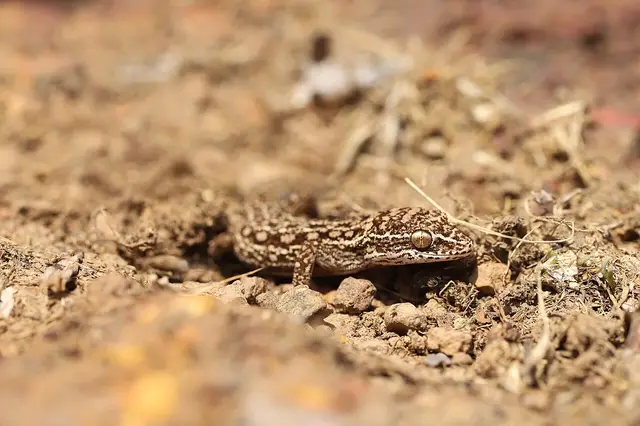
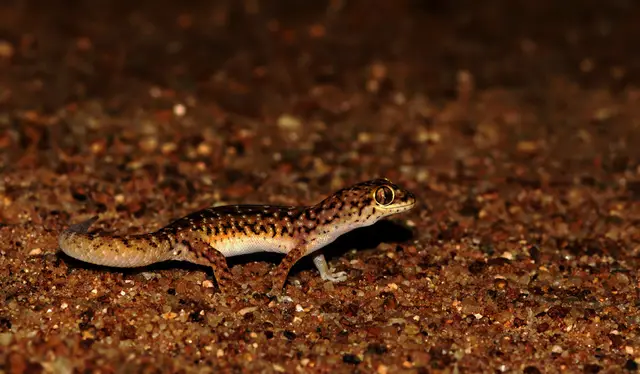
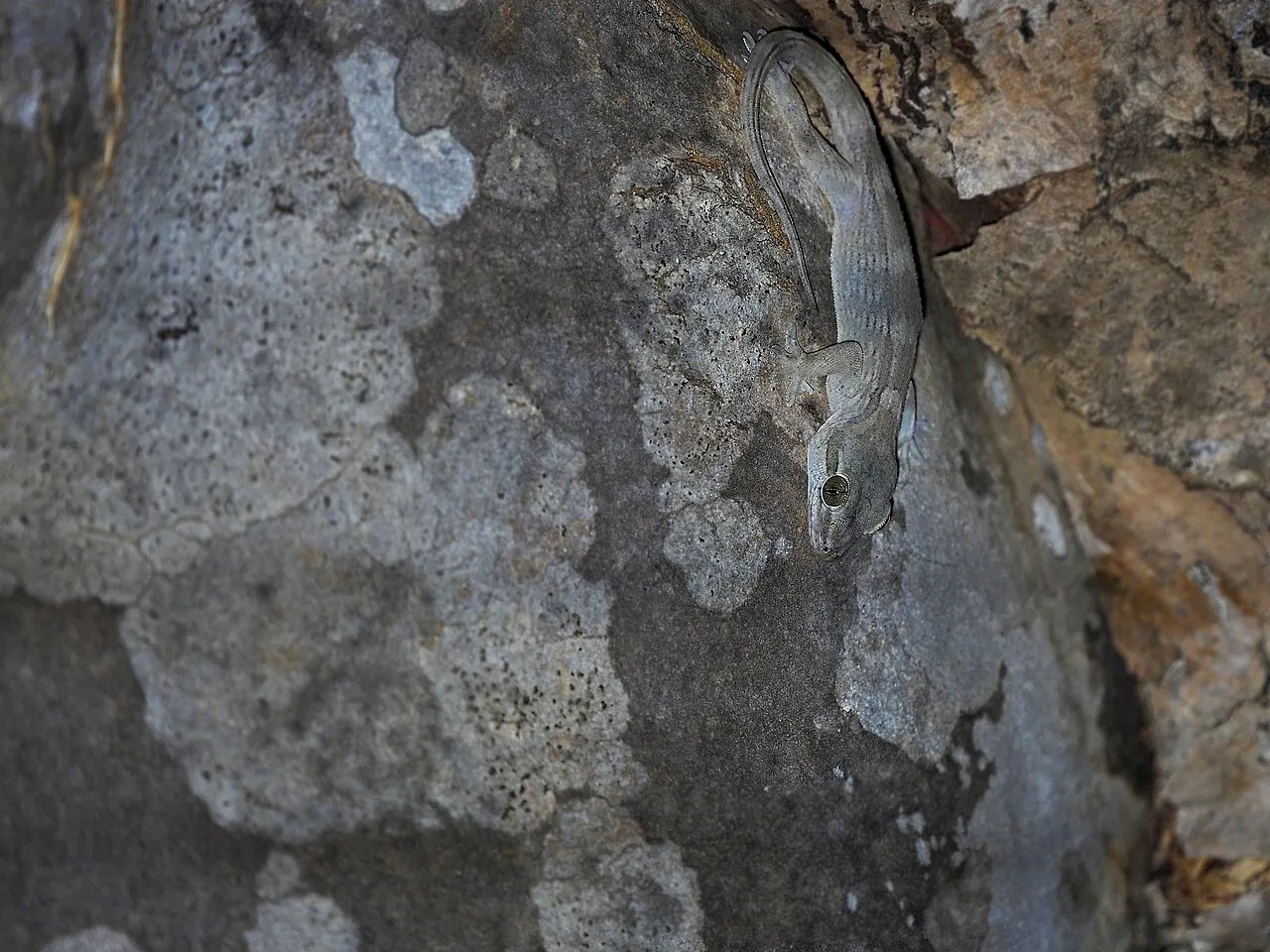
The dragon blood tree gecko (Hemidactylus dracaenacolus) is a small gecko found only on the Diksam Plateau of Socotra, an island off Yemen, where it lives on the endemic dragon's blood tree. The IUCN Red List classed it as Critically Endangered in 2011, based on a tiny range and ongoing habitat decline.
Where it lives
Socotra is a UNESCO World Heritage island in the Indian Ocean, and all 31 of its native reptile species are found nowhere else. This gecko is one of the most restricted of them. Herbert Rösler and Wolfgang Wranik described it in 1999 from specimens collected at Diksam, at about 695 m above sea level.
Fieldwork reported in 2011 found it at six localities on the Diksam Plateau, between 762 and 1004 m, with the farthest two sites within about 8.5 km of each other. The 2011 Red List assessment estimates its extent of occurrence at 25 square kilometres, its area of occupancy at 6, and counts it as a single location.
Pins are Wikidata “endemic to” fields. Orange dots, when present, are GBIF occurrence tiles — survey bias included.
How it lives
The gecko is tied to the dragon's blood tree (Dracaena cinnabari), the umbrella-shaped tree whose red resin gives it its name. The scientific name joins Dracaena with a Latin word meaning to inhabit. Surveyors found geckos under stones at the base of the trees by day, and active on the trunks at night. Only one was seen on the ground. The Red List describes its habitat as dry savanna, and the species lays eggs.
Much else is unknown. A project run by researchers at the University of Porto's CIBIO institute, funded by the Mohamed bin Zayed Species Conservation Fund, set out to map where the gecko occurs, study its diet and microhabitat, and update estimates of its range to test whether its numbers are falling. The project reports that the gecko occupies a much smaller area than the trees do, and now appears at very low densities in places where it was once common.
Why it is in trouble
The gecko depends on one tree in one small area, so the tree's condition decides its fate. The CIBIO project describes the trees as declining, with overmaturity and overgrazing by introduced goats putting them at risk. The Red List names small-holder farming and grazing as ongoing threats, along with unintentional effects of other activities. It records a continuing decline in the area of habitat and a decreasing population trend.
What is being done
The Red List assessment lists protection of the gecko's resources and habitat as a needed conservation action. Whether any of the gecko's range lies inside a protected area is recorded as unknown. The gecko's survival is closely linked to keeping dragon's blood tree woodland standing.
Sources
Written for this catalog in our own words from the sources below, checked against them on 12 November 2026. Population figures are estimates and carry the year they were made. Status and assessment year: IUCN. 2026. The IUCN Red List of Threatened Species. Version 2026-1. iucnredlist.org.
- IUCN Red List assessment, Hemidactylus dracaenacolus (2011)
- Zenodo record, Hemidactylus dracaenacolus (Rösler and Wranik 1999 treatment)
- CIBIO, The Dragon Blood Tree's Gecko project
- Mohamed bin Zayed Species Conservation Fund, case study
- Reptile Database, Hemidactylus dracaenacolus
- Wikipedia, Hemidactylus dracaenacolus