Endangered
Alpine she-oak skink
Cyclodomorphus praealtus
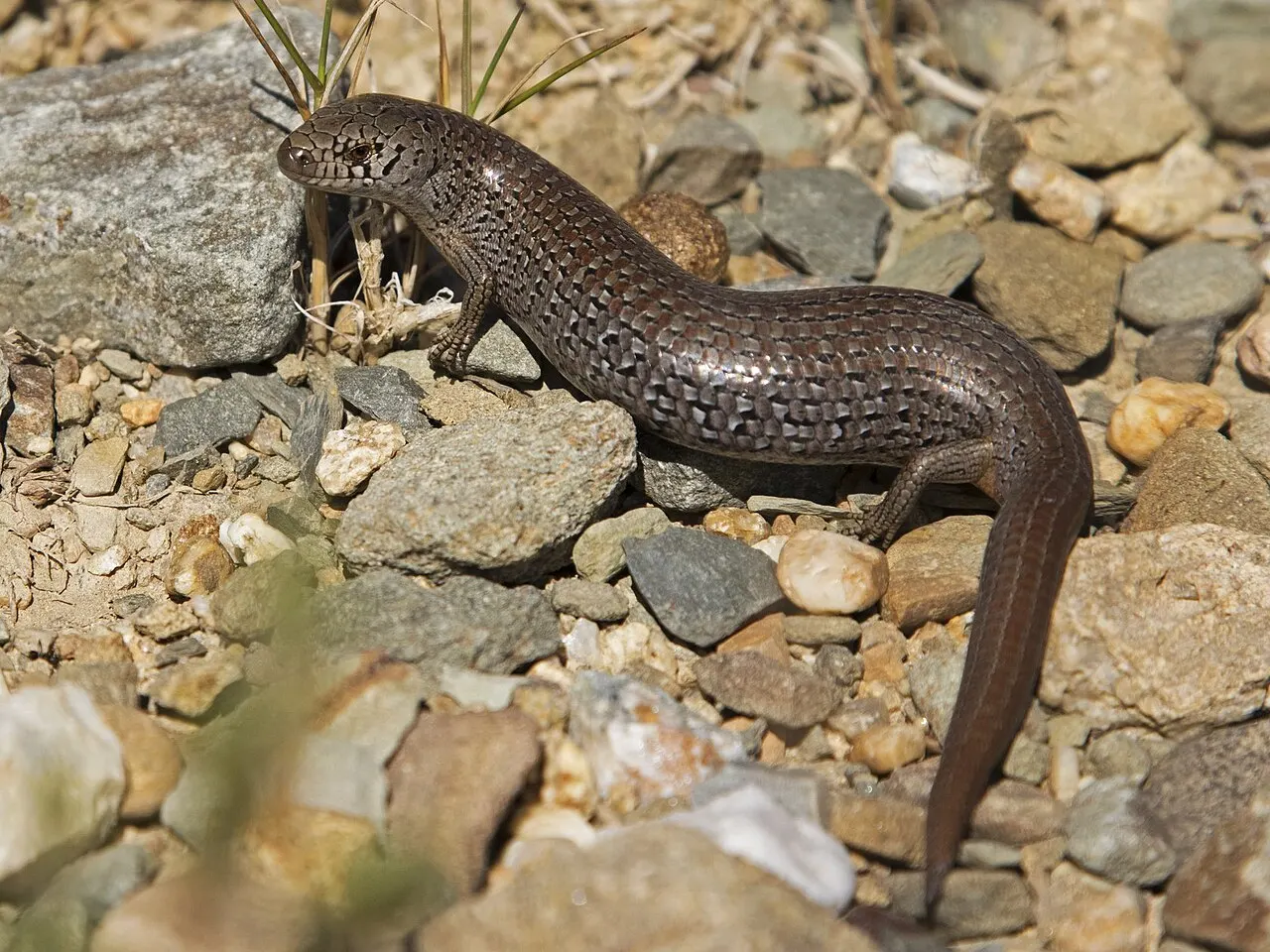
The alpine she-oak skink (Cyclodomorphus praealtus) is a slender, live-bearing lizard found only in the sub-alpine and alpine grasslands of New South Wales and Victoria, Australia. The IUCN Red List classed it as Endangered in 2018, with its population decreasing and split into isolated pockets.
How to recognise it
It's a medium-sized, slender skink, reaching about 350 mm in total length. Body length (snout to vent) is given as up to 130 mm by the New South Wales government, and as up to 116 mm in another reference. The back is olive-green to reddish-brown with dark edges along the sides, and the tail is relatively short and tapered.
Telling it from other she-oak skinks by eye is hard. Location is the main clue, along with having fewer than 60 scales under the tail. Herpetologist Glenn Shea formally described it in 1995, from a specimen collected at Kiandra in 1967. The name combines Latin words meaning very and high, a nod to where it lives.
Where it lives
This skink is found only in the Australian Alps. In New South Wales it has been recorded only in Kosciuszko National Park, between Smiggin Holes and Kiandra. In Victoria it occurs in the north-east and as far south as Lankey Plain on the Dargo High Plains.
It favours treeless or lightly treed ground covered in tussock grass, low heath, or both. A 2023 genetic study in Conservation Genetics identified four populations on the Kosciuszko Plateau and three on the southern plateaus. The northern and southern regions are effectively isolated from each other.
Pins are Wikidata “endemic to” fields. Orange dots, when present, are GBIF occurrence tiles — survey bias included.
How it lives
Much of its life goes unseen. It shelters under litter, rocks and logs, and basks on grass tussocks. Adults stay in the same general area for long periods, and the longest distance recorded for one individual is about 45 metres.
It eats mostly small invertebrates such as snails and insects, and occasionally small lizards and snakes. It gives birth to live young. Museum females collected in summer carried 2 to 9 embryos, which suggests a summer breeding period, but breeding is poorly understood because the animal is so hard to find.
Why it is in trouble
The IUCN lists increasing fire frequency and intensity, shifting and altered habitat, and tourism and recreation areas among the threats, and records a continuing decline in the area the species occupies. The New South Wales profile adds weeds, disturbance by feral horses, deer and pigs, livestock grazing, predation by cats and foxes, and habitat lost to tracks and other infrastructure.
Genetics is a concern too. The 2023 study found low genetic diversity and small effective population sizes across the range. Populations on the Kosciuszko Plateau showed more inbreeding and more differences between them than those in the south.
What is being done
The skink is listed as Endangered under national law and in New South Wales, and part of its habitat lies inside protected areas. State recovery priorities include surveys of distribution and abundance, control of feral animals and weeds, cat and fox management, fire management that avoids over-frequent burning, avoiding ground disturbance near known habitat, and monitoring. The genetic researchers suggest that genetic rescue be investigated as a way to offset isolation.
Sources
Written for this catalog in our own words from the sources below, checked against them on 12 November 2026. Population figures are estimates and carry the year they were made. Status and assessment year: IUCN. 2026. The IUCN Red List of Threatened Species. Version 2026-1. iucnredlist.org.




