Endangered
Aurelio's Rock Lizard
Iberolacerta aurelioi
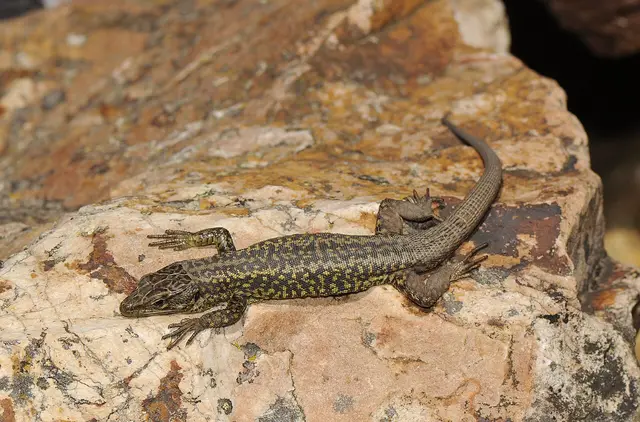
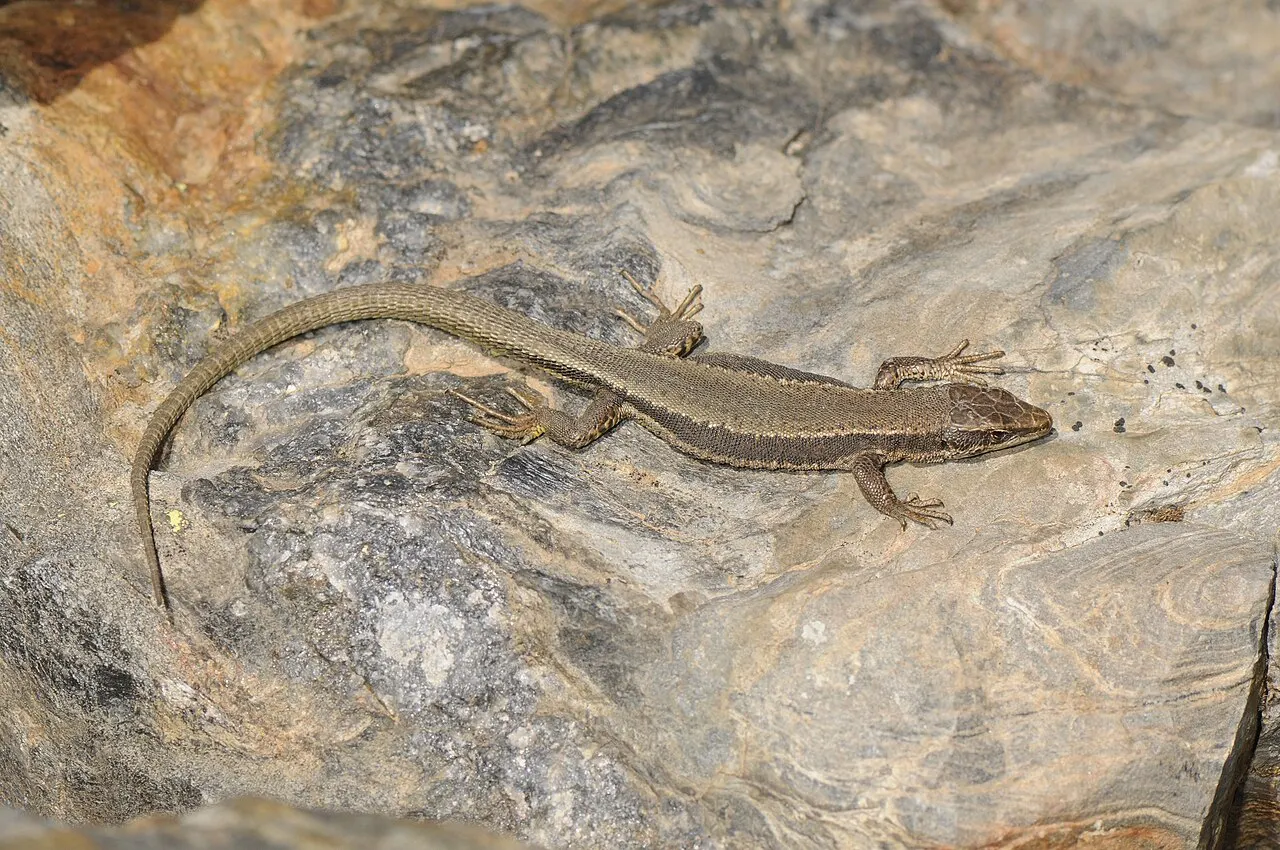
Aurelio's rock lizard (Iberolacerta aurelioi) is a small, high-mountain lizard living on rocky slopes and meadows in the central Pyrenees, around the point where Andorra, Spain and France meet. The IUCN Red List assessed it as Endangered in 2024. Its range is tiny and split into fragments.
How to recognise it
It's a small lacertid, with a snout-to-vent length of up to about 6 cm. A 2025 genome preprint puts body length for the Pyrenean and Alpine rock lizards (the genus Iberolacerta) at 6 to 6.5 cm and suggests the small size may be an adaptation to high altitude.
The species was described in 1994 by Oscar Arribas and is reportedly named for his father, Aurelio.
Where it lives
The lizard is endemic to the Pyrenees and occurs in Andorra, Spain and France. The type locality is a lake at 2,400 m in the Pica d'Estats massif in Lleida, Spain, and a genome study sampled an animal from the Comapedrosa massif in Andorra. The IUCN assessment gives a total range of only about 303 square km, with one or two locations, and calls the population severely fragmented.
It lives high, between roughly 1,960 and 3,000 m above sea level, on rocky ground, temperate grassland and pasture. It occurs in at least one protected area.
Pins are Wikidata “endemic to” fields. Orange dots, when present, are GBIF occurrence tiles — survey bias included.
How it lives
It lays eggs. A 2008 study in Amphibia-Reptilia examined droppings from a population in Andorra, and its title describes a poor-resources alpine environment. The abstract reports a narrow diet dominated by insects, with signs of opportunistic cannibalism.
Its genome suggests an old lineage. A 2025 preprint by Talavera, Carranza and colleagues estimates that it split from the other two Pyrenean species, Aran's and Bonnal's rock lizards, around 7.8 million years ago, and that these lizards have lived in small populations for a very long time. The preprint links this to signs of inbreeding in the genome.
Why it is in trouble
The IUCN lists small-scale grazing and farming, dams, tourism and recreation areas, and habitat shifting and alteration as threats. It records a decreasing population trend and a continuing decline in habitat area.
Climate change adds pressure. The preprint notes that mountains may warm faster than the global average and expects wall lizards (Podarcis) to move upslope as temperatures rise, which could bring competition or new diseases to mountain specialists like this one.
What is being done
The assessment lists site management, site protection and international-level action as conservation measures needed, and records the species in at least one protected area. The size of the remaining population is unknown.
Sources
Written for this catalog in our own words from the sources below, checked against them on 12 November 2026. Population figures are estimates and carry the year they were made. Status and assessment year: IUCN. 2026. The IUCN Red List of Threatened Species. Version 2026-1. iucnredlist.org.