Endangered
Trimeresurus truongsonensis
Trimeresurus truongsonensis
The Truong Son pit viper (Trimeresurus truongsonensis), also called the Quang Binh pitviper, is a venomous snake known with certainty only from the forests of Phong Nha-Ke Bang National Park in central Vietnam. The IUCN Red List classes it as Endangered (assessed 2022), though its population trend is unknown.
How to recognise it
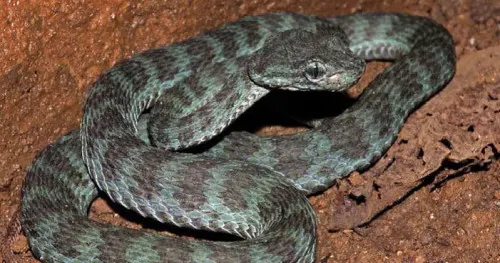
This is a fairly small pitviper, reaching a maximum total length of about 64 cm. Males reach around 52 cm of that in head-and-body length.
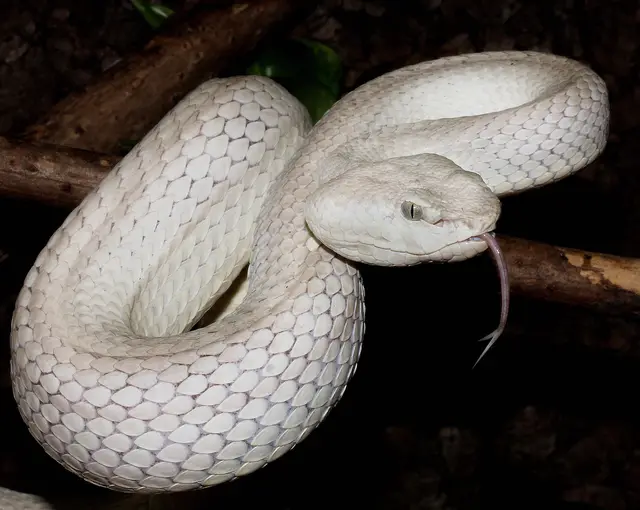
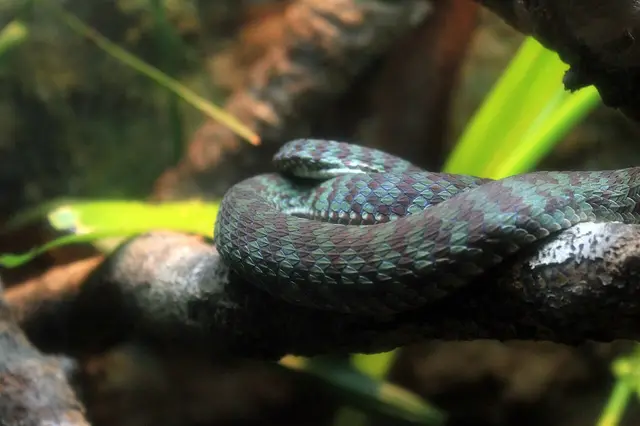
The sexes differ in colour. Males are greenish blue on the body and head, and females are light brown. The body and tail carry roughly 66 to 70 red-brown crossbands, and red-brown spots on the head form a mosaic pattern. The belly is grey-blue.
Where it lives
It was described in 2004 from Phong Nha-Ke Bang National Park in Quang Binh province, in the Annamite (Truong Son) Mountains, and the species is named after that range. The type specimen came from about 600 m. The Red List gives its elevation as 500 to 600 m and an extent of occurrence of roughly 2,340 square kilometres, in what it counts as a single location.
The Red List records it in Vietnam, with presence in neighbouring Laos uncertain. The Reptile Database suggests it may be more widespread in Quang Binh and possibly south toward Quang Tri province, but the park is the only place it is known with certainty.
Pins are Wikidata “endemic to” fields. Orange dots, when present, are GBIF occurrence tiles — survey bias included.
How it lives
It lives in evergreen lowland tropical forest and is partly arboreal. It's secretive, and reportedly most often seen basking after heavy rain. Females give birth to live young rather than laying eggs. Its diet and breeding season are not described in the sources available.
Why it is in trouble
The Red List records a continuing decline in the area of forest it depends on, and lists shifting agriculture as an ongoing threat. Deliberate targeting of the species is flagged as a future risk, and animals may also be killed unintentionally by small-scale harvesting. The size of the population and whether it's shrinking are both unknown.
What is being done
Its known range lies inside a protected area, and site management is the only conservation action listed. Research priorities named in the assessment are its population size, distribution and trends, the threats it faces, and harvest and use.
Sources
Written for this catalog in our own words from the sources below, checked against them on 12 November 2026. Population figures are estimates and carry the year they were made. Status and assessment year: IUCN. 2026. The IUCN Red List of Threatened Species. Version 2026-1. iucnredlist.org.