Endangered
McGregor's pit viper
Trimeresurus mcgregori
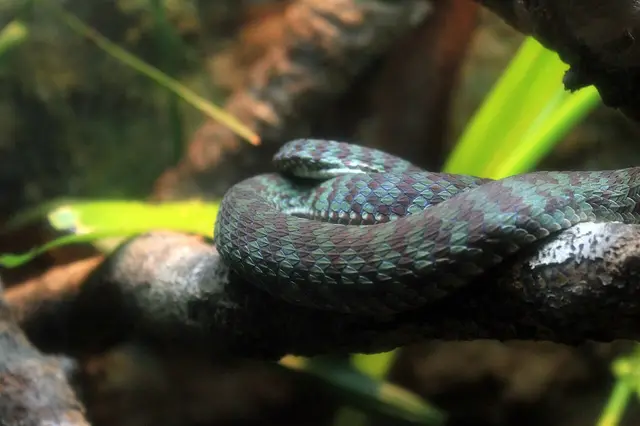
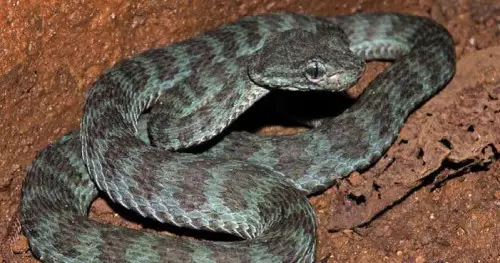
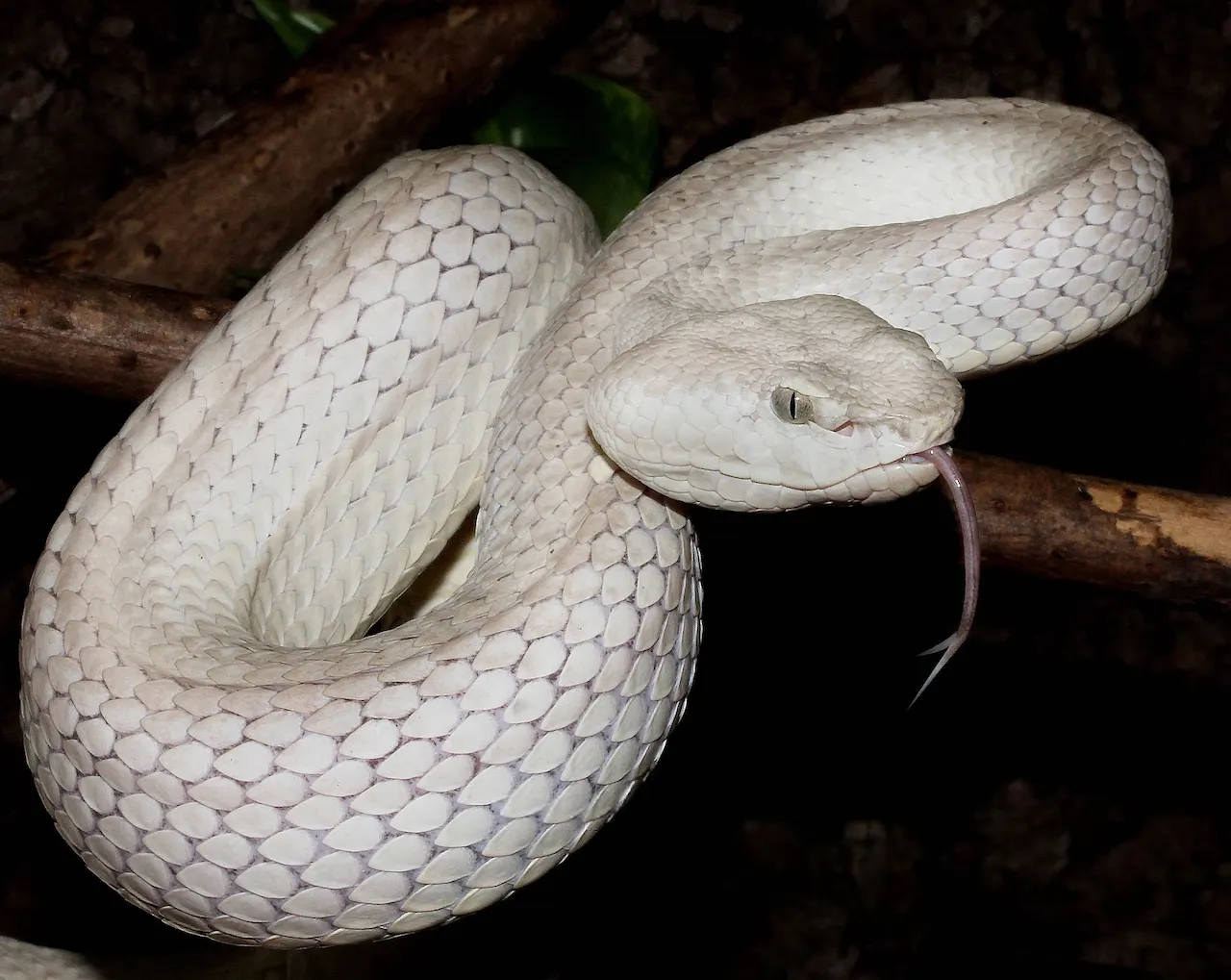
McGregor's pit viper (Trimeresurus mcgregori), also called the Batanes pit viper, is a venomous tree snake found only in the Batanes Islands of the northern Philippines. The IUCN rated it Endangered in 2022 and records a falling population. Its colour runs from yellow to nearly silvery white.
How to recognise it
This is a fully arboreal pit viper. The only measured specimen in the sources is the original type, a preserved snake 865 mm long that was described as almost paper white. Colour is unusually variable. In zoo breeding records, hatchlings from a single clutch came out white or silver, plain yellow, or yellow with tiger-like stripes, so colour is a poor way to identify it.
Where it lives
The species is endemic to the Batanes group, between Luzon and Taiwan. The type locality is Batan Island, and the IUCN counts two locations. It lives from sea level to about 800 m in moist lowland forest, moist shrubland and rural gardens.
Pins are Wikidata “endemic to” fields. Orange dots, when present, are GBIF occurrence tiles — survey bias included.
How it lives
Almost nothing has been published on its life in the wild. Most of what is known comes from captive animals. Females lay eggs. At Audubon Zoo in New Orleans, records from 1992 onward show clutches of 2 to 11 eggs, incubation of 45 to 54 days at 26.7 degrees C, and a gestation period of roughly 4 to 6 months between mating and egg laying.
A 2022 paper in Reptiles & Amphibians, by the zoo's Robert Mendyk, reports at least 149 captive-bred young produced in accredited zoos since 1993. It adds that the snake remains rare in collections outside zoological parks.
A name with a story
R. C. McGregor collected the first specimen on Batan on 12 June 1907, and the snake carries his name. He reportedly survived being bitten by it. The original specimen was destroyed in Manila during the Second World War. A replacement specimen (neotype) at the California Academy of Sciences was designated by Alan Leviton in 1964.
Edward Taylor described the species in 1919. It was later treated as a subspecies of T. flavomaculatus, and work around 2001 and 2002 restored it to full species. Some authors place it in the genus Parias.
Why it is in trouble
The IUCN lists targeted collection as the main ongoing threat, affecting a majority of the population. Persecution (people killing snakes) also affects a majority, and commercial and industrial development a smaller share. The assessment records use as pets or display animals. The Reptile Database lists the species among the 30 most endangered viper species, citing a 2016 study by Maritz and colleagues.
There is no population estimate. The IUCN reports no recovery plan or monitoring scheme in place, though the snake occurs in at least one protected area. It lists harvest management, trade management and site management as needed actions.
Sources
Written for this catalog in our own words from the sources below, checked against them on 12 November 2026. Population figures are estimates and carry the year they were made. Status and assessment year: IUCN. 2026. The IUCN Red List of Threatened Species. Version 2026-1. iucnredlist.org.