Endangered
Gerrhonotus parvus
Gerrhonotus parvus
The pygmy alligator lizard (Gerrhonotus parvus) is a small, egg-laying anguid from the Sierra Madre Oriental of northeastern Mexico, living in dry canyons and scrub in Nuevo León and Coahuila. The IUCN rated it Endangered in 2007. Only about 16 specimens had reached scientific collections by 2018.
How to recognise it
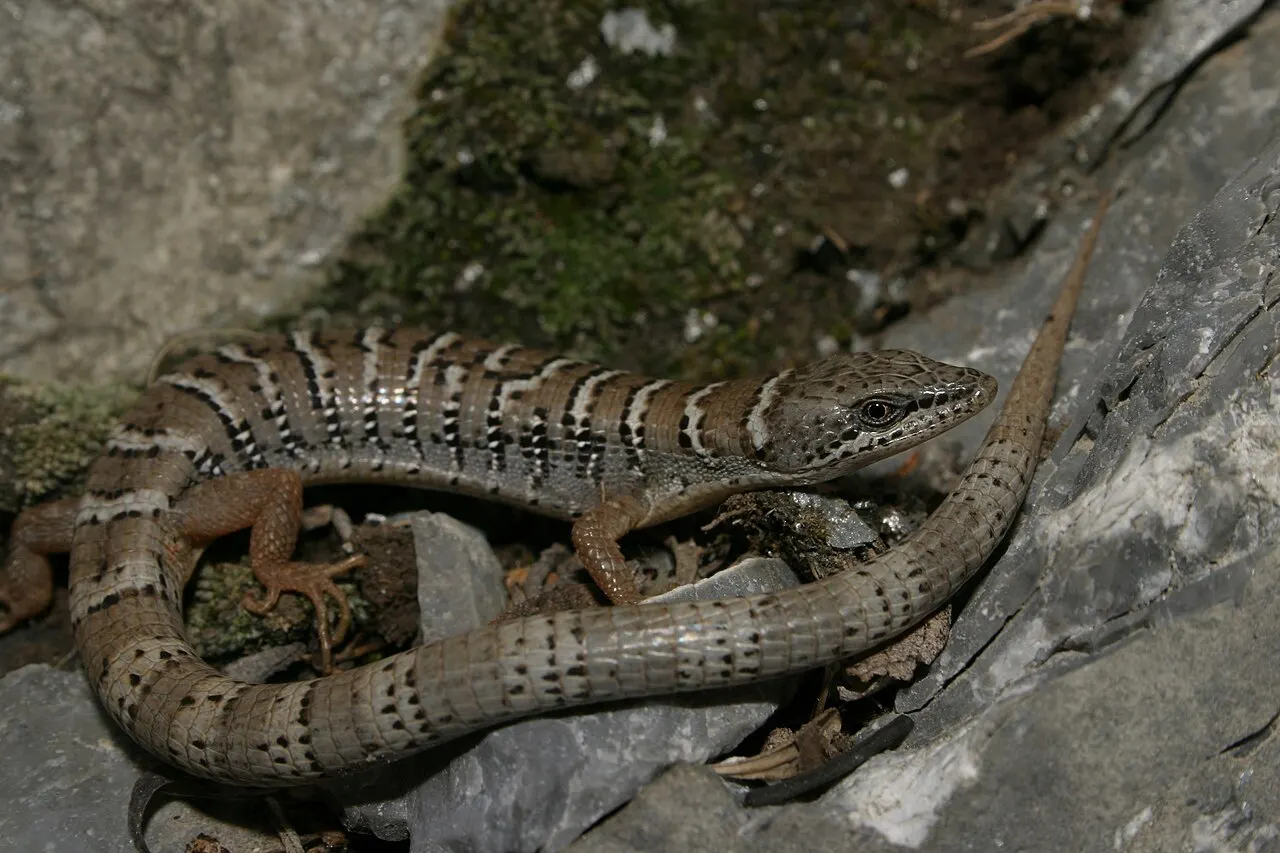
It's the smallest species in its genus, and the name parvus is Latin for small. Adults measure roughly 55 to 76 mm from snout to vent, and males can reach about 130 mm in total length once the tail is counted. The head is glossy and smooth, grayish brown with scattered dark spots, and the chin and throat are pearly white. Smooth back scales and wide pale crossbands on the tail help separate it from its relatives.
Knight and Scudday described it in 1985 in The Southwestern Naturalist, from specimens collected near Galeana, Nuevo León. For years it was filed under the genus Elgaria, but a 2005 DNA study by Conroy and colleagues supported its place in Gerrhonotus.
Where it lives
Until 2018 the species was known only from Nuevo León, in the municipalities of Galeana, Los Rayones, Santa Catarina and Santiago. That year Javier Banda-Leal and colleagues reported eight lizards from the Sierra de Zapalinamé protected area near Saltillo, Coahuila, found between 2012 and 2017. Those records lie 28 to 44 km west of the nearest Nuevo León sites and sit at roughly 1,900 to 2,200 m, well above the 900 to 1,650 m of the earlier records.
The habitat is rocky and dry. In San Isidro Canyon, a well-documented site, steep limestone walls carry agave, sotol and scrub oak, with leaf litter piled between boulders and a few intermittent pools. The type locality near Galeana is a transition zone between pine forest and open gypsum scrub, and lizards have also been found among the dead leaves of yuccas.
Pins are Wikidata “endemic to” fields. Orange dots, when present, are GBIF occurrence tiles — survey bias included.
How it lives
Much about its daily life is still unrecorded. It lays eggs. A female found in Santa Catarina in 2012 laid six, the largest clutch documented up to 2014, and a paratype from the original series held four. Banda-Leal and colleagues call it an enigmatic species, and the IUCN assessment gives no population size.
Why it is in trouble
The IUCN assessment lists a decreasing population and names small-scale farming and grazing, and mining and quarrying, as threats, with ecosystem conversion and degradation as the resulting stresses. The Endangered rating rests on a small range and an ongoing decline in habitat quality (criterion B1ab(iii)).
Fire is another hazard. On 27 March 2017, two lizards from San Lorenzo Canyon in Coahuila were found burned, and a third was found alive.
What is being done
Mexico lists the species under special protection (NOM-059-SEMARNAT, 2010), and all the Coahuila records come from the Sierra de Zapalinamé protected area, decreed in 1996. The IUCN assessment names site protection, site management and captive breeding as conservation actions, but records none as in place.
Sources
Written for this catalog in our own words from the sources below, checked against them on 12 November 2026. Population figures are estimates and carry the year they were made. Status and assessment year: IUCN. 2026. The IUCN Red List of Threatened Species. Version 2026-1. iucnredlist.org.




