Endangered
Malayan Forest Gecko
Cyrtodactylus pulchellus
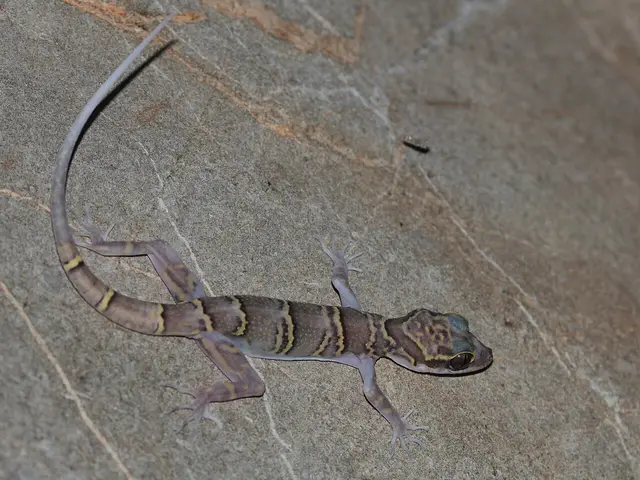
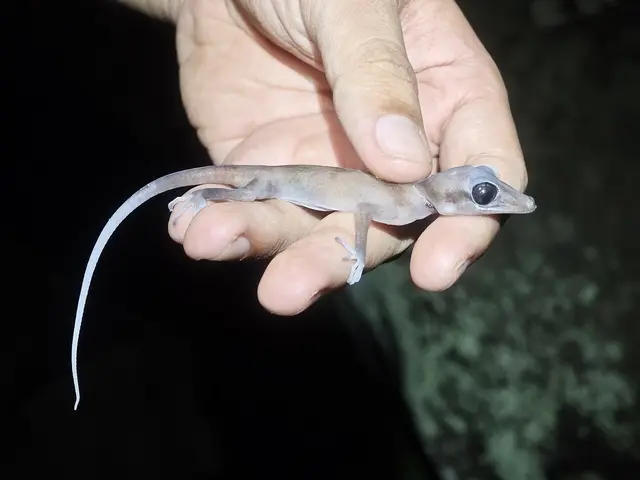
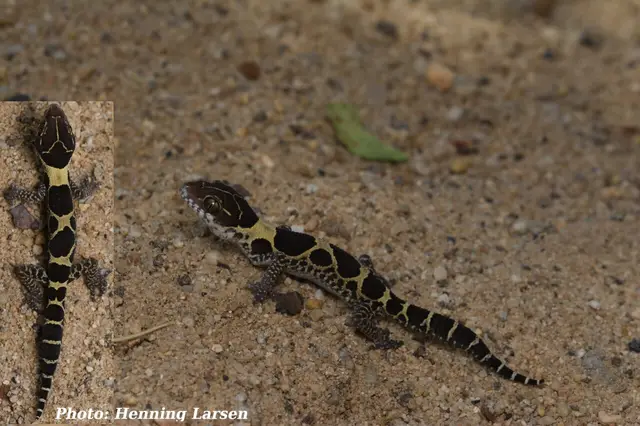
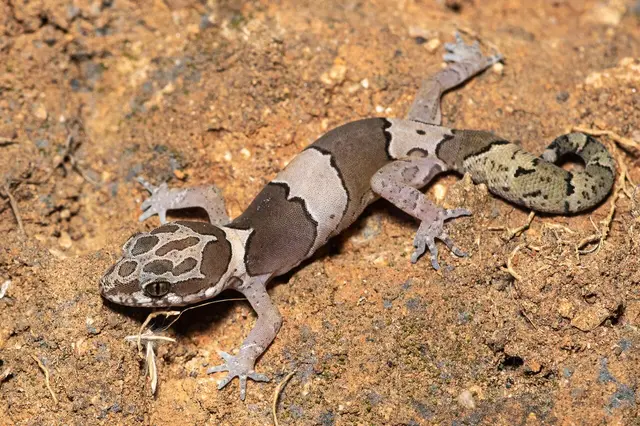
The Malayan forest gecko or banded bent-toed gecko (Cyrtodactylus pulchellus) is a nocturnal, rock-climbing gecko. After recent taxonomic revisions it is mostly associated with Penang Island in Peninsular Malaysia, though sources disagree on its range. The IUCN Red List rated it Endangered in 2018 because its range is tiny and shrinking.
How to recognise it
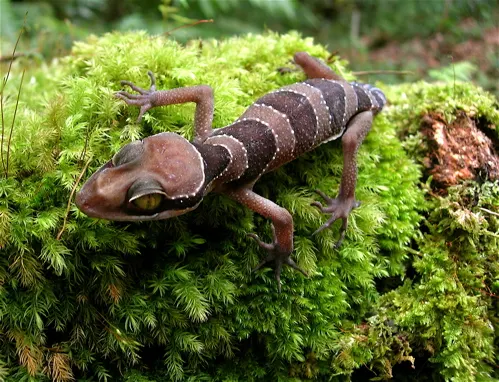
It belongs to the bent-toed geckos, a large genus with vertical pupils and toes that bend at an angle and carry no sticky pads. Older descriptions give it a light brown back crossed by broad chestnut bands with pale edges and a large, flattened head. A 2021 study notes four body bands as typical. The older descriptions were written when the name covered a much wider set of populations, so details may not fit every animal once called by this name.
The species lays eggs.
A species that shrank on paper
For a long time C. pulchellus was thought to range across the Malay Peninsula and beyond, with records from Thailand, Myanmar and India. It is now known to be the namesake of a complex of 17 named species, according to a 2021 ZooKeys study by Termprayoon and colleagues. Reports from India are regarded as errors, and a Myanmar record remains to be verified. In 2012 a revision fixed the original type locality to Penang Island.
Sources still differ on the extent of the range. The Reptile Database lists Thailand as well as Penang, while a Thai lizard guide treats the species as endemic to Penang. The IUCN assessment lists only Peninsular Malaysia.
Where it lives
The gecko is nocturnal and climbs, living reportedly in granite rock forest. It sometimes uses nearby vegetation and the outer walls of buildings. The IUCN habitat list gives rocky areas and lowland moist forest. It now survives mostly in the forested hills and the western half of Penang Island, according to the Thai lizard guide.
The IUCN estimates its extent of occurrence at about 150 square km, with an occupied area of 10 to 100 square km, in a single location.
Pins are Wikidata “endemic to” fields. Orange dots, when present, are GBIF occurrence tiles — survey bias included.
Why it is in trouble
The IUCN lists housing and urban development and collection for the pet trade as threats across the whole range, though it could not put numbers on how severe they are. The area it occupies is thought to be shrinking. The population trend is unknown and no population size has been given.
The species is commonly seen in the pet trade, but it is unclear whether all the animals sold under this name truly belong to it after the taxonomic changes.
What is being done
The 2018 assessment records no protected area for the species. Its only listed conservation action is resource and habitat protection, which is a recommendation rather than a programme. Surveys that pin down the true range would help, since the changing taxonomy makes the species harder to track.
Sources
Written for this catalog in our own words from the sources below, checked against them on 12 November 2026. Population figures are estimates and carry the year they were made. Status and assessment year: IUCN. 2026. The IUCN Red List of Threatened Species. Version 2026-1. iucnredlist.org.