Endangered
Forest spotted gecko
Cyrtodactylus speciosus
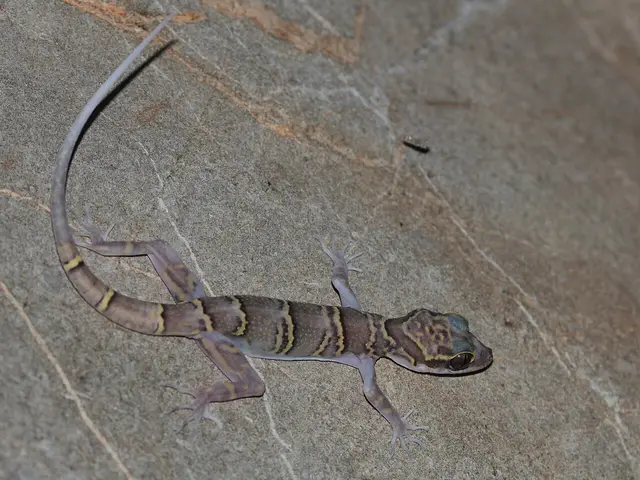
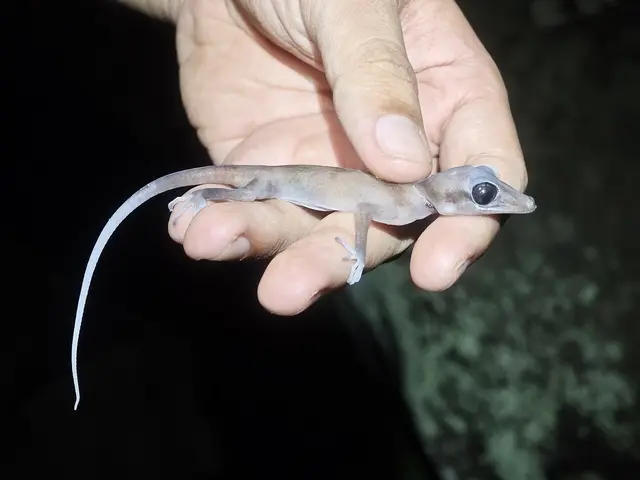
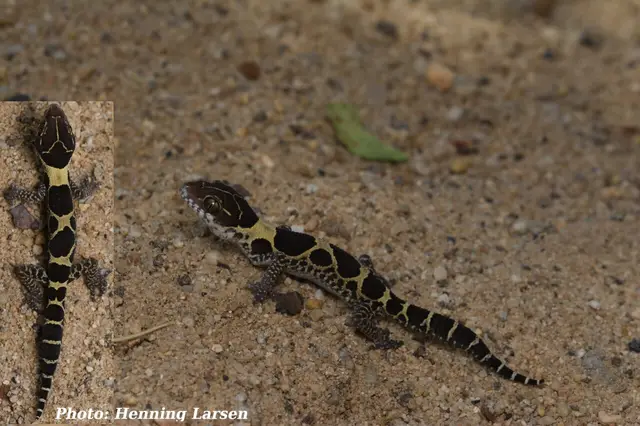
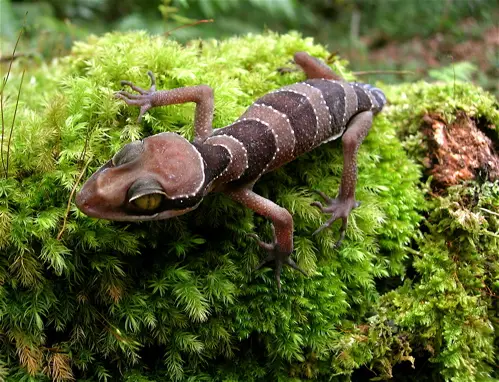
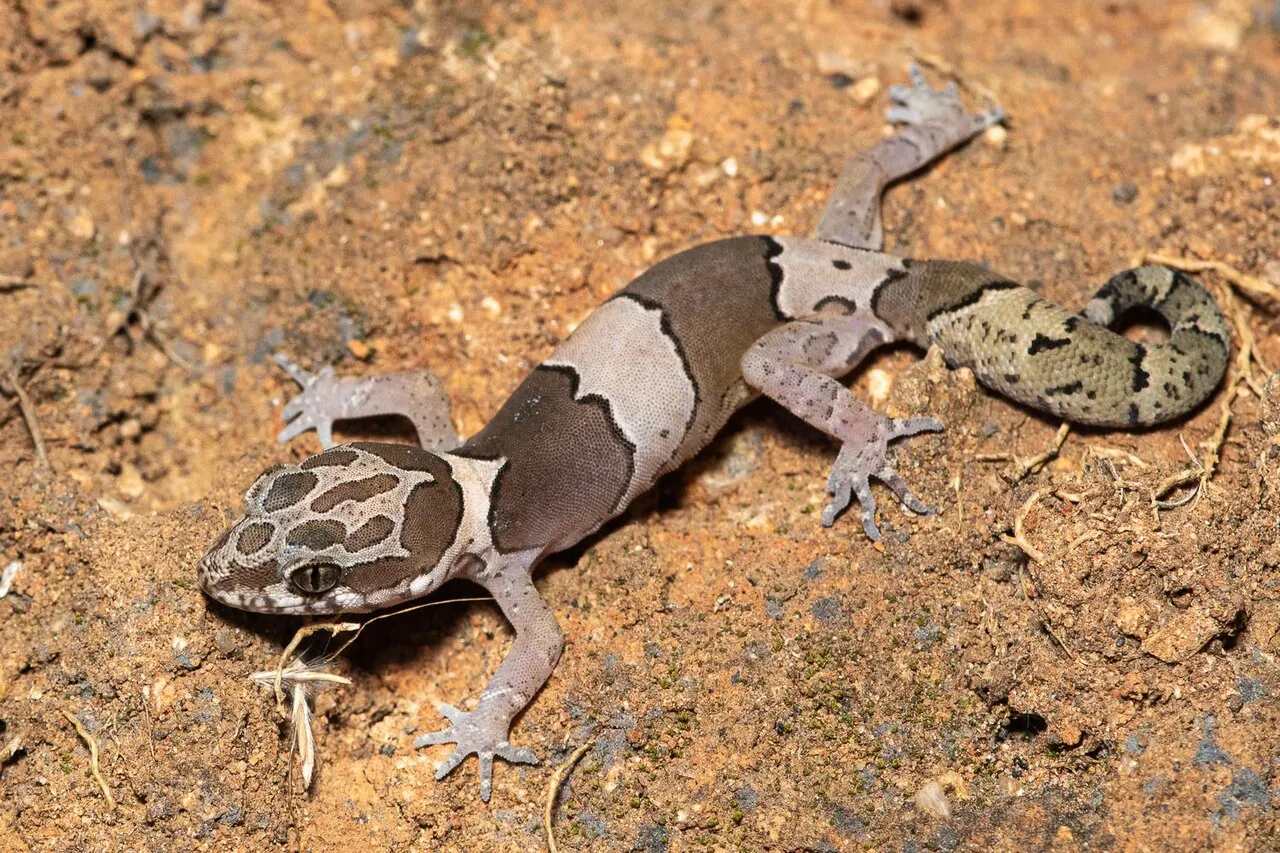
The forest spotted gecko, or Erode ground gecko (Cyrtodactylus speciosus), is a ground-dwelling gecko of the hills and scrub of southern India's Eastern and Western Ghats. The IUCN listed it as Endangered in 2021 and records a decreasing population, with habitat lost to building and development.
How to recognise it
This is a nocturnal gecko that lives on the ground. Animals around Coimbatore have two evenly spaced dark crossbars (rarely three) on the trunk, and the scales on the back are uniform in size.
Where it lives
The species was described by the naturalist Beddome in 1870, from a specimen collected at a tope (a small grove) near Erode in Tamil Nadu. For a long time it was lumped with Cyrtodactylus collegalensis, and researchers separated the two again in 2016. It has still not been found again at Erode itself.
Records now come from hills in the Eastern Ghats and parts of the Western Ghats, including the hills around Coimbatore, Tirupur and Erode. Genetically similar populations are known from the Shevaroys, about 180 km from Coimbatore, and animals tentatively matched to the species have been reported from scrub near Thanjavur on the eastern coastal plain. The IUCN gives an elevation range of 300 to 650 m and lists dry subtropical forest, dry shrubland and plantations as habitat.
Pins are Wikidata “endemic to” fields. Orange dots, when present, are GBIF occurrence tiles — survey bias included.
How it lives
It is nocturnal, becoming active after dusk, and it reportedly lays eggs. In a 2023 survey at two sites on the northern edge of Coimbatore, geckos were found in grassy patches, leaf litter and gravelly ground, always at night on unploughed land beside cultivated fields. When approached they slipped into cracks and holes or hid in ground vegetation. Juveniles moved faster, and gravid females were seen with eggs showing through the belly skin.
It is reportedly an insect eater, though no detailed diet study has turned up.
Why it is in trouble
The IUCN lists commercial and industrial areas and housing and urban areas as threats, describes the population as severely fragmented, and records ongoing decline in the area it occupies. A 2024 paper in the Journal of Threatened Taxa reported two sites near Coimbatore at about 420 and 435 m, and argued that building construction and habitat loss threaten this strictly ground-living gecko. Those sites sit among farmland, rubbish dumps, roads and grazing land.
The gecko is also hard to find: about 100 hours of night searching between April and September 2023 produced 14 sightings, roughly one every 7 hours. The paper's authors called for more surveys and for protection of remnant patches of vegetation.
What is being done
The assessment lists resource and habitat protection and site or area protection as conservation actions, and records that the species is not known from a protected area. No species-specific programme has been described.
Sources
Written for this catalog in our own words from the sources below, checked against them on 12 November 2026. Population figures are estimates and carry the year they were made. Status and assessment year: IUCN. 2026. The IUCN Red List of Threatened Species. Version 2026-1. iucnredlist.org.