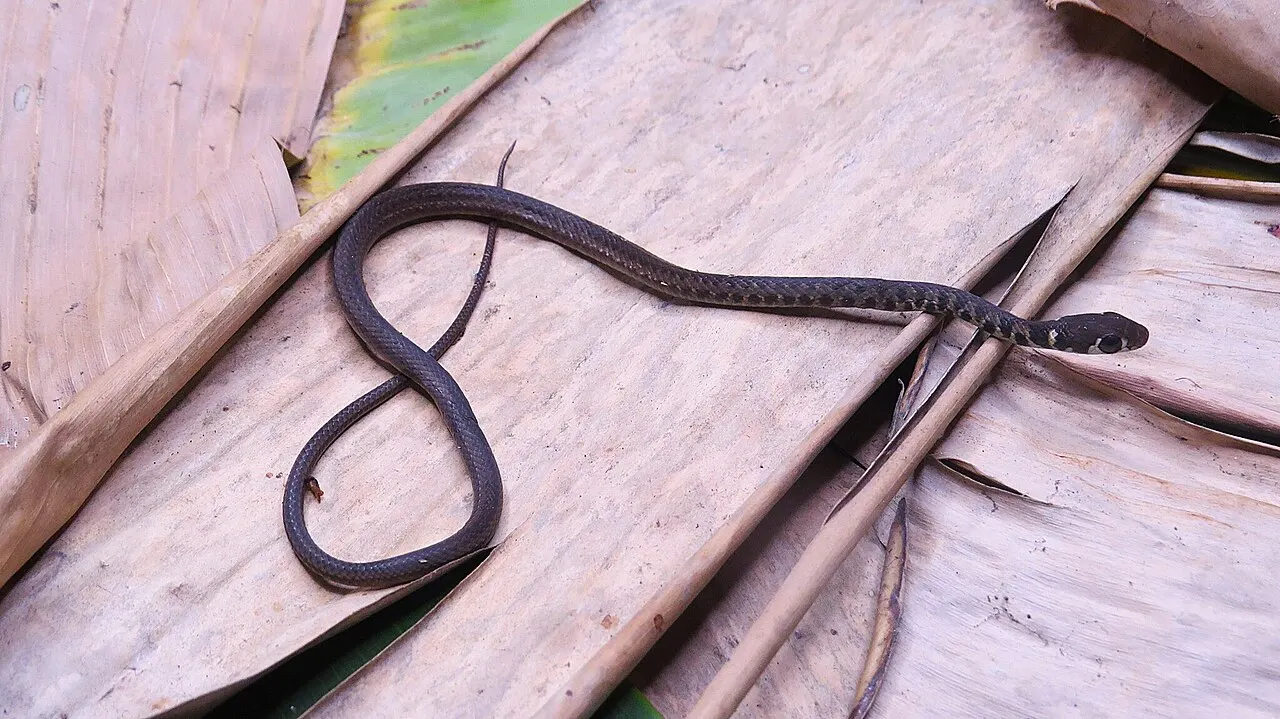
Critically Endangered
Echinanthera cephalomaculata
Echinanthera cephalomaculata
Echinanthera cephalomaculata is a small snake of north-eastern Brazil, recorded from Alagoas and Pernambuco. It was described only in 1994. The IUCN Red List assessed it as Critically Endangered in 2020, based on a single location, an extent of about 99 square kilometres and shrinking habitat.
How to recognise it
Very little has been written about what this snake looks like. The original 1994 description by Marcos Di Bernardo was based on a female measuring 561 mm (about 22 inches), and that single measurement is still the main size reference.
The scientific name combines the Greek word for head with the Latin word for spotted, a reference to markings on the head. The genus Echinanthera sits in the family Dipsadidae in the IUCN's taxonomy, though the Reptile Database and some other sources file it under Colubridae.
Where it lives
The type locality is Pedra Talhada, in the municipality of Quebrangulo, Alagoas, where the holotype was collected by F. Pedro Celestino in December 1992. The Reptile Database lists the range as Pernambuco and Alagoas, and a 2019 paper in Herpetology Notes by Freitas and colleagues reported first records for Pernambuco, calling the snake rare.
The IUCN assessment records the species as native and resident in Brazil, living in subtropical or tropical moist lowland forest, at one location with an estimated extent of occurrence of 99 square kilometres.
Pins are Wikidata “endemic to” fields. Orange dots, when present, are GBIF occurrence tiles — survey bias included.
How it lives
Almost nothing is documented. The Reptile Database lists it as egg-laying. Diet, activity pattern and breeding season are not described in the sources available.
Why it is in trouble
The assessment lists two ongoing threats, both affecting more than 90 percent of the species' range: farming, in the agro-industry category, and housing and urban development. Both convert forest to other uses. The area the snake occupies is still declining.
The population trend is listed as unknown, and no estimate of how many snakes remain has been published.
What is being done
The only conservation action listed is site and area protection, and the assessment records that the species is not known to occur in any protected area. That leaves the forest around the type locality without the legal cover a reserve would give it.
Sources
Written for this catalog in our own words from the sources below, checked against them on 12 November 2026. Population figures are estimates and carry the year they were made. Status and assessment year: IUCN. 2026. The IUCN Red List of Threatened Species. Version 2026-1. iucnredlist.org.




