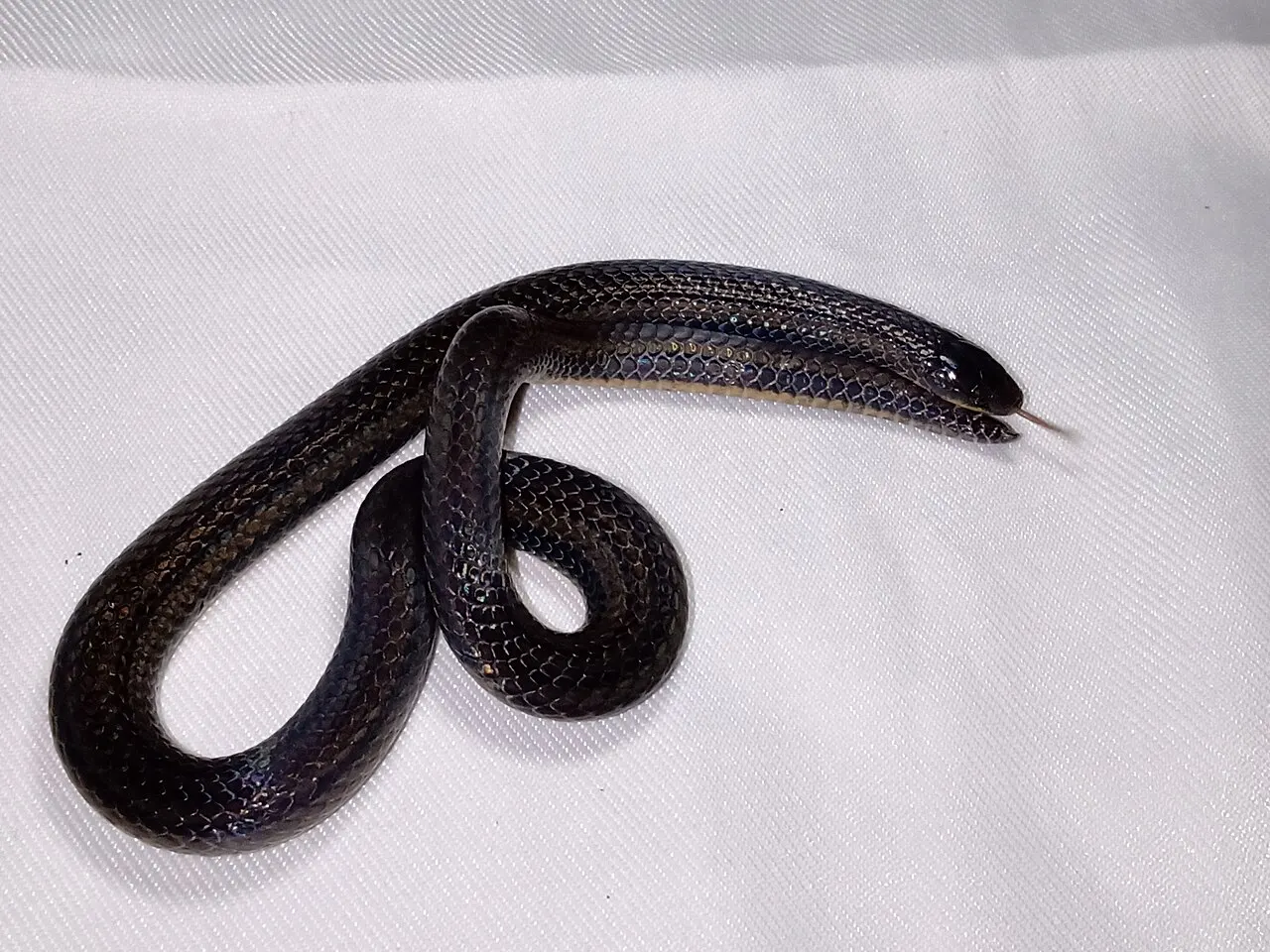
Endangered
Dary's burrowing snake
Adelphicos daryi
Dary's burrowing snake (Adelphicos daryi) is a small, secretive snake known only from the highlands around Guatemala City. The IUCN Red List rated it Endangered in 2014 because its range is tiny and shrinking under urban growth. Only a handful of places have ever produced records.
How to recognise it
Snakes in the genus Adelphicos are small, 39 to 57 cm long, and live hidden in leaf litter. Dary's burrowing snake is reportedly at the larger end of that range, with females reaching about 57 cm including the tail and males passing 40 cm.
It was described in 1982 by the herpetologists Jonathan Campbell and Linda Ford, working from 11 specimens collected at San Jorge Muxbal in the Department of Guatemala.
Where it lives
The species is endemic to Guatemala's central highlands. The IUCN gives its elevation as about 1,300 to 2,134 m, lists subtropical moist montane forest as its habitat, and estimates its entire extent of occurrence at only about 300 square km. Other accounts describe it in pine-oak woodland.
Until 2017 it was known from five localities, all within the Department of Guatemala, including the type locality, Villa Canales, Santa Catarina Pinula and sites along the highway to El Salvador. A 2020 paper in Amphibian and Reptile Conservation then reported a sixth, along the Rio Las Monjas in Guatemala City, at 1,530 m.
Pins are Wikidata “endemic to” fields. Orange dots, when present, are GBIF occurrence tiles — survey bias included.
How it lives
It is terrestrial and fossorial, which means it spends its time on the ground and underground, and it is mainly active at night. The Rio Las Monjas snake was found at 9 p.m. on 11 July 2017, beside a large rock, by a photographer on a night walk who first took it for a different snake. A herpetologist confirmed the identification from photographs.
Diet, breeding and lifespan have not been published in the sources available, so the snake's daily life remains largely unknown.
Why it is in trouble
Guatemala City has grown across much of the snake's range. The IUCN names housing and urban development as the threat, and the trend in its numbers is listed as unknown, in part because it is so rarely seen. The 2017 sighting came 19 years after the last confirmed report from the Km 14.5 site on the El Salvador road.
The new site is unprotected. Settlements restrict access to parts of it, and local people still cut firewood in other parts.
What is being done
The IUCN assessment lists site protection and habitat protection as conservation actions, and records none as already in place. Morales-Merida and Muller, who reported the 2020 record, said efforts in the area need to improve, in cooperation with local communities, and called for a national water law and less deforestation.
Sources
Written for this catalog in our own words from the sources below, checked against them on 12 November 2026. Population figures are estimates and carry the year they were made. Status and assessment year: IUCN. 2026. The IUCN Red List of Threatened Species. Version 2026-1. iucnredlist.org.




