Endangered
Grand skink
Oligosoma grande
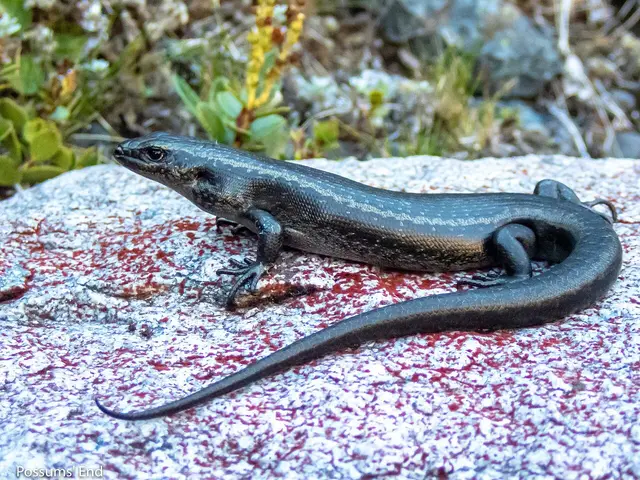
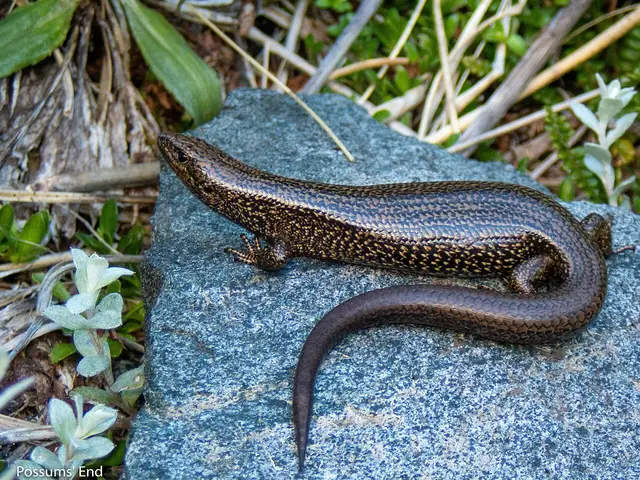
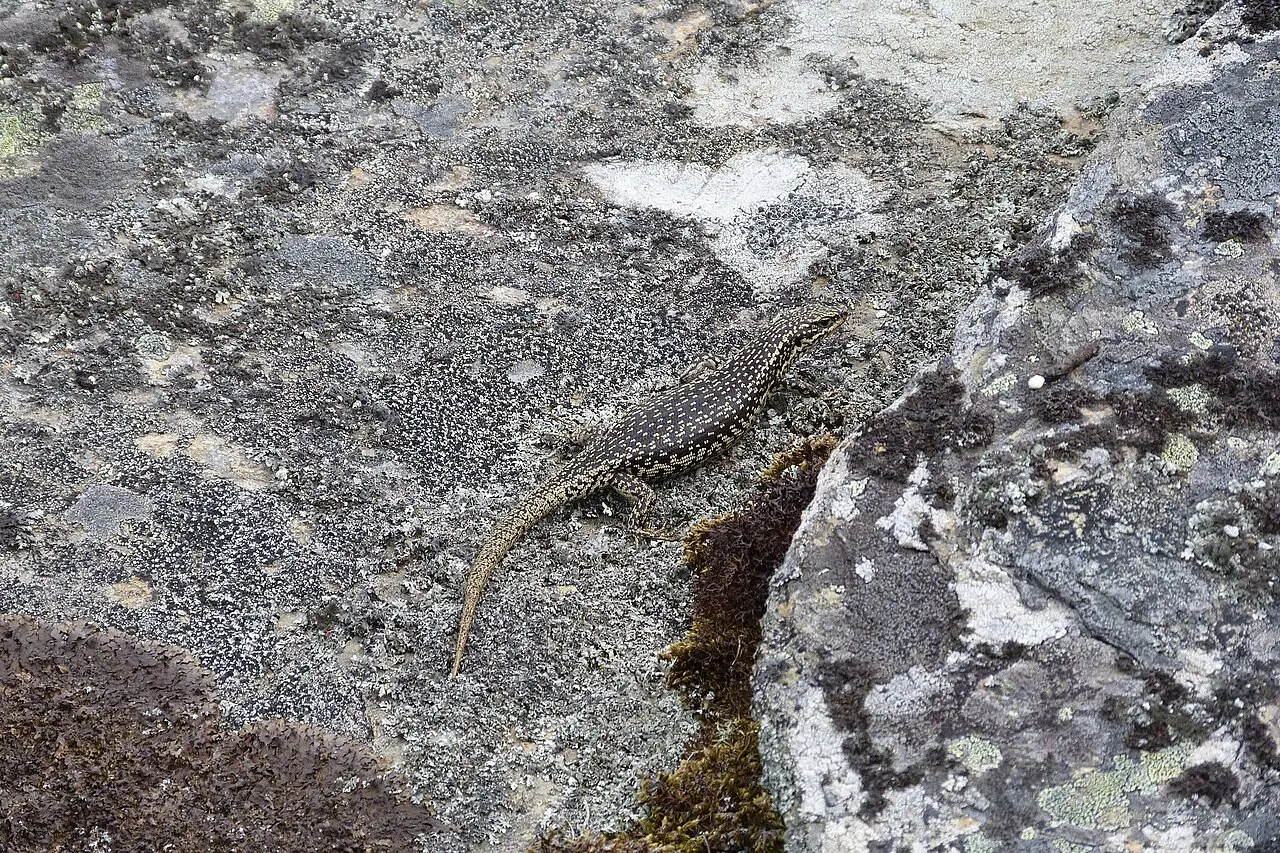
The grand skink (Oligosoma grande) is one of New Zealand's largest lizards, a black skink flecked with gold that basks on schist rock outcrops in Otago. The IUCN Red List rated it Endangered in 2019. Introduced predators are blamed for the loss of most of its range, and it survives in two main areas.
How to recognise it
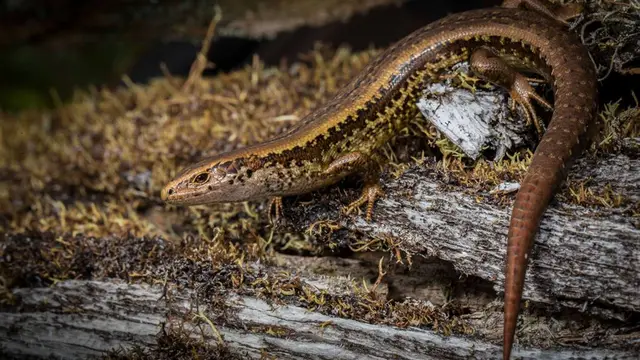
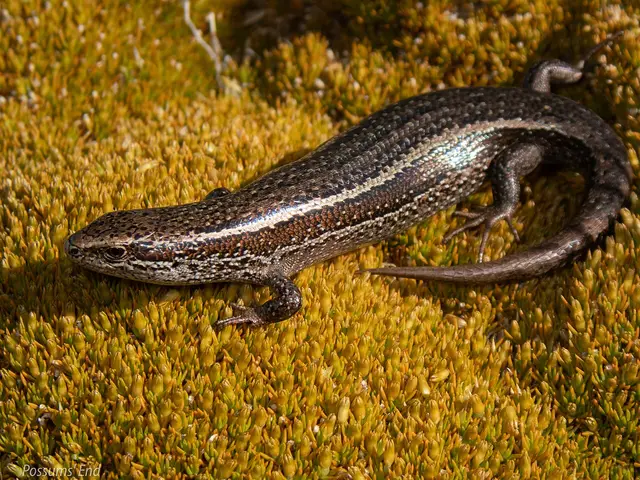
Adults reach about 115 mm from snout to vent in the eastern form and 105 mm in the western form, with a tail much longer than the body. They weigh up to about 30 g. The body is mostly black, marked with gold, yellow, cream or greenish flecks that blend with lichen-covered rock. Eastern animals tend to be larger and brighter, and western ones greener or greyer.
Where it lives
It is found only in Otago, in the South Island of New Zealand. Western populations live around Lindis Pass and Lake Hawea. Eastern ones live around Macraes Flat and Middlemarch. The species once ranged over much of Central Otago, and a 1995 estimate cited in a 2012 paper put its remaining range at about 8 percent of the presumed original.
The IUCN records just 2 locations in 2019, with an area of occupancy of about 204 square kilometres, at elevations from 200 to 1,000 m. It lives on rocky outcrops (tors) in tussock grassland and nearby pasture.
Pins are Wikidata “endemic to” fields. Orange dots, when present, are GBIF occurrence tiles — survey bias included.
How it lives
Grand skinks are active by day and spend a lot of time basking in the open. Small groups of up to about 20 share a house-sized tor, and neighbouring groups may sit 50 to 150 m apart in some places. Individuals have been seen moving as far as 403 m across tor systems.
They mature slowly, at 3 to 5 years. Mating is in February and March, and females give birth to 2 to 4 live young in late summer. Their food is mainly small flies and the fruits of native shrubs. Captive animals have lived for up to 30 years.
Why it is in trouble
Introduced mammals are the main cause. Cats, ferrets, stoats and weasels hunt lizards as a second choice to rabbits, and hedgehogs, rats and mice are also known to eat them. The IUCN names feral cats, stoats, ship rats and house mice among the current threats, along with agricultural land use.
A 2012 study at Macraes Flat showed how fast things can go wrong. At a site with no predator control, the grand skink population fell by about 85 percent over 2006 to 2008, from 76 to 11 skinks. After a stoat was seen hunting on the study rocks, nearly half the remaining skinks disappeared within five days.
What is being done
The same study ran a three-year trial of two protection methods. One was a mammal-proof fence (18 ha at one site and 9 ha at another), the other a trapping network of 400 traps along 42 km, covering about 2,100 ha. Grand skink numbers rose inside the fence and at the heart of the trapping area, while skinks at the edge of the trapping area barely changed.
The IUCN notes that control of invasive predators is in place and that part of the range lies in a protected area, and it lists awareness work among the recommended actions. It rated the trend as stable in 2019. New Zealand's Department of Conservation is reported to class the species as Nationally Endangered.
Sources
Written for this catalog in our own words from the sources below, checked against them on 12 November 2026. Population figures are estimates and carry the year they were made. Status and assessment year: IUCN. 2026. The IUCN Red List of Threatened Species. Version 2026-1. iucnredlist.org.