Critically Endangered
Aspidura ravanai
Aspidura ravanai
Ravana's rough-sided snake (Aspidura ravanai) is a small snake known only from cloud forest on the western slopes of Sri Pada in the central highlands of Sri Lanka. Scientists described it in 2017, and the IUCN Red List rated it Critically Endangered in 2021.
How to recognise it
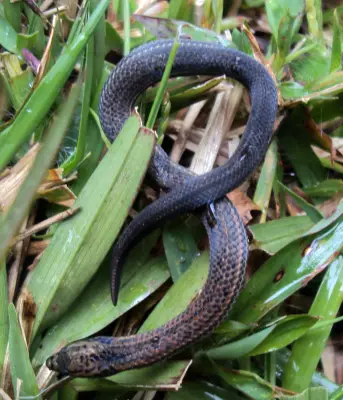
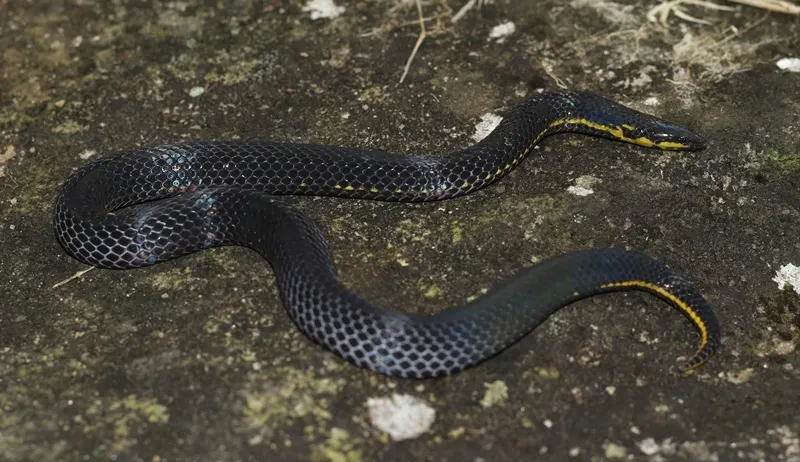
It belongs to the colubrid snakes (subfamily Natricinae) and to the genus Aspidura. Its whole back is jet black. The belly is black with bright yellow blotches, and a bright yellow line runs along the underside of the tail from base to tip. It has 15 rows of dorsal scales, 132 to 139 belly scales and keeled scales around the vent and tail base.
Adults are small. Two paratypes measured 218 mm (male) and 414 mm (female) from snout to vent. The 2017 description treated it as the eighth Aspidura species known from Sri Lanka, set apart by colour pattern, scale counts and DNA. In Sinhala it is called Ravanage madilla.
Where it lives
It is known only from the western slopes of Sri Pada Peak, in the Sri Pada sanctuary (Peak Wilderness) of the central highlands, at 1,650 to 2,000 m. The forest there is moist montane cloud forest. Seventeen specimens have been found. The IUCN counts a single location, and records that the species occurs in at least one protected area.
Pins are Wikidata “endemic to” fields. Orange dots, when present, are GBIF occurrence tiles — survey bias included.
How it lives
Specimens were mostly found in shady spots with deep leaf litter, hidden under loose soil or logs, and up to about 30 cm below ground. Little else about its diet or breeding has been published.
DNA work suggests it split from its sister lineage, Aspidura trachyprocta, at least 6.2 million years ago, while the genus as a whole began diversifying about 18 million years ago. The name honours Ravana, a king of Sri Lankan legend.
Why it is in trouble
A tiny range is the core problem. The IUCN lists habitat conversion and degradation as stresses, names tourism and recreation areas as a threat, and records a continuing decline in habitat area. The population trend is decreasing.
What is being done
The IUCN lists resource and habitat protection and captive breeding among the actions for the species, and the forest it lives in is partly inside a protected area. No population size has been estimated.
Sources
Written for this catalog in our own words from the sources below, checked against them on 12 November 2026. Population figures are estimates and carry the year they were made. Status and assessment year: IUCN. 2026. The IUCN Red List of Threatened Species. Version 2026-1. iucnredlist.org.