Endangered
Amathites Lava Lizard
Eurolophosaurus amathites
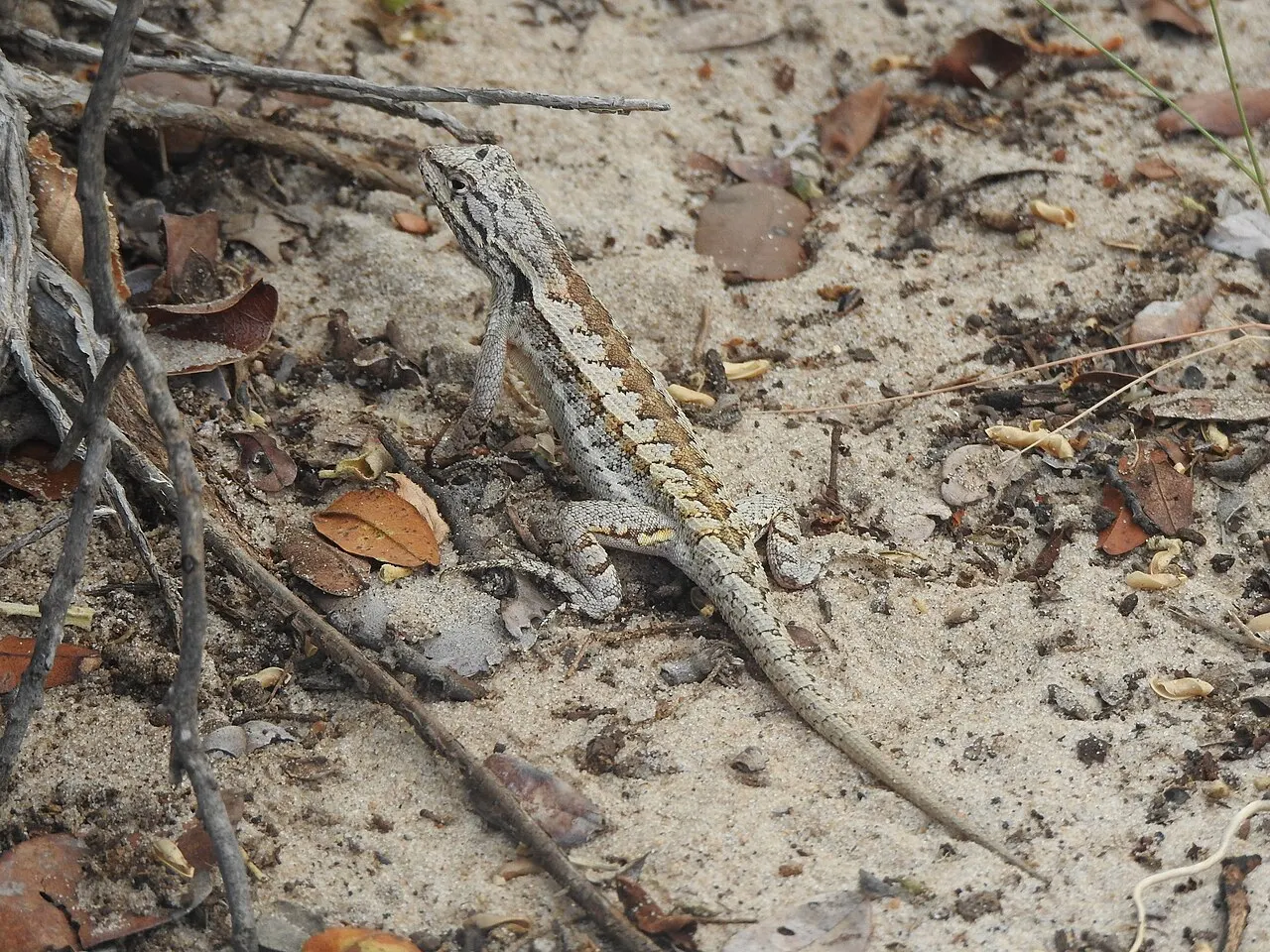
The Amathites lava lizard (Eurolophosaurus amathites) is a small ground lizard of the Caatinga in Bahia, Brazil, where it lives on sandy soil and dunes. The IUCN Red List assessed it as Endangered in 2021. It is known from three locations spread over a small area.
What kind of lizard it is
It belongs to the family Tropiduridae, the South American lava lizards. Miguel Trefaut Rodrigues described it in 1984 as Tropidurus amathites, and it was later moved to Eurolophosaurus. The species name comes from a Greek word meaning dwelling in sand. The type specimen came from Santo Inácio, in Bahia.
Where it lives
It is endemic to Brazil, and only to the state of Bahia. A 2022 review of Caatinga lizards by Uchoa and colleagues describes it as living on the sand dunes of the São Francisco River, at low to medium elevations of 405 to 587 m. The IUCN assessment gives 480 to 600 m. The review puts annual rainfall in its range at 572 to 745 mm.
The IUCN counts three locations, with a total extent of occurrence of 363 square kilometres, and lists dry tropical shrubland as its habitat. Public records are concentrated in Bahia. In the GBIF database, 482 of 545 records are from there, and several hundred are human observations.
Pins are Wikidata “endemic to” fields. Orange dots, when present, are GBIF occurrence tiles — survey bias included.
How it lives
It is a diurnal lizard that stays on the ground. Its microhabitat is the leaf litter beneath shrubs and low vegetation, under about 2 m tall. When people are nearby, it seeks shelter in the vegetation.
It eats mainly arthropods. The most important prey belong to two insect orders, Hymenoptera (ants, wasps and bees) and Blattodea (cockroaches and termites), and it also takes some plant leaves. It is oviparous, and a female usually lays two eggs at a time.
Why it is in trouble
The 2021 assessment rated it Endangered under criterion B1ab(iii), applied to a small range with a declining habitat. It records ongoing decline in the area of habitat. The threats it names are all scored as low impact: small-scale grazing and farming, mining and quarrying, and unintentional harm from small-scale harvesting. The population is not severely fragmented, but the trend is unknown and no population size has been estimated.
What is being done
The assessment notes an area-based regional management plan, and lists no other conservation actions in place. Older databases still show a Data Deficient status for the species, which predates the 2021 Endangered assessment.
Sources
Written for this catalog in our own words from the sources below, checked against them on 12 November 2026. Population figures are estimates and carry the year they were made. Status and assessment year: IUCN. 2026. The IUCN Red List of Threatened Species. Version 2026-1. iucnredlist.org.




