Endangered
St. Lucia Anole
Anolis luciae
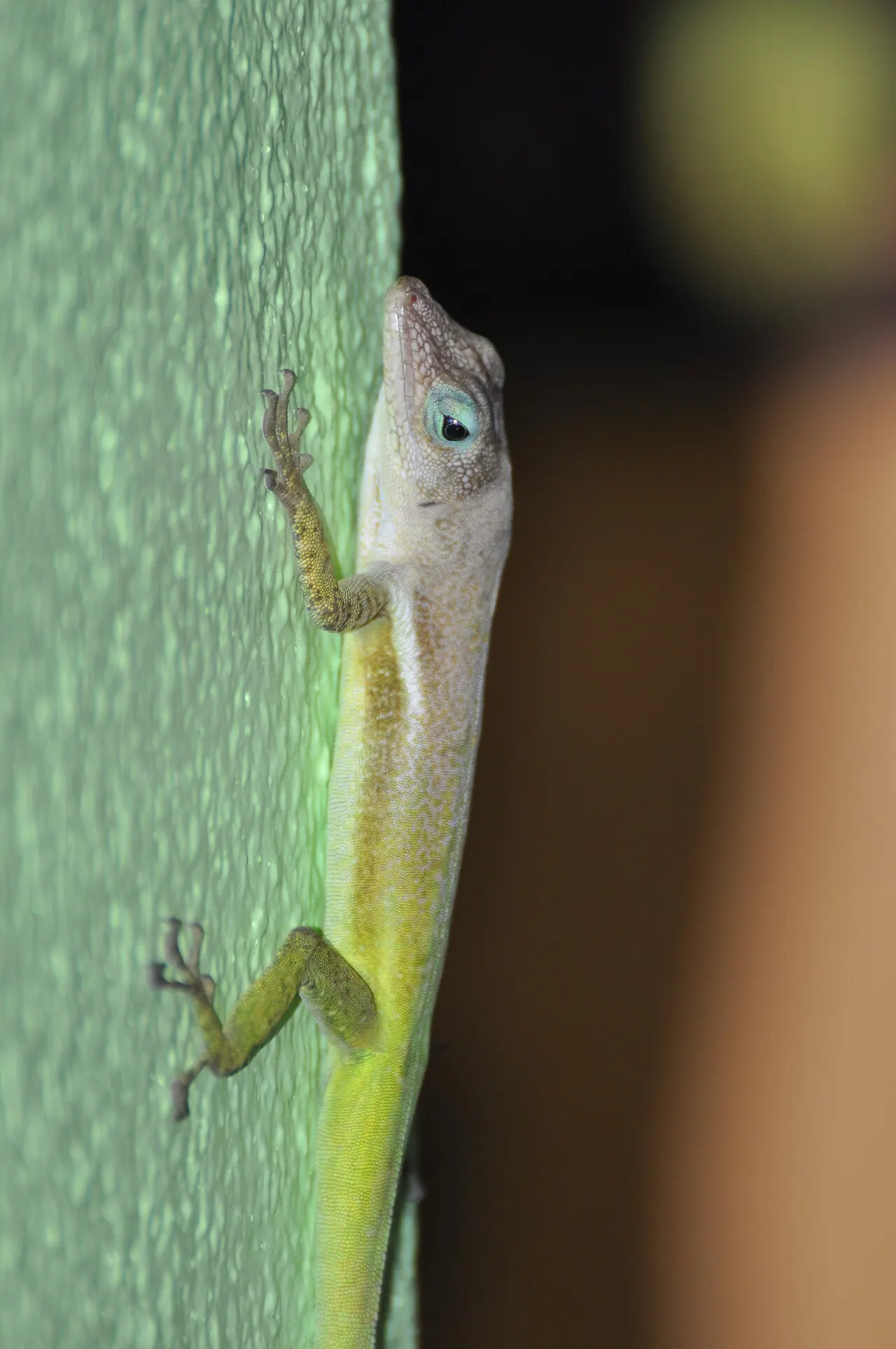
The St. Lucia anole (Anolis luciae) is a lizard found only on the Caribbean island of Saint Lucia and a few offshore islets. The IUCN Red List rated it Endangered in 2020, with a declining population. Its colour shifts from brown to bright green depending on where it lives, and introduced anoles now compete with it.
How to recognise it
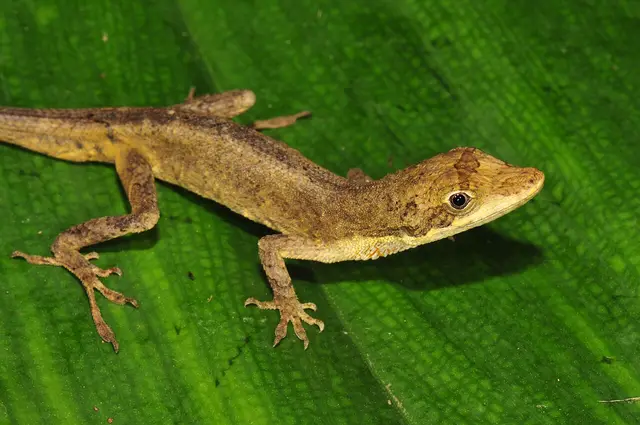
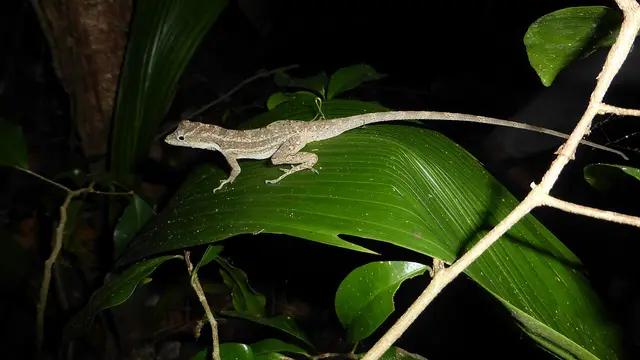
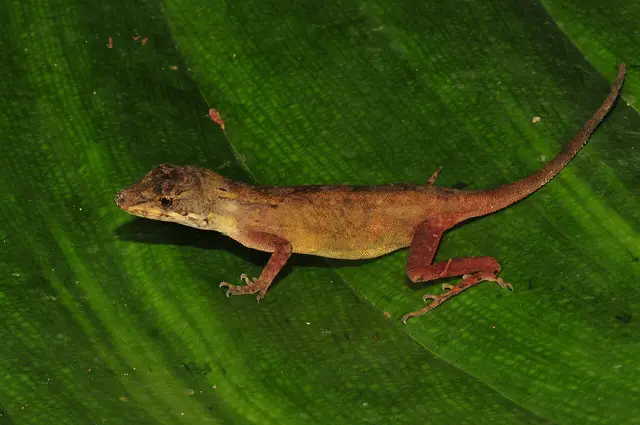
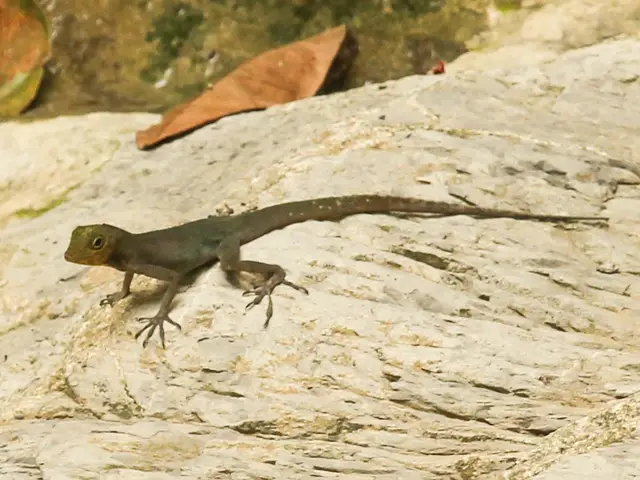
Colour varies a lot across the island. Lizards in drier habitats tend to be brown on the back, while those in wetter areas can be bright green, and some populations have blue flanks. The underside may be white or yellowish.
Males can be plain or marked with netted or chevron patterns. Females are usually duller and may carry a stripe down the middle of the back or dark chevrons.
Where it lives
The species is endemic to Saint Lucia in the Lesser Antilles. The Reptile Database lists it from the main island plus Pigeon Island and Maria Island. The IUCN counts five locations.
It is mainly a forest lizard, reportedly found from sea level up to about 700 m (2,300 ft), and the IUCN also records it from moist lowland forest, gardens, plantations, pasture, arable land and urban areas. It lays eggs.
Pins are Wikidata “endemic to” fields. Orange dots, when present, are GBIF occurrence tiles — survey bias included.
Why it is in trouble
Saint Lucia historically had just one anole species. That has changed. Watts' anole (Anolis wattsi) has spread widely across the island, the Barbados anole (Anolis extremus) may be expanding its range, and the Cuban brown anole (Anolis sagrei) has recently arrived and is dispersing. A 2019 study in the Caribbean Journal of Science, based on visual surveys and opportunistic sightings, concluded that at least two of these newcomers may be reducing the St. Lucia anole's numbers, especially in disturbed habitats.
The IUCN assessment names all three introduced anoles as threats and records a continuing decline. The criteria are based on a small range, with five locations and an estimated extent of occurrence of about 5,000 square kilometres.
What is being done
The species occurs in at least one protected area. The IUCN lists policies and regulations, and control of invasive and problematic species, among the conservation actions in place or needed.
Sources
Written for this catalog in our own words from the sources below, checked against them on 12 November 2026. Population figures are estimates and carry the year they were made. Status and assessment year: IUCN. 2026. The IUCN Red List of Threatened Species. Version 2026-1. iucnredlist.org.