Endangered
Dark Chuckwalla
Phymaturus tenebrosus
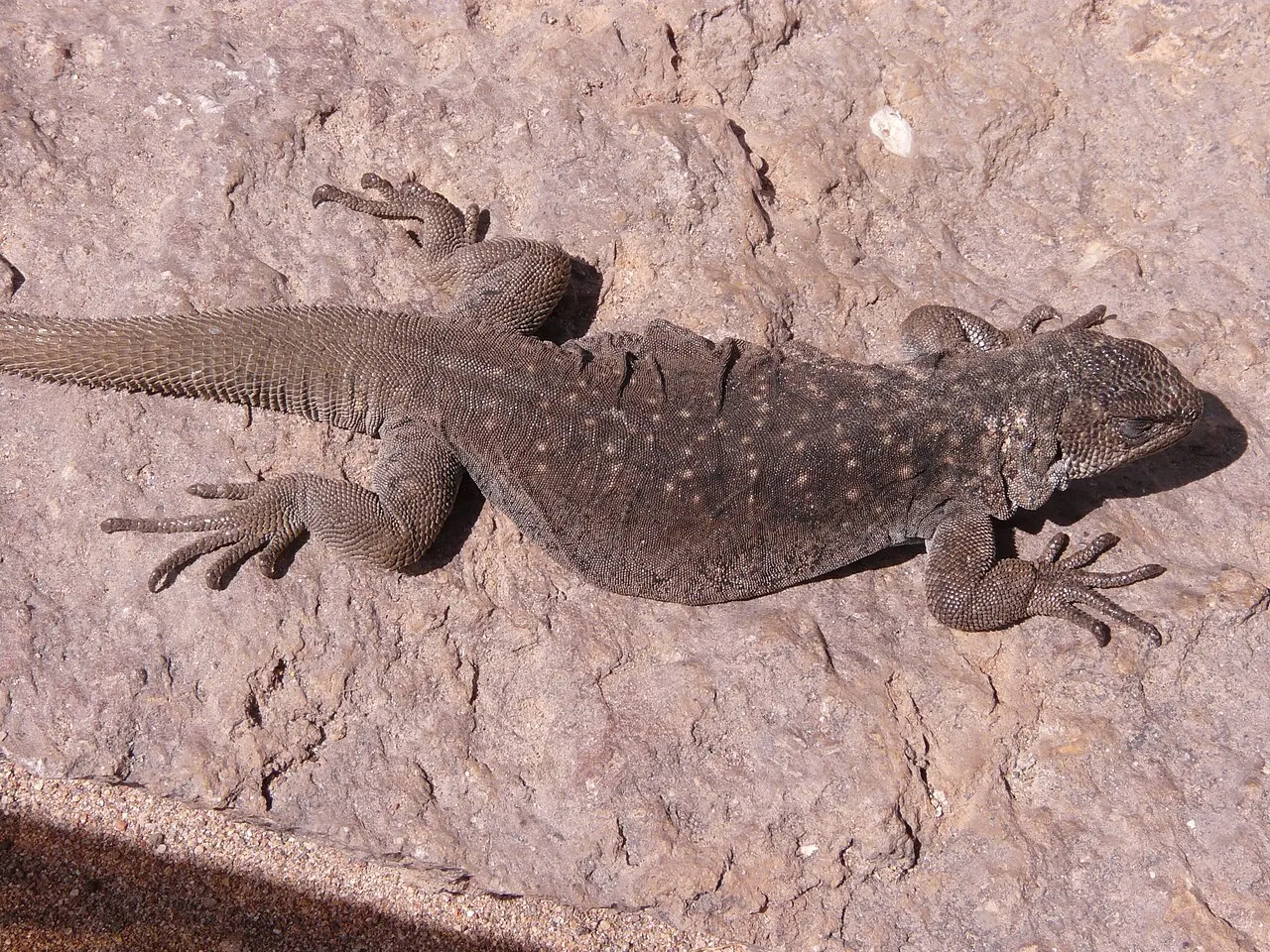
The dark chuckwalla (Phymaturus tenebrosus) is a rock-dwelling, plant-eating lizard from north-western Patagonia in Argentina. Mostly black, it is known only from Rio Negro Province. The IUCN Red List classed it as Endangered in 2017, citing a declining population and a shrinking area of habitat.
How to recognise it
Most dark chuckwallas are mostly black, some with very fine, sparse white spots, and some are dark brown. Its closest look-alikes in the genus are Phymaturus zapalensis and Phymaturus calcogaster, which have denser spotting or larger white spots. Lobo and Quinteros described it in 2005.
Adults are stocky. In a 2019 study of 34 adults near Villa Llanquin, the average snout to vent length was about 92 millimetres and body mass ranged from roughly 14 to 35 grams. Lizards matured at about 85 millimetres (females) and 87 millimetres (males).
Where it lives
The species is known only from Rio Negro Province, Argentina. The type locality lies about 20 kilometres south of Cerro Alto on National Road 40. The Red List counts one location and gives an elevation of 900 to 1,100 metres.
It lives on rocky outcrops and cliffs. The 2019 study site near Villa Llanquin, at about 1,200 metres, has a mean annual air temperature of about 10.7 degrees Celsius and annual rainfall of about 343 millimetres. The Red List does not record the species from any protected area.
Pins are Wikidata “endemic to” fields. Orange dots, when present, are GBIF occurrence tiles — survey bias included.
How it lives
Dark chuckwallas give birth to live young, and the Reptile Database describes the species as plant-eating. They mature late, at 7 to 9 years, and the maximum lifespan reported is 16 years.
A 2019 PeerJ study by Cabezas-Cartes and colleagues found it is a poor thermoregulator. Active lizards had a median body temperature of 26.3 degrees Celsius, well below their preferred temperature of around 35 degrees, and they tolerated temperatures from about 7.6 to 42.9 degrees. The study concluded the lizard may tolerate, or even benefit from, modest warming. That ran against an earlier 2010 prediction of high extinction risk from climate change, and the sample was small and from one site.
Why it is in trouble
The Red List records a declining population and a shrinking area of habitat, and lists increased fire frequency and small-holder grazing, ranching or farming as ongoing threats whose extent is unknown. The 2019 study names the lizard's live-bearing reproduction and rock-dwelling, plant-eating lifestyle among factors behind its threatened status.
No population size has been estimated, and the assessment records no protected area holding the species.
Sources
Written for this catalog in our own words from the sources below, checked against them on 12 November 2026. Population figures are estimates and carry the year they were made. Status and assessment year: IUCN. 2026. The IUCN Red List of Threatened Species. Version 2026-1. iucnredlist.org.




