Endangered
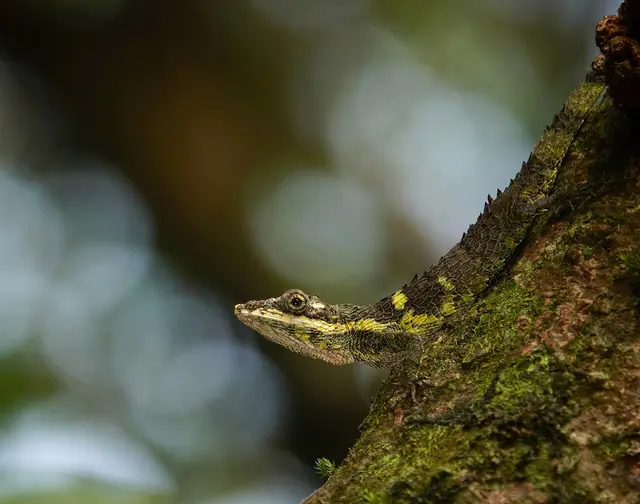
Cophotis ceylanica
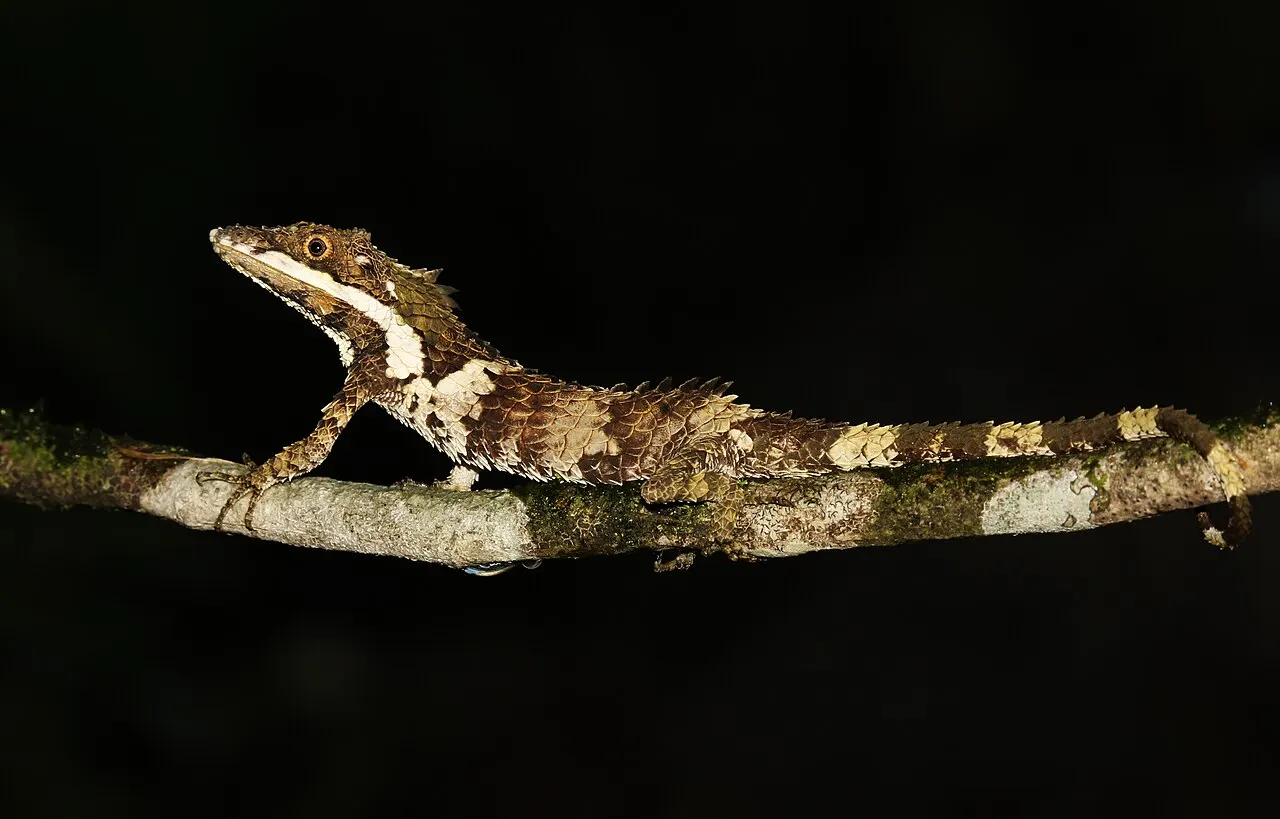
Cophotis ceylanica
The Ceylon deaf agama or pygmy lizard (Cophotis ceylanica) is a slow-moving, live-bearing lizard found only in the cool, misty highlands of Sri Lanka. The IUCN Red List classed it as Endangered in 2021, and its mountain forest range is small, patchy and under pressure.
How to recognise it
It has a flattened-sided body, a narrow head, a long crest down the back of the neck and a short prehensile tail that can grip a twig. There's no eardrum, which explains the name deaf agama.
The back is olive green with darker bands, and some animals have orange patches.
Where it lives
It's endemic to the montane forests of Sri Lanka. Recorded localities include Nuwara Eliya, Horton Plains, Hakgala, Adam's Peak and the Knuckles range. The Red List counts three locations, gives an elevation of 1,300 to 2,200 m and estimates its extent of occurrence at about 565 square km. It lives in moist montane forest and has also been recorded in plantations.
Pins are Wikidata “endemic to” fields. Orange dots, when present, are GBIF occurrence tiles — survey bias included.
How it lives
A 2018 study by Keerthirathna and Mahaulpatha in Horton Plains National Park cloud forest found these lizards mostly on branches, none below 1 m and most at 2 to 3 m, with the most on the shrub Sarcococca brevifolia. About 72% perched on thin branches, 1 to 2 cm across. Air temperature at perches averaged about 20 degrees C.
Males bob their heads when threatened and are aggressive toward each other. Females bear four or five young at a time, each about 47 to 50 mm long, between May and August.
Why it is in trouble
The Red List records a continuing decline in both the population and the area it occupies. The threats it lists include small-holder farming, roads and railways, tourism developments, pesticides and herbicides, drought and temperature extremes, and deliberate collection of the animal.
A January 2026 Mongabay report describes captive-bred Cophotis lizards (this species and the Knuckles pygmy lizard) advertised on international trading sites since 2015, at roughly $500 to $1,000. A Sri Lankan researcher quoted there says such ads are seen regularly. The lizards are strictly protected under Sri Lanka's Flora and Fauna Protection Ordinance.
What is being done
Recorded actions are site management plus national and international measures. The species occurs in at least one protected area and is listed in CITES Appendix I. A 2025 study in Integrative Conservation found that more than 40% of the most critical habitat for Sri Lankan agamid lizards lies outside protected areas.
Sources
Written for this catalog in our own words from the sources below, checked against them on 12 November 2026. Population figures are estimates and carry the year they were made. Status and assessment year: IUCN. 2026. The IUCN Red List of Threatened Species. Version 2026-1. iucnredlist.org.