Endangered
Blackbelly garter snake
Thamnophis melanogaster
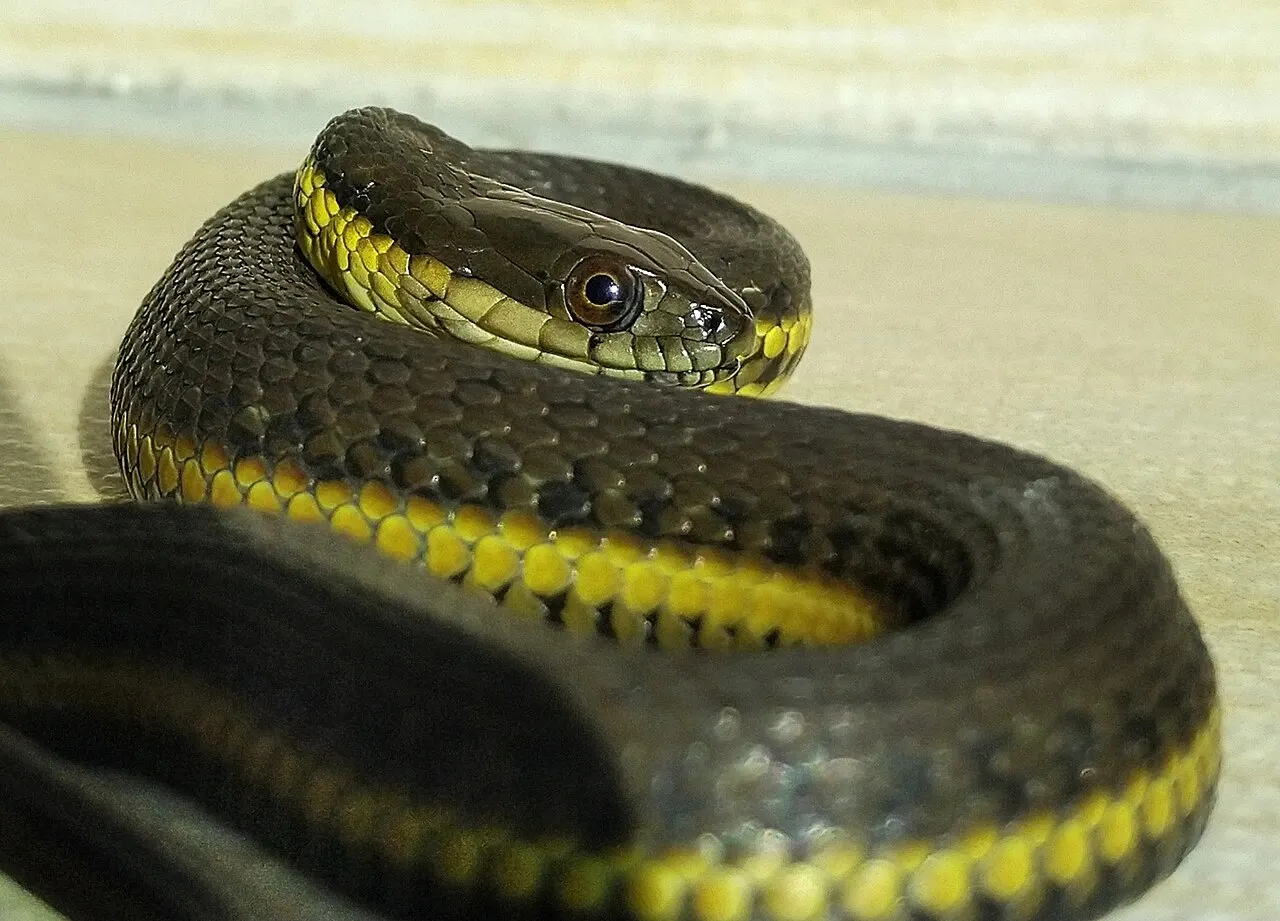
The blackbelly garter snake (Thamnophis melanogaster) is a semiaquatic snake found only in Mexico, mostly on the Central Mexican Plateau. It hunts underwater along lake shores, streams and wetlands, and takes its name from the dark stripe down its belly. The IUCN Red List rated it Endangered in 2007, citing a decline in habitat.
How to recognise it
Colour varies a lot between populations. The back can be brown, olive, gray, tan, red, orange or pink, with or without rows of dark spots, and some populations have a pale stripe down the spine while others do not. The belly usually carries a black stripe along its centre, which is where both the common and scientific names come from.
It is a fairly small snake. In a sample of 686 animals taken at two sites in 2005 to 2011, the average length from snout to vent was about 29 cm and the average weight about 19 g, though that figure includes young animals. The biggest measured 66 cm.
Where it lives
The species is endemic to Mexico. Records come from states including Mexico City, Michoacan, Jalisco, Guanajuato, Queretaro, Durango, Zacatecas, San Luis Potosi, Hidalgo and Chihuahua. Four subspecies are recognised, one of them named from the town of Lerma and another from Lake Chapala.
Records span roughly 1,150 m to above 2,500 m (a study site at Lerma sits at 2,573 m). Habitat listed by the IUCN includes freshwater marshes and small pools, permanent streams, and areas of subtropical dry and moist forest. It has reportedly not been found more than about 15 m from water.
Pins are Wikidata “endemic to” fields. Orange dots, when present, are GBIF occurrence tiles — survey bias included.
How it lives
This snake feeds underwater. Fish are its main food, and it also takes tadpoles, frogs, leeches and earthworms. It reportedly eats soft-bodied crayfish too, an unusual habit among garter snakes. At Lerma, a wetland, researchers found fish in most snakes that had eaten, plus a few with leeches or axolotls, while snakes at Lake Cuitzeo had eaten only fish. Only about one snake in eight held prey when sampled.
Females give birth to live young rather than laying eggs.
Why it is in trouble
The Red List counts the population as decreasing, and the Endangered rating (criterion A2c+4c) rests on a reduction in numbers linked to loss of habitat. The assessment does not name specific threats. A 2019 PeerJ paper on three Mexican garter snakes, this one included, cites modelling that projects their potential range shrinking as climate, vegetation and land use change.
What is being done
The snake occurs in at least one protected area. The assessment lists site and area management and habitat restoration as the conservation actions needed, and calls for research on population trends, life history, threats and the effect of conservation measures.
Sources
Written for this catalog in our own words from the sources below, checked against them on 12 November 2026. Population figures are estimates and carry the year they were made. Status and assessment year: IUCN. 2026. The IUCN Red List of Threatened Species. Version 2026-1. iucnredlist.org.




