Endangered
Long-toed skink
Oligosoma longipes
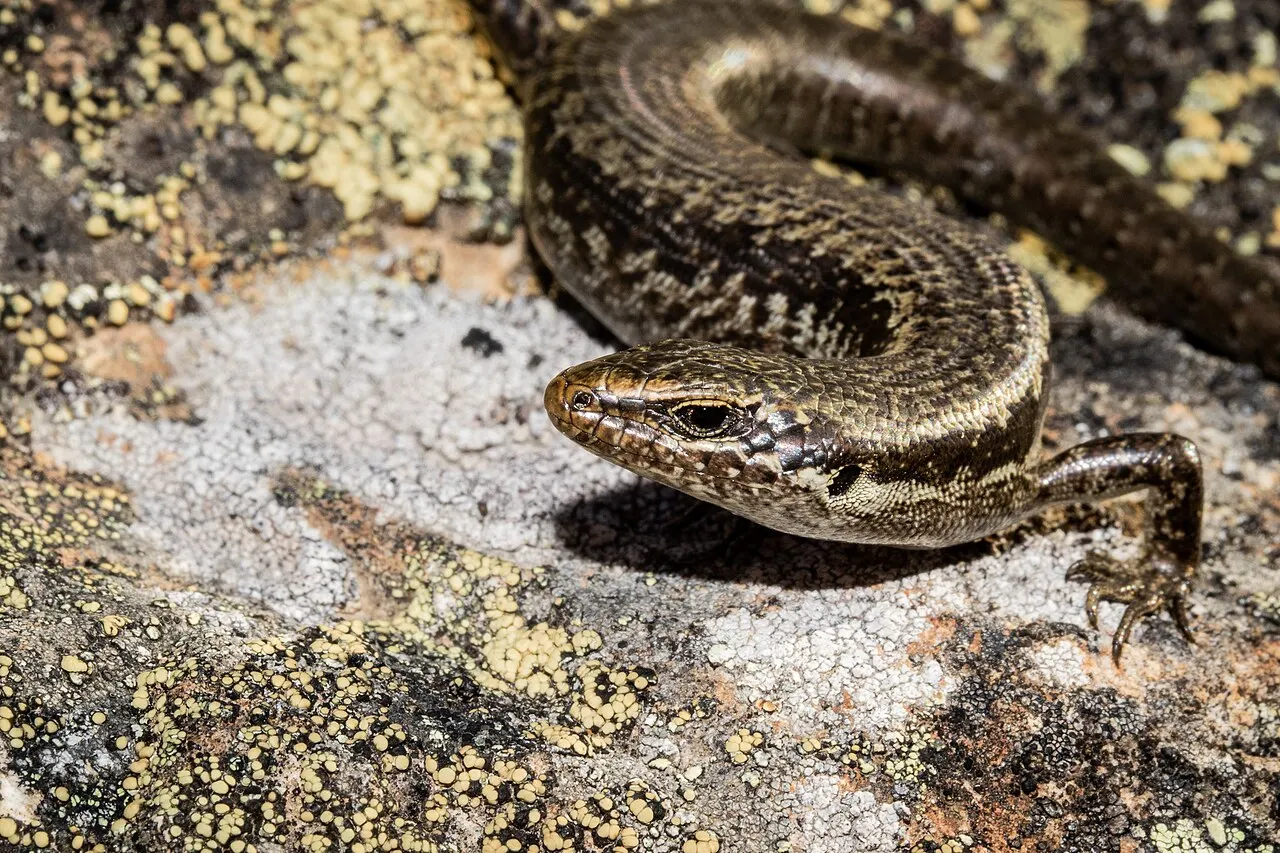
The long-toed skink (Oligosoma longipes) is a small, sun-loving lizard of New Zealand's South Island, living on dry rocky slopes at a few scattered sites. The IUCN Red List classed it as Endangered in 2019, citing a tiny range and a population that is fragmented and declining.
How to recognise it
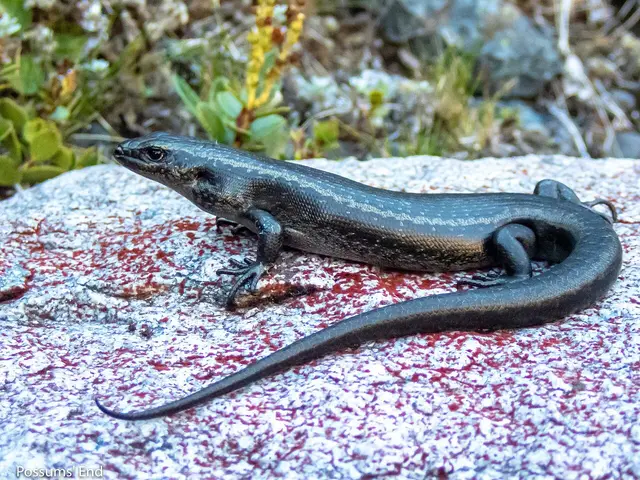
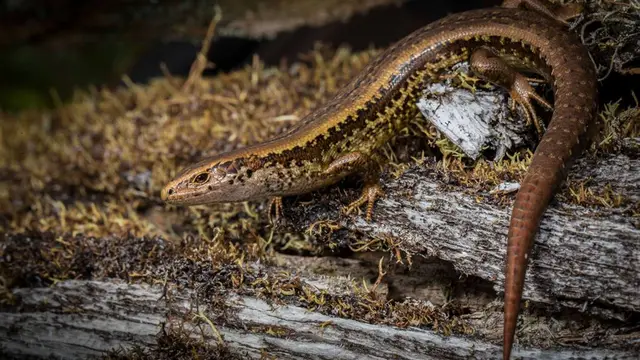
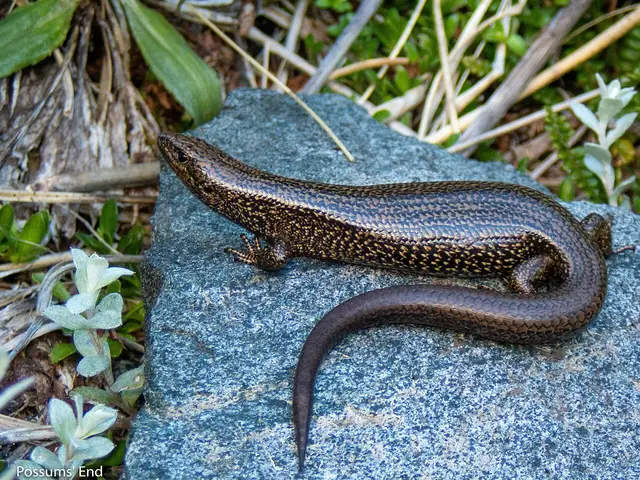
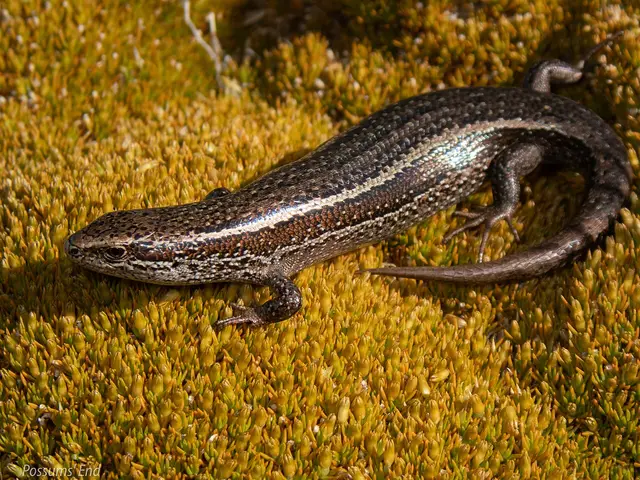
The name fits: the toes and the tail are both long, and the tail is much longer than the body. The back is grey to brownish-grey with pale grey and brown blotches, sometimes with a faint or broken brown stripe down the middle. A thin grey stripe runs from the ear towards the tail, with a notched brown band below it. The belly is usually plain grey, sometimes speckled with dark spots, especially under the chin.
Maximum body length (snout to vent) is given as about 70 mm in one source and up to 80 mm in another. It can be confused with the Southern Marlborough grass skink, which shares some of its sites, but that lizard has shorter toes and tail.
Where it lives
Patterson described the species in 1997. It is a species complex, and its taxonomy is in flux. The IUCN assessed it as a single species and recognises distinct northern and southern clades within it. It describes the range as the foothills of the north-eastern Southern Alps across Nelson, Marlborough and Canterbury, with an extent of occurrence of about 732 square km and an occupied area of roughly 48 square km.
The New Zealand Herpetological Society applies a narrower definition. It calls the species the northern long-toed skink, with several scattered populations in inland and southern Marlborough, and treats the southern lizards of inland Canterbury (the Roamatimati skink) as a separate taxon that was previously included. Whether the northern skink also occurs in northern Canterbury needs survey.
The habitat is rocky and dry: screes, gravel or boulder slopes, dry streambeds, eroding stream terraces and rock piles among low vegetation.
Pins are Wikidata “endemic to” fields. Orange dots, when present, are GBIF occurrence tiles — survey bias included.
How it lives
It is active by day and relies strongly on the sun for warmth, emerging from rock retreats to hunt when conditions allow. It eats small invertebrates and the berries or fruit of native plants. Almost nothing is recorded about how it breeds, how long it lives or how it behaves socially.
Why it is in trouble
The IUCN describes the population as severely fragmented and still declining, with the largest subpopulation estimated at no more than 500 animals. Its list of conservation actions includes invasive species control, which points to introduced predators, but no specific cause of decline is recorded in its structured data. A lack of recent sightings has left the skink's status in New Zealand uncertain.
What is being done
The New Zealand Herpetological Society says the skink is not currently managed and expects surveys within its range in the coming years.
Its national status is disputed in the sources. The Department of Conservation listed it as Nationally Vulnerable in 2012, and the IUCN assessment also cites that rank. The herpetological society says the most recent classification lists it as Data Deficient because of few recent sightings, and that herpetologists expect it to stay Nationally Vulnerable after more study.
Sources
Written for this catalog in our own words from the sources below, checked against them on 12 November 2026. Population figures are estimates and carry the year they were made. Status and assessment year: IUCN. 2026. The IUCN Red List of Threatened Species. Version 2026-1. iucnredlist.org.