Endangered
Angel Island chuckwalla
Sauromalus hispidus
The Angel Island chuckwalla, also called the spiny chuckwalla, is a very large, plant-eating lizard found only on a few islands in Mexico's Gulf of California. The IUCN Red List classed it as Endangered in 2019, with a shrinking population estimated at 1,000 to 5,000 animals.
How to recognise it
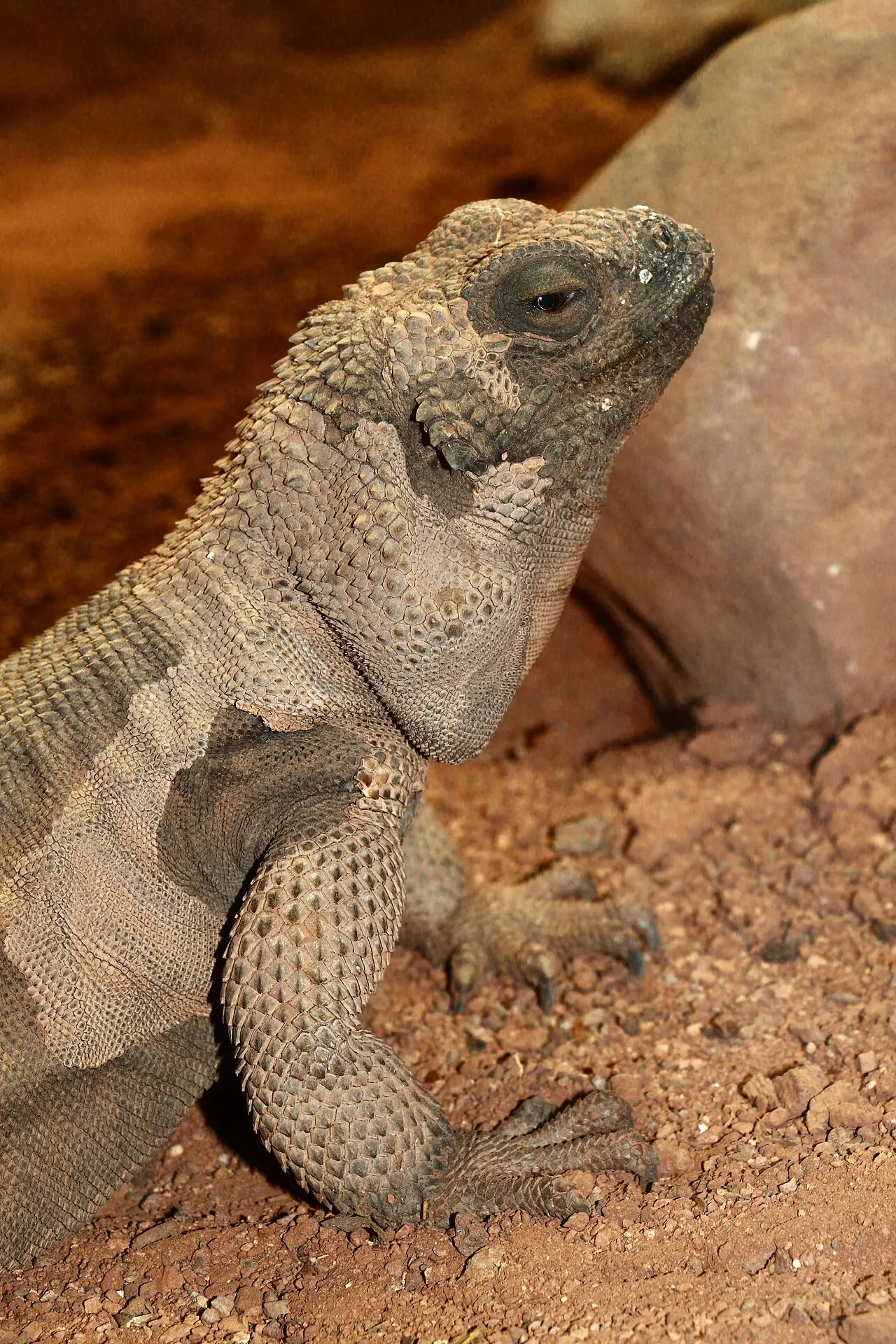
This is reportedly the second-largest chuckwalla. Adults can reach about 44 cm in body length, around 64 cm with the tail, and 1.4 kg, and island animals are said to be two or three times the size of their mainland relatives. Other sources give smaller figures: a San Diego herpetology atlas lists up to 317 mm from snout to vent, and the original 1891 description gave an average of about 540 mm in total length for four specimens.
The body is dark brown with black cross bands. With age the bands reportedly fade and the lizard turns a plain dark brown or black. The scales on its neck and back end in spines, which is where the name hispidus (thorny) comes from.
Where it lives
The species is native to Isla Ángel de la Guarda, a rugged island of about 931 square km with no permanent fresh water, and is also listed from smaller islands nearby: Mejía, Granito, Pond and the two San Lorenzo islands. Smith Island and several others in Bahía de los Ángeles are believed to hold introduced animals. The IUCN assessment gives an upper elevation of 1,316 m.
It favours lava flows and rocky ground with crevices, usually among creosote bush and cholla cactus. Isla Ángel de la Guarda is a protected reserve.
Pins are Wikidata “endemic to” fields. Orange dots, when present, are GBIF occurrence tiles — survey bias included.
How it lives
Chuckwallas are active by day and bask in the morning, and through winter days. This one eats mainly creosote bush and cholla, plus leaves, fruit and flowers of other plants. Insects may be a minor extra.
When threatened it runs for a crevice, gulps air to swell its body, and wedges itself in so it is hard to pull out. Mating runs from April to July. Females lay 5 to 16 eggs between June and August, and the eggs hatch in late September. Lifespans of 25 years or more are reported.
Why it is in trouble
Its whole world is a handful of dry islands, so one bad run of weather can hit the whole species. The Red List assessment names drought, temperature extremes and storms or flooding as ongoing threats that can make numbers swing, and expects habitat change in future. Feral cats are listed as an ongoing threat causing slow, significant declines, and goats, mice and rats are also listed as introduced animals present. Collecting for pets, food and medicine is recorded as a past pressure that could return. The population trend is decreasing.
People have also moved chuckwallas around. The Seri (Comca'ac) used them as food and reportedly carried a few to other islands in Bahía de los Ángeles, where most of those groups appear to have died out. In the early 2000s, hobby breeders reportedly crossed this species with the San Esteban chuckwalla to produce pets.
What is being done
Nearly all of the population (91 to 100 percent) lies inside protected areas, an area management plan exists, and invasive species control is recorded as in place. A San Diego herpetology atlas notes Mexico lists the species as Threatened under its national rules (NOM-059). The assessment records no recovery plan, no systematic monitoring scheme and no captive breeding programme, and it lists awareness work as a needed action.
Sources
Written for this catalog in our own words from the sources below, checked against them on 12 November 2026. Population figures are estimates and carry the year they were made. Status and assessment year: IUCN. 2026. The IUCN Red List of Threatened Species. Version 2026-1. iucnredlist.org.




