Endangered
Globe-horned chameleon
Calumma globifer
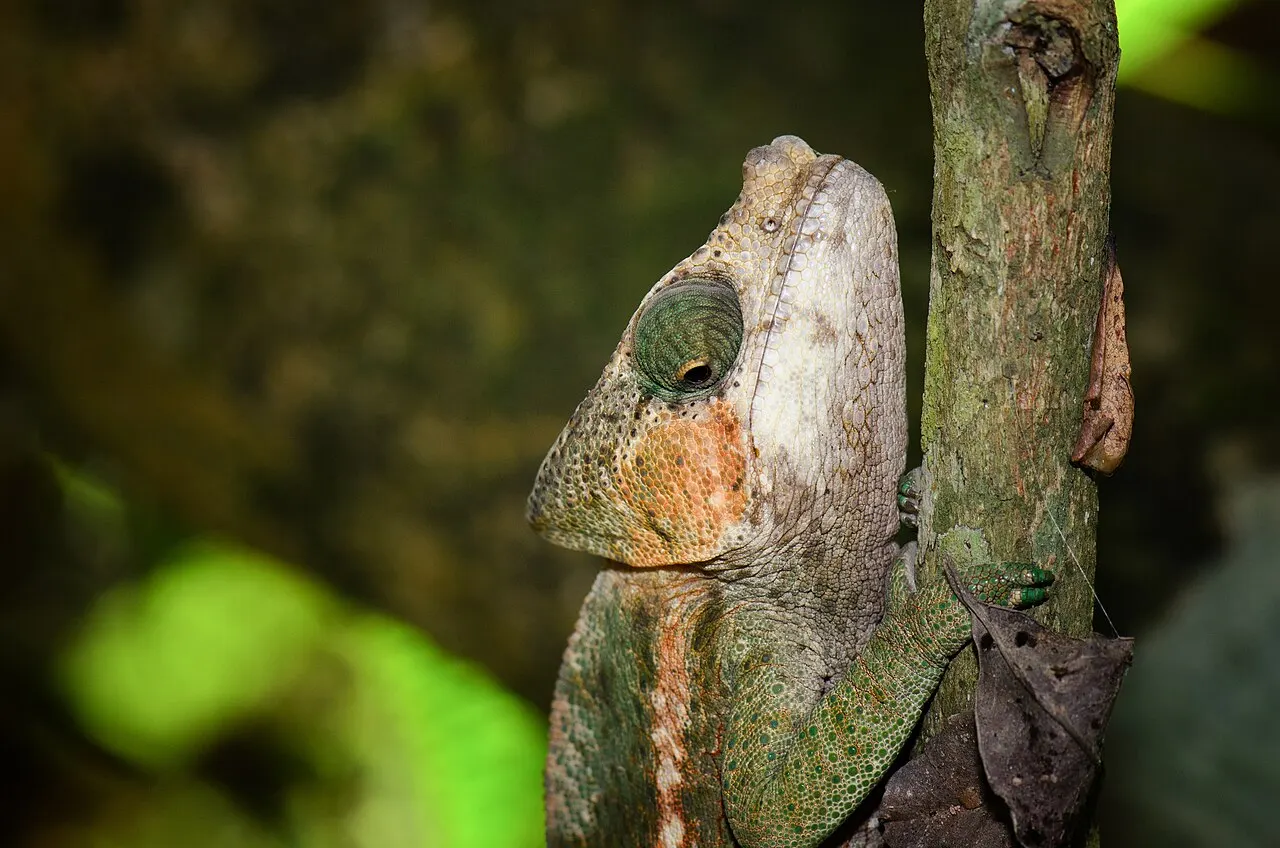
The globe-horned chameleon (Calumma globifer) is a large forest chameleon from the eastern highlands of Madagascar. Males carry two knob-like growths on the snout. The IUCN Red List has rated it Endangered since its 2011 assessment, mainly because the rainforest it depends on keeps shrinking.
How to recognise it
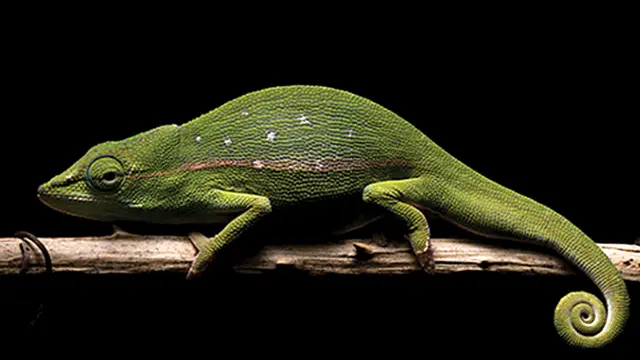
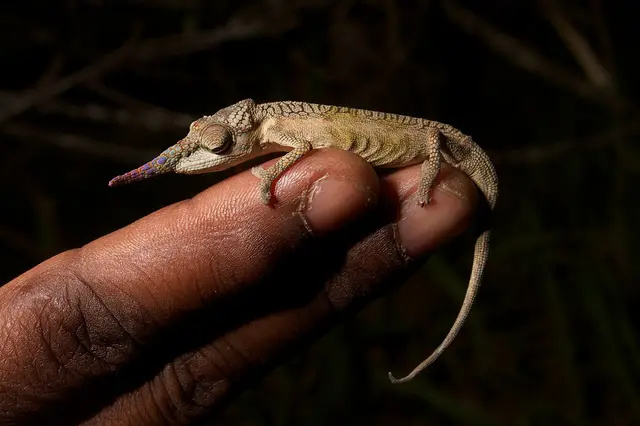
This is one of the bigger chameleons on the island, with a total length of roughly 31 to 40 cm according to one chameleon-keeper's species profile. Males have a pair of small knobs on the nose, and the scientific name points to them: globifer comes from Latin words meaning "to carry a ball". The knobs are much smaller in females.
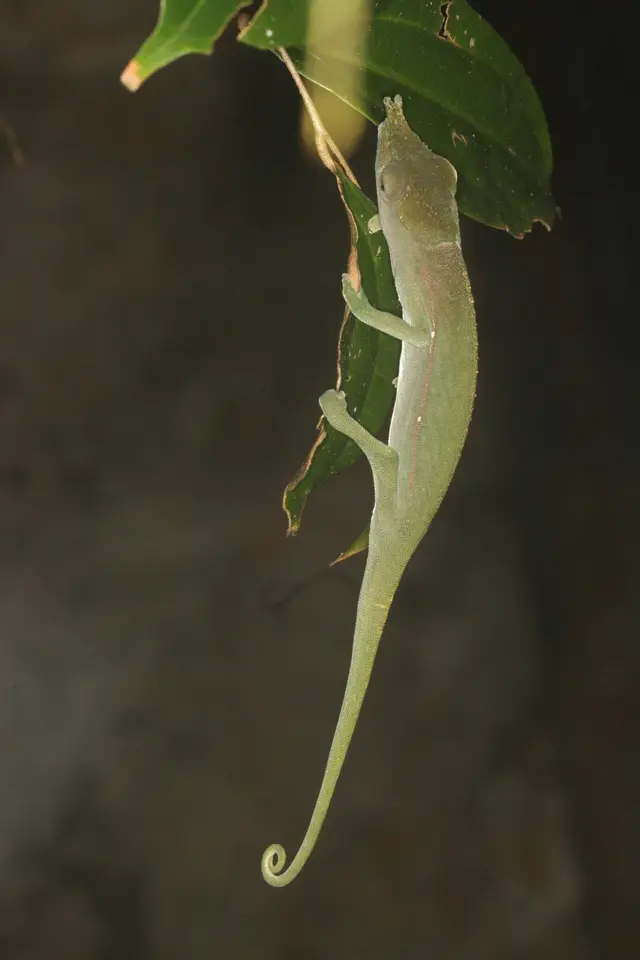
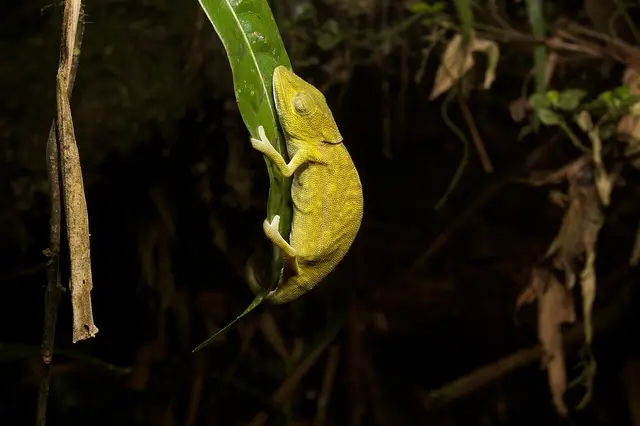
Colour is variable. Reports describe greens and yellow-greens, often with a pale or dark stripe along the flank that darkens when the animal is stressed. Descriptions of its size and build differ between sources, so treat the figures as approximate.
Where it lives
It is found only in Madagascar, in scattered patches of humid forest in the east and southeast. Breeder accounts place it in the remaining rainforest east of Antananarivo, around Mandraka, and in the Anjozorobe forests to the north. The original specimens, described in 1879, came from near Antananarivo.
The IUCN assessment gives an altitude range of 1,200 to 1,500 m and an extent of occurrence of about 676 square km. A keeper profile gives 700 to 1,300 m, so sources disagree on elevation.
Pins are Wikidata “endemic to” fields. Orange dots, when present, are GBIF occurrence tiles — survey bias included.
How it lives
It's a tree dweller. One account says it prefers intact forest with old, thick-branched trees, mossy limbs and tangled lianas, and usually stays in the canopy or above head height. In secondary growth it has been recorded only near Mandraka.
It lays eggs, and a keeper profile puts a clutch at around 25. Keepers describe it as shy and fairly non-aggressive, and say it needs high humidity and good air circulation.
Why it is in trouble
The IUCN lists the population as decreasing. The threats it records are shifting agriculture, small-scale farming and grazing, more frequent and intense fires, and small-scale harvesting of the animals themselves. Pets and display animals are named as a use.
It depends on old, intact forest, so slash-and-burn clearing removes the habitat it favours. A breeder source says both of the forests it names are barely protected and that the species is disappearing.
What is being done
The species is on CITES Appendix II, so international trade is regulated, and one keeper source says legal export is not possible. The IUCN assessment records that it occurs in at least one protected area and that conservation sites have been identified over part of its range.
In 2011 the IUCN found no recovery plan, no monitoring scheme and no harvest management plan in place. No population figures show whether any protection is working.
Sources
Written for this catalog in our own words from the sources below, checked against them on 12 November 2026. Population figures are estimates and carry the year they were made. Status and assessment year: IUCN. 2026. The IUCN Red List of Threatened Species. Version 2026-1. iucnredlist.org.