Critically Endangered
Casuhatien Anole
Pristidactylus casuhatiensis
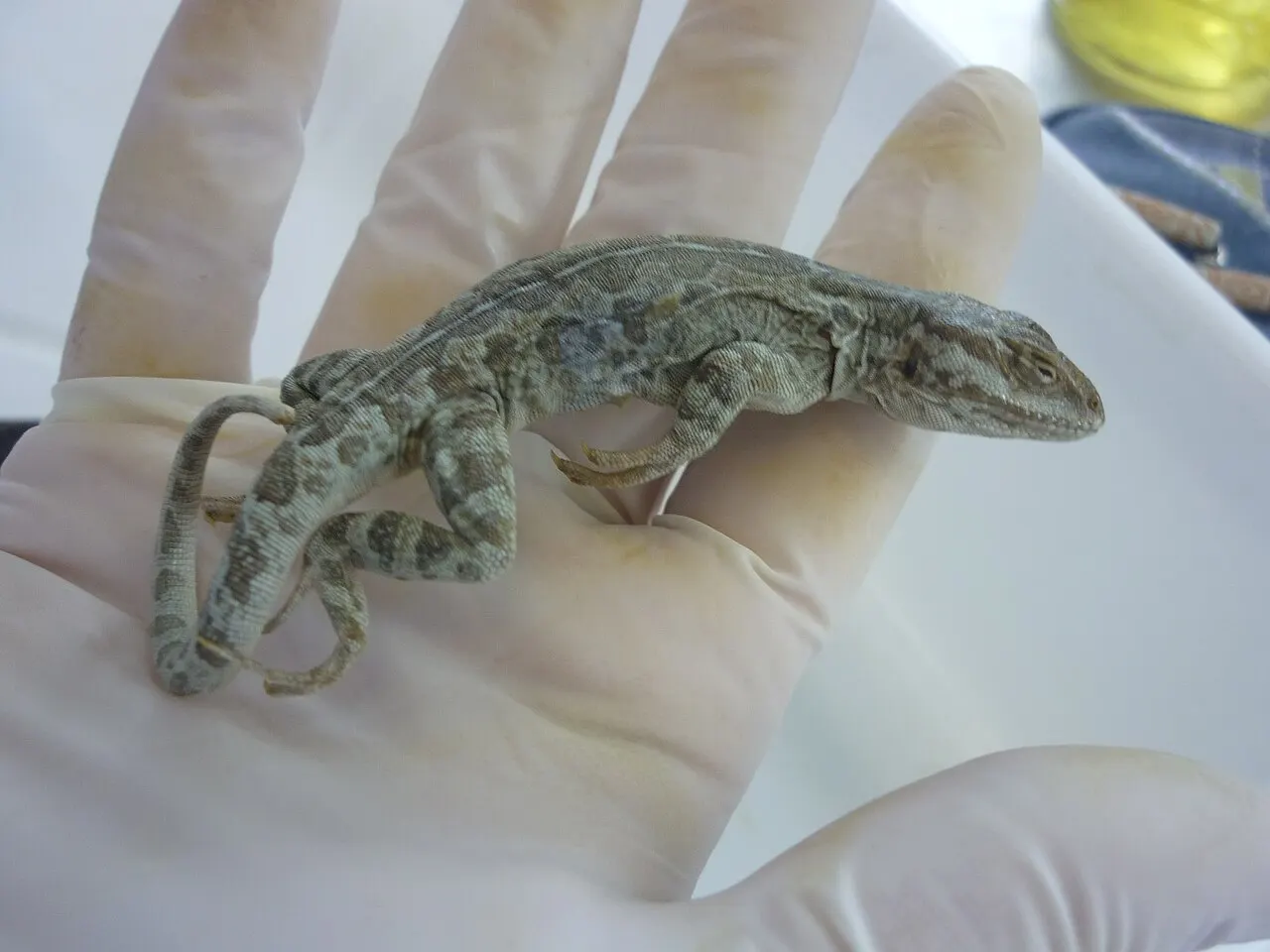
Pristidactylus casuhatiensis, the copper lizard or Casuhatien anole, is a lizard found only in the Ventania hills of Buenos Aires Province, Argentina. The IUCN Red List (2017) rates it Critically Endangered, with a known range of roughly 30 square kilometres.
What it is
This is an egg-laying lizard in the family Leiosauridae, described by Gallardo in 1968 from specimens collected in the Sierra de la Ventana. Its species name comes from Casuhati, an indigenous name for those hills.
Published descriptions of its looks are scarce. One detail from field work is that the colour pattern of the scales on the face and head is unique to each animal, which lets researchers tell individuals apart from photographs.
Where it lives
It lives in temperate grassland on the hills of the Ventania range in the central Pampas, from about 700 m upward. The Red List, assessed in 2017, estimates its extent of occurrence at about 30 square kilometres and counts one location.
Known records long came from three heavily visited sites: Cerro Ventana, Cerro Tres Picos and Destierro. Searches under a Rufford Foundation project from 2016 to 2018 later found animals at Cerro Napostá and a new population at Cerro Funke, where a juvenile was described for the first time. The lizards use open grassland to move between rocky outcrops.
Pins are Wikidata “endemic to” fields. Orange dots, when present, are GBIF occurrence tiles — survey bias included.
How it lives
Little is documented. Rufford project work found that it eats 11 species of arthropods and one snail, Plagiodontes patagonicus, which is endemic to the Sierra de la Ventana hills. The Cerro Funke population has a different ratio of males to females than the better-known Cerro Ventana one.
Why it is in trouble
Ecological information is scarce, and the Red List gives the population trend as unknown. It does record a continuing decline in habitat area. Threats named include fire, introduced pines (Pinus halepensis) and blackberry, and possible future collection for the pet trade.
Fire has hit the area more than once. The 2018 Rufford evaluation reported a fire across the whole south of the mountain system that again made field work difficult and delayed management actions.
What is being done
The Red List lists control of invasive species and site management as the measures needed. Under the Rufford project, talks were given in schools and town centres in Tornquist and Coronel Suárez, trail signs were planned for the Ventana and Tres Picos trails, and workshops with rangers and guides worked toward a conservation action plan.
The province designated a ranger dedicated to the species. In 2017 Buenos Aires Province declared the lizard a Provincial Natural Monument under Law 14.969, and in 2018 the district of Tornquist adopted it as an emblem.
Sources
Written for this catalog in our own words from the sources below, checked against them on 12 November 2026. Population figures are estimates and carry the year they were made. Status and assessment year: IUCN. 2026. The IUCN Red List of Threatened Species. Version 2026-1. iucnredlist.org.




