Endangered
Duméril's worm lizard
Leposternon octostegum
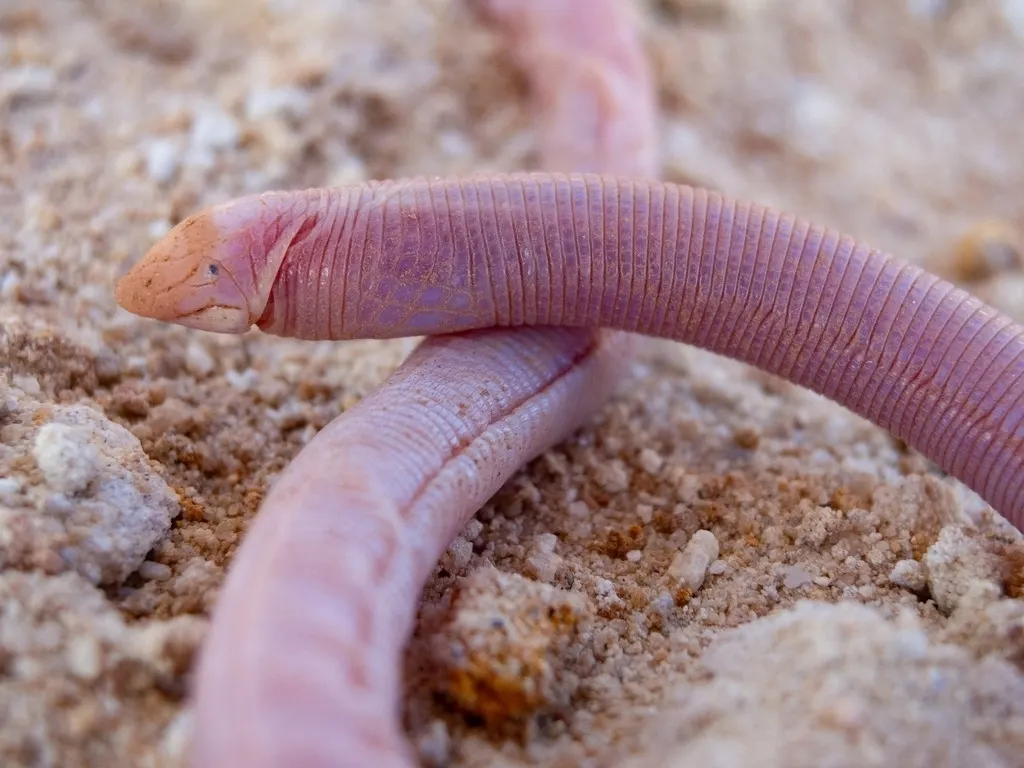
Duméril's worm lizard (Leposternon octostegum) is a pale, shovel-headed burrowing reptile known only from the coastal state of Bahia, Brazil. The IUCN Red List rated it Endangered in 2021. For over 150 years it was known from a single museum specimen, and it is still poorly studied.
How to recognise it
This is an amphisbaenian, or worm lizard: a legless, burrowing reptile with a blunt, shovel-like head built for pushing through soil. Its Portuguese name, cobra-de-duas-cabeças, means two-headed snake. It is slender and medium-sized, with a maximum adult length of 388 mm and a maximum adult body width of 9.3 mm.
Living animals from Salvador are a pale, grizzled colour with sparse, tiny brownish dots, mostly on the back half of the body. The head carries three rows of shields, eight main ones, which gave the species its name (octostegum). Young animals can lack pigment altogether: a 150 mm specimen had none, while larger ones were increasingly speckled.
Where it lives
The species was described by Duméril in 1851 from a single specimen labelled only "Brésil". Later records were vague, and it remained known from that one animal until Brazilian researchers collected new material near Salvador in 2003 and 2006. Their 2019 redescription in the Journal of Threatened Taxa confirmed that it is a valid species.
Those animals came from a site called Aterro Metropolitano Centro, near Salvador at sea level, and from Arembepe in the municipality of Camaçari. Three of the specimens were damaged by bulldozers. The IUCN lists the species only from Bahia, gives five locations and an extent of occurrence of about 1,381 square kilometres, and names lowland moist forest as its habitat.
Pins are Wikidata “endemic to” fields. Orange dots, when present, are GBIF occurrence tiles — survey bias included.
How it lives
Very little is recorded about its habits. A crested caracara is reportedly the only predator actually seen eating this species, though others probably do too. The 2019 redescription calls its distribution relatively restricted and its ecological data scarce.
Why it is in trouble
The IUCN rates it Endangered on the strength of its small range and a continuing decline in its area. The one threat listed is housing and urban development, which the assessment says affects a majority (50 to 90 percent) of the species' range. The population trend is unknown.
The redescription's authors add that conservation of these animals has been largely overlooked in Brazil, partly because the taxonomy of the group has stayed unclear.
What is being done
No specific conservation action is recorded for the species, and the IUCN lists it as unknown whether it occurs in a protected area. The 2019 redescription was framed as support for conservation and management planning for these animals.
Sources
Written for this catalog in our own words from the sources below, checked against them on 12 November 2026. Population figures are estimates and carry the year they were made. Status and assessment year: IUCN. 2026. The IUCN Red List of Threatened Species. Version 2026-1. iucnredlist.org.




