Critically Endangered
Barbados threadsnake
Tetracheilostoma carlae
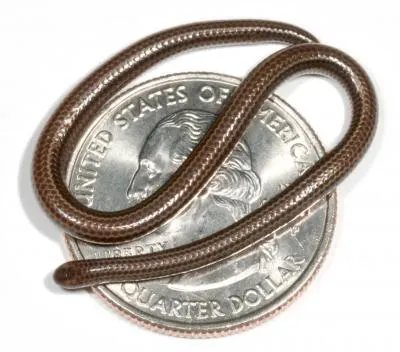
The Barbados threadsnake is a worm-thin burrowing snake found only on Barbados, and it is widely described as the smallest snake in the world, at about 10 centimetres when grown. The IUCN lists it as Critically Endangered (assessed 2015, published 2016). It went unrecorded for about 20 years before a 2025 find.
How to recognise it
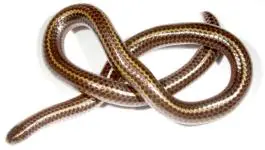
Adults average about 10 centimetres long, and the largest specimen on record measured 10.4 centimetres. Other accounts of the 2025 find give 7.5 to 10 centimetres. The body is about as wide as a spaghetti noodle. Under a microscope it shows pale orange lines down the back, eyes set on the sides of the head and a rostral scale at the snout.
Telling it apart by eye is hard, because it looks very like the Brahminy blind snake, an invasive species on the island. The threadsnake is shorter and carries those dorsal lines. Confirmation usually takes a close look under magnification.
Where it lives
It is found nowhere else but Barbados. The IUCN treats it as known from a single location, between about 100 and 280 metres above sea level, in dry tropical forest. Its range reportedly lies in the east of the island, and the 2025 snake turned up in central Barbados. Most of the island's remaining forest is in the undeveloped Scotland District.
Almost all of the original forest has gone. About 98 percent of Barbados's primary forest has been cleared over roughly 500 years, mostly for farming.
Pins are Wikidata “endemic to” fields. Orange dots, when present, are GBIF occurrence tiles — survey bias included.
How it lives
It spends its life under rocks and in soil. Its diet has not been well studied, but it is thought to eat mainly termites and ant larvae. Threadsnakes lay eggs, and this species produces one large egg at a time. The hatchling is about half the length of its mother.
Why it is in trouble
The IUCN names housing and urban development as the threat, with continuing loss of habitat. The snake is not known to occur in any protected area, and its population trend is listed as unknown.
Records are scarce. Only a handful of confirmed sightings exist since 1889, with decades between them. S. Blair Hedges described the species in 2008 and named it for his wife, the herpetologist Carla Ann Hass. Museum specimens had earlier been filed under another species. The snake then went unrecorded for about 20 years, and Re:wild put it on its list of species lost to science.
What is being done
In March 2025 a survey by Barbados's environment ministry and Re:wild turned up a live snake under a rock in central Barbados. Project officer Connor Blades examined it at the University of the West Indies, and it was put back where it was found. The find was announced on 23 July 2025.
Blades has voiced concern that very low numbers could make it hard for individuals to find mates, especially where habitat is degraded. The project plans more surveys to map the range and develop protection for the snake and its habitat.
Sources
Written for this catalog in our own words from the sources below, checked against them on 12 November 2026. Population figures are estimates and carry the year they were made. Status and assessment year: IUCN. 2026. The IUCN Red List of Threatened Species. Version 2026-1. iucnredlist.org.