Endangered
Woodbush legless skink
Acontias rieppeli
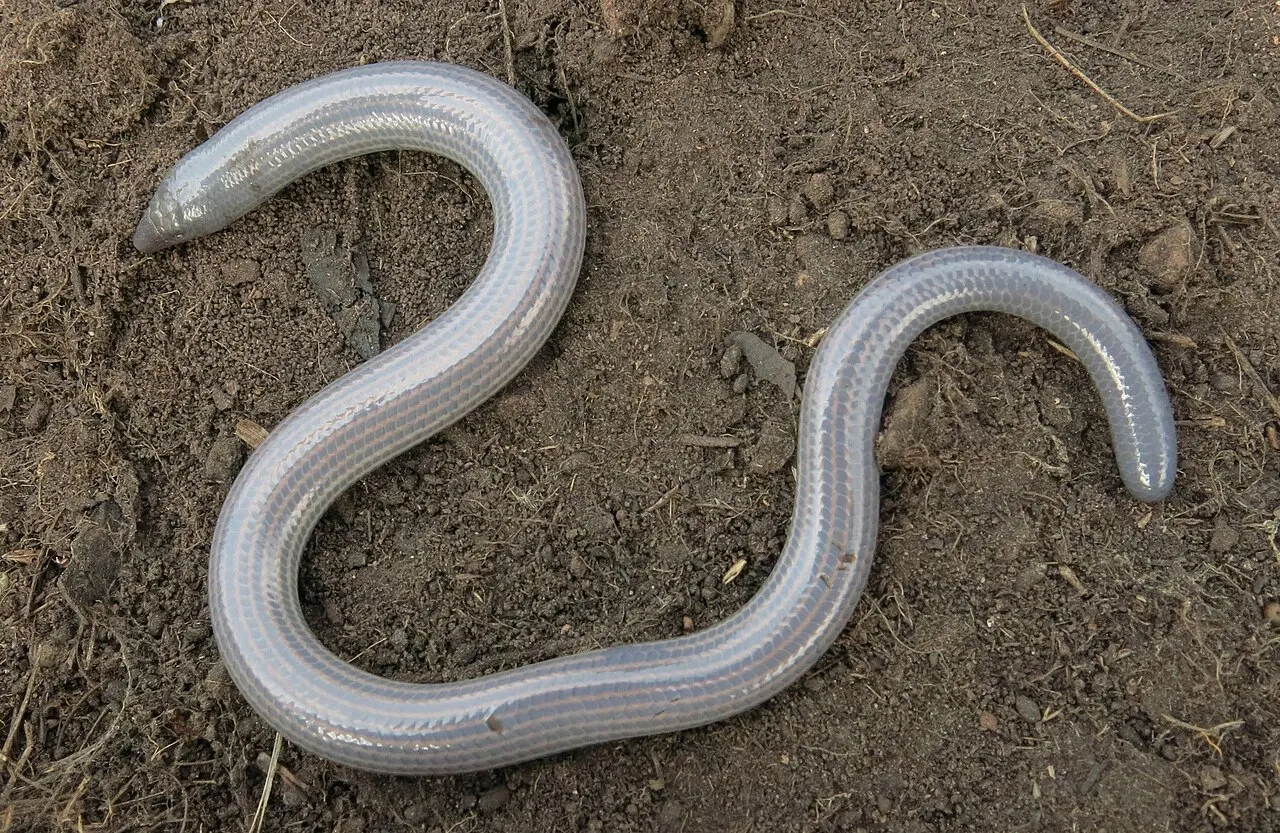
The woodbush legless skink (Acontias rieppeli) is a limbless, live-bearing lizard known only from the Woodbush and Wolkberg highlands of Limpopo Province, South Africa. The IUCN Red List rated it Endangered in 2022, with a small, fragmented range that plantations and housing keep shrinking.
How to recognise it
It's a legless skink, a lizard that has lost its limbs. Its original describer placed it in its own genus, as Acontophiops lineatus. That genus was told apart by two supraciliary scales (the small scales along the brow) and hidden ear openings, where Acontias skinks have three or four and no external ear opening.
Work on its relationships showed it sits close to Acontias cregoi, and in 2010 Lamb, Biswas and Bauer merged the genus into Acontias. Because the name Acontias lineatus already belonged to another skink, the species was renamed rieppeli, after the Field Museum zoologist Olivier Rieppel.
Where it lives
The species is found in the northern Transvaal mountains of Limpopo, from the Woodbush area to the Wolkberg. The type locality is Mpome. The IUCN puts its extent of occurrence at about 870 square kilometres, at elevations between 1,600 and 2,000 metres.
Recorded habitats include high-altitude subtropical grassland and drier grassland, and plantations also appear in the habitat list.
Pins are Wikidata “endemic to” fields. Orange dots, when present, are GBIF occurrence tiles — survey bias included.
How it lives
Females give birth to live young rather than laying eggs. Beyond that, little has been published about its diet, size or behaviour.
Why it is in trouble
The IUCN assessment names plantations (farming and forestry) and the spread of housing and urban areas as the threats. The population is severely fragmented, and its area and extent of occurrence are both still shrinking. The population trend is listed as decreasing.
Its status has moved around. The IUCN assessments gave Vulnerable in 1996, Endangered in 2017, Near Threatened in 2018 and Endangered again in 2022. The Reptile Database still shows Near Threatened, the 2018 category, so the older label turns up in reference works.
What is being done
At least part of the population lives inside a protected area. The assessment lists site and area protection, habitat protection and site management as relevant conservation actions. The species is not subject to any international trade controls, and no population size has been estimated.
Sources
Written for this catalog in our own words from the sources below, checked against them on 12 November 2026. Population figures are estimates and carry the year they were made. Status and assessment year: IUCN. 2026. The IUCN Red List of Threatened Species. Version 2026-1. iucnredlist.org.




