Aves in crisis
531 records. Red List version 2026-1
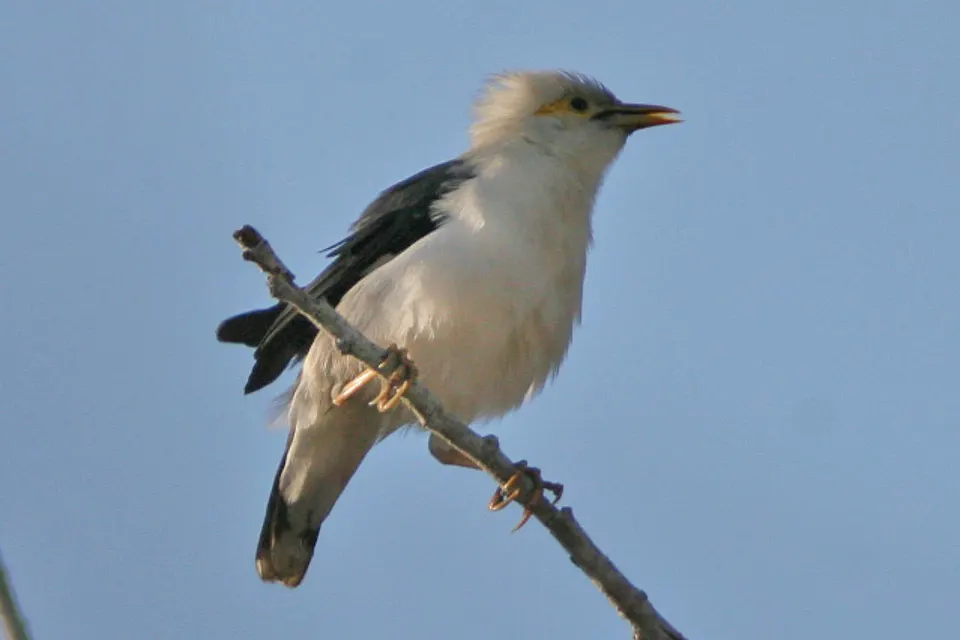
In this catalog, Aves stands for birds. We list 531 birds that the IUCN Red List records as threatened enough to be Critically Endangered, Endangered or Extinct in the Wild: 193 Critically Endangered, 333 Endangered and 5 Extinct in the Wild.
The biggest groups are the orders Passeriformes (217), Psittaciformes (53) and Accipitriformes (34), and the families with the most listed species are Psittacidae (50), Accipitridae (32) and Columbidae (24). The full list below is grouped by order.
A class is a filing shelf, not a measure of risk: it says nothing about how fast any one species is declining. Status and assessment years come from the IUCN Red List (version 2026-1); how to read an IUCN assessment explains what the categories and criteria mean, and each record links to its own assessment.
Some of these animals are also kept or traded as pets. For the legal side in each US state, see exotic pet laws by state.
Status breakdown
531 records: Critically Endangered 193; Endangered 333; Extinct in the Wild 5.
All species
Passeriformes (217)
- Acridotheres tertius CR
- Acridotheres tricolor CR
- Acrocephalus longirostris CR
- Akiapolaau Hemignathus wilsoni EN
- Alagoas Tyrannulet Phylloscartes ceciliae CR
- Aldabra Fody Foudia aldabrana EN
- Algerian Nuthatch Sitta ledanti EN
- Ammospiza caudacuta EN
- Anthus sokokensis EN
- Antioquia Brush Finch Atlapetes blancae CR
- Apolinar's Wren Cistothorus apolinari EN
- Araripe Manakin Antilophia bokermanni CR
- Archer's lark Heteromirafra archeri CR
- Artisornis moreaui EN
- Asir Magpie Pica asirensis EN
- Bachman's Warbler Vermivora bachmanii CR
- Bahama Oriole Icterus northropi EN
- Bahama Swallow Tachycineta cyaneoviridis EN
- Bahama Warbler Setophaga flavescens EN
- Bahia Tapaculo Eleoscytalopus psychopompus EN
- Bahian Mouse-colored Tapaculo Scytalopus gonzagai EN
- Bali Myna Leucopsar rothschildi CR
- Banded Cotinga Cotinga maculata CR
- Banggai Crow Corvus unicolor CR
- Bare-necked Umbrellabird Cephalopterus glabricollis EN
- Basra Reed Warbler Acrocephalus griseldis EN
- Bates's Weaver Ploceus batesi EN
- Bernier's Vanga Oriolia bernieri EN
- Black Rosy Finch Leucosticte atrata EN
- Black-hooded Antwren Formicivora erythronotos EN
- Black-winged Starling Acridotheres melanopterus EN
- blue swallow Hirundo atrocaerulea EN
- Blue-crowned Laughingthrush Pterorhinus courtoisi CR
- Bokikokiko Acrocephalus aequinoctialis EN
- Botha's lark Spizocorys fringillaris EN
- Brasília Tapaculo Scytalopus novacapitalis EN
- Braun's Bushshrike Laniarius brauni EN
- Brown-capped Rosy Finch Leucosticte australis EN
- Buff-throated Purpletuft Iodopleura pipra EN
- Bugun Liocichla Liocichla bugunorum CR
- Carduelis cucullata Spinus cucullatus EN
- Cebu Flowerpecker Dicaeum quadricolor CR
- Cerulean Flycatcher Eutrichomyias rowleyi CR
- Cherry-throated Tanager Nemosia rourei CR
- Chestnut-capped Piha Lipaugus weberi CR
- Chestnut-capped Thrush Geokichla interpres EN
- Chlorodrepanis stejnegeri EN
- Chloropsis cochinchinensis cochinchinensis EN
- Chuuk Monarch Metabolus rugensis EN
- Clarke's Weaver Ploceus golandi EN
- Clytoctantes alixii EN
- Colombian Mountain Grackle Macroagelaius subalaris EN
- Comoros cuckooshrike Ceblepyris cucullatus EN
- Cone-billed Tanager Conothraupis mesoleuca EN
- Copsychus sechellarum EN
- Coracornis sanghirensis CR
- Crithagra concolor CR
- Crow Honeyeater Gymnomyza aubryana CR
- Cryptospiza shelleyi EN
- Cundinamarca Antpitta Grallaria kaestneri EN
- Diamantina Tapaculo Scytalopus diamantinensis EN
- Dicrurus menagei EN
- Elfin Woods Warbler Setophaga angelae EN
- Fatuhiva Monarch Pomarea whitneyi CR
- Fernwren Oreoscopus gutturalis EN
- Finn's Weaver Ploceus megarhynchus EN
- Flores Monarch Symposiachrus sacerdotum EN
- Forty-spotted Pardalote Pardalotus quadragintus EN
- Fringilla polatzeki EN
- Gabela Akalat Sheppardia gabela EN
- Gabela Bushshrike Laniarius amboimensis EN
- Gabela Helmetshrike Prionops gabela EN
- Galápagos Martin Progne modesta EN
- Garrulax annamensis EN
- Garrulax bicolor EN
- Garrulax rufifrons EN
- Giant Kingbird Tyrannus cubensis EN
- Giant Nuthatch Sitta magna EN
- golden white-eye Cleptornis marchei EN
- Golden-cheeked Warbler Setophaga chrysoparia EN
- Gough Finch Rowettia goughensis CR
- Grallaria fenwickorum CR
- Grand Comoro Drongo Dicrurus fuscipennis EN
- Greater Green Leafbird Chloropsis sonnerati EN
- Grey-cheeked Bulbul Alophoixus bres EN
- Gurney's Pitta Hydrornis gurneyi CR
- Gymnomyza samoensis EN
- Hawaiian Crow Corvus hawaiiensis EW
- Helmet Vanga Euryceros prevostii EN
- Hispaniolan Crossbill Loxia megaplaga EN
- Hoary-throated Spinetail Synallaxis kollari EN
- Ibadan Malimbe Malimbus ibadanensis EN
- Iphis Monarch Pomarea iphis CR
- Isabela Oriole Oriolus isabellae CR
- Jamaican Blackbird Nesopsar nigerrimus EN
- Jankowski's Bunting Emberiza jankowskii EN
- Javan Blue Flycatcher Cyornis banyumas CR
- Javan Green Magpie Cissa thalassina CR
- Javan leafbird Chloropsis cochinchinensis EN
- Javan Pied Myna Gracupica jalla CR
- Javan White-eye Zosterops flavus EN
- Jocotoco Antpitta Grallaria ridgelyi EN
- Juan Fernández Tit-Tyrant Anairetes fernandezianus EN
- Kinglet Calyptura Calyptura cristata CR
- Kupeornis rufocinctus EN
- Lalage newtoni CR
- Lalage typica EN
- Locustella major EN
- Loveridge's Sunbird Cinnyris loveridgei EN
- Loxops caeruleirostris CR
- Loxops coccineus EN
- Macronyx sharpei EN
- Macrosphenus pulitzeri EN
- Mallee Emu-wren Stipiturus mallee EN
- Manorina melanotis EN
- Marañón Spinetail Synallaxis maranonica CR
- Mariana Crow Corvus kubaryi CR
- Marsh Seedeater Sporophila palustris EN
- Masafuera Rayadito Aphrastura masafuerae CR
- Maui Alauahio Paroreomyza montana EN
- Maui Parrotbill Pseudonestor xanthophrys CR
- Mauritius Fody Foudia rubra EN
- Mauritius olive white-eye Zosterops chloronothos CR
- Millerbird Acrocephalus familiaris EN
- Mimus graysoni CR
- Mimus trifasciatus EN
- Montecincla jerdoni EN
- Myrmoderus ruficauda EN
- Myrmotherula snowi CR
- Napothera pasquieri EN
- New Zealand rock wren Xenicus gilviventris EN
- Nias Hill Myna Gracula robusta CR
- Niceforo's Wren Thryophilus nicefori CR
- Nihoa Finch Telespiza ultima CR
- Noisy Scrubbird Atrichornis clamosus EN
- Norfolk Robin Petroica multicolor EN
- Olomaʻo Myadestes lanaiensis CR
- Orange-bellied Antwren Terenura sicki CR
- Owston's Tit Sittiparus owstoni EN
- Oʻahu ʻAlauahio Paroreomyza maculata CR
- Padda oryzivora EN
- Pale-headed Brushfinch Atlapetes pallidiceps EN
- Palila Loxioides bailleui CR
- Perijá Thistletail Asthenes perijana EN
- Pernambuco Foliage-gleaner Automolus lammi EN
- Phibalura boliviana EN
- Pinto's Spinetail Synallaxis infuscata EN
- Pipilo socorroensis EN
- Pitcairn Reed Warbler Acrocephalus vaughani EN
- Poeoptera femoralis EN
- Pohnpei cicadabird Edolisoma insperatum EN
- Pohnpei Starling Aplonis pelzelni CR
- Principe Thrush Turdus xanthorhynchus CR
- Príncipe White-eye Zosterops ficedulinus EN
- Puaiohi Myadestes palmeri CR
- Pycnonotus snouckaerti EN
- Q138338990 Chiroxiphia bokermanni CR
- Ramphocinclus brachyurus EN
- Raso Lark Alauda razae CR
- Regent Honeyeater Anthochaera phrygia CR
- Rota White-eye Zosterops rotensis CR
- Royal Cinclodes Cinclodes aricomae EN
- Rubeho Akalat Sheppardia aurantiithorax EN
- Rudd's lark Heteromirafra ruddi EN
- Rufous Scrubbird Atrichornis rufescens EN
- Rufous-headed Robin Larvivora ruficeps EN
- Rück's Blue Flycatcher Cyornis ruckii CR
- Saffron-cowled Blackbird Xanthopsar flavus EN
- Saint Lucia Black Finch Melanospiza richardsoni EN
- Saint Lucia Oriole Icterus laudabilis EN
- Saipan Reed Warbler Acrocephalus hiwae EN
- Sangihe White-eye Zosterops nehrkorni CR
- Santa Marta Bush Tyrant Myiotheretes pernix EN
- Semper's Warbler Leucopeza semperi CR
- Sierra Leone Prinia Schistolais leontica EN
- Sierra Madre Sparrow Xenospiza baileyi EN
- Silver Oriole Oriolus mellianus EN
- Sitta victoriae EN
- South Island kōkako Callaeas cinereus CR
- Sporophila maximiliani EN
- Sri Lanka Whistling Thrush Myophonus blighi EN
- St. Kitts Bullfinch Melopyrrha grandis CR
- Straw-headed Bulbul Pycnonotus zeylanicus CR
- Streak-breasted bulbul Hypsipetes siquijorensis EN
- Streaked Reed Warbler Acrocephalus sorghophilus CR
- Stresemann's Bushcrow Zavattariornis stresemanni EN
- Sumatran Leafbird Chloropsis media EN
- Superb Pitta Pitta superba EN
- Symposiachrus boanensis CR
- São Paulo Marsh Antwren Formicivora paludicola CR
- São Tomé Fiscal Lanius newtoni CR
- Taita Apalis Apalis fuscigularis CR
- Taita Thrush Turdus helleri EN
- Teardrop White-eye Rukia ruki EN
- Toxostoma guttatum CR
- Tricolored Blackbird Agelaius tricolor EN
- Trochalopteron ngoclinhense EN
- Trochalopteron yersini EN
- Wangi-wangi White-eye Zosterops paruhbesar EN
- Western Bristlebird Dasyornis longirostris EN
- Whistling Warbler Catharopeza bishopi EN
- White-bellied Cinclodes Cinclodes palliatus CR
- White-throated Grasswren Amytornis woodwardi EN
- White-tipped Monarch Symposiachrus everetti EN
- Wilkins's Finch Nesospiza wilkinsi CR
- Worthen's Sparrow Spizella wortheni EN
- Yellow Cardinal Gubernatrix cristata EN
- Yellow-breasted Bunting Emberiza aureola CR
- Yellow-shouldered Blackbird Agelaius xanthomus EN
- Zapata Wren Ferminia cerverai EN
- Zosterornis nigrorum EN
- ʻAkikiki Oreomystis bairdi CR
- ʻAkohekohe Palmeria dolei CR
- ʻAnianiau Magumma parva EN
Psittaciformes (53)
- Amazona lilacina CR
- Baudin's Black Cockatoo Zanda baudinii CR
- Black-billed Amazon Amazona agilis EN
- Blue-throated Macaw Ara glaucogularis CR
- Blue-winged Racket-tail Prioniturus verticalis CR
- Cacatua citrinocristata CR
- Charmosyna amabilis CR
- El Oro Parakeet Pyrrhura orcesi EN
- Fuertes's Parrot Hapalopsittaca fuertesi EN
- Glaucous Macaw Anodorhynchus glaucus CR
- Golden-shouldered Parrot Psephotellus chrysopterygius EN
- Great Green Macaw Ara ambiguus CR
- Green Racket-tail Prioniturus luconensis EN
- Grey Parrot Psittacus erithacus EN
- Grey-breasted Parakeet Pyrrhura griseipectus EN
- Imperial Amazon Amazona imperialis CR
- Kakapo Strigops habroptila CR
- Kea Nestor notabilis EN
- Kuhl's Lorikeet Vini kuhlii EN
- Lear's Macaw Anodorhynchus leari EN
- Lilac-crowned Amazon Amazona finschi EN
- Maroon-fronted Parrot Rhynchopsitta terrisi EN
- Neophema chrysogaster CR
- New Caledonian Lorikeet Charmosyna diadema CR
- Orange-fronted parakeet Cyanoramphus malherbi CR
- Pezoporus occidentalis CR
- Pfrimer's Parakeet Pyrrhura pfrimeri EN
- Psittacus timneh EN
- Puerto Rican Amazon Amazona vittata CR
- Purple-naped Lory Lorius domicella EN
- Pyrrhura caeruleiceps EN
- Pyrrhura subandina CR
- Red-and-blue Lory Eos histrio EN
- Red-crowned Parrot Amazona viridigenalis EN
- Red-faced Parrot Hapalopsittaca pyrrhops EN
- Red-fronted Macaw Ara rubrogenys CR
- Red-vented Cockatoo Cacatua haematuropygia CR
- Salmon-crested Cockatoo Cacatua moluccensis EN
- Santa Marta Parakeet Pyrrhura viridicata EN
- Spix's Macaw Cyanopsitta spixii EW
- Sumba eclectus Eclectus cornelia EN
- Sun Conure Aratinga solstitialis EN
- Sunset Lorikeet Trichoglossus forsteni EN
- Swift Parrot Lathamus discolor CR
- Tanygnathus everetti EN
- Thick-billed Parrot Rhynchopsitta pachyrhyncha EN
- Ultramarine Lorikeet Vini ultramarina CR
- vinaceous-breasted amazon Amazona vinacea EN
- White Cockatoo Cacatua alba EN
- Yellow-crested Cockatoo Cacatua sulphurea CR
- Yellow-headed Amazon Amazona oratrix EN
- Yellow-naped Amazon Amazona auropalliata CR
- Zanda latirostris EN
Accipitriformes (34)
- Bateleur Terathopius ecaudatus EN
- Black Harrier Circus maurus EN
- California condor Gymnogyps californianus CR
- Chaco Eagle Buteogallus coronatus EN
- Egyptian Vulture Neophron percnopterus EN
- Flores Hawk-Eagle Nisaetus floris EN
- Great Nicobar Serpent Eagle Spilornis klossi EN
- Gundlach's hawk Accipiter gundlachi EN
- Hooded Vulture Necrosyrtes monachus CR
- Indian Vulture Gyps indicus CR
- Javan hawk-eagle Nisaetus bartelsi EN
- Lappet-faced Vulture Torgos tracheliotos EN
- Madagascar Fish Eagle Haliaeetus vociferoides CR
- Madagascar Serpent Eagle Eutriorchis astur EN
- Malagasy Harrier Circus macrosceles EN
- Martial Eagle Polemaetus bellicosus EN
- Pallas’s Fish Eagle Haliaeetus leucoryphus EN
- Philippine Eagle Pithecophaga jefferyi CR
- Philippine Hawk-Eagle Nisaetus philippensis EN
- Pinsker's Hawk-Eagle Nisaetus pinskeri EN
- Red Goshawk Erythrotriorchis radiatus EN
- Red-headed Vulture Sarcogyps calvus CR
- Ridgway's Hawk Buteo ridgwayi CR
- Rufous-tailed Hawk Buteo ventralis EN
- Réunion Harrier Circus maillardi EN
- Rüppell's Vulture Gyps rueppelli CR
- Secretarybird Sagittarius serpentarius EN
- Slender-billed Vulture Gyps tenuirostris CR
- Spizaetus isidori EN
- Steppe Eagle Aquila nipalensis EN
- White-backed Vulture Gyps africanus CR
- White-collared Kite Leptodon forbesi EN
- White-headed Vulture Trigonoceps occipitalis CR
- White-rumped Vulture Gyps bengalensis CR
Procellariiformes (33)
- Amsterdam Albatross Diomedea amsterdamensis EN
- Antipodean Albatross Diomedea antipodensis EN
- Atlantic Petrel Pterodroma incerta EN
- Barau's Petrel Pterodroma baraui EN
- Bermuda Petrel Pterodroma cahow EN
- Black-capped Petrel Pterodroma hasitata EN
- Bryan's Shearwater Puffinus bryani CR
- Fregetta maoriana CR
- Galápagos Petrel Pterodroma phaeopygia CR
- Grey-headed Albatross Thalassarche chrysostoma EN
- Hawaiian Petrel Pterodroma sandwichensis EN
- Henderson Petrel Pterodroma atrata EN
- Hutton's Shearwater Puffinus huttoni EN
- Hydrobates homochroa EN
- Hydrobates macrodactylus CR
- Indian Yellow-nosed Albatross Thalassarche carteri EN
- Jamaican Petrel Pterodroma caribbaea CR
- Magenta Petrel Pterodroma magentae CR
- Mascarene Petrel Pseudobulweria aterrima CR
- Newell's Shearwater Puffinus newelli CR
- Northern Royal Albatross Diomedea sanfordi EN
- Pachyptila macgillivrayi CR
- Pelecanoides whenuahouensis CR
- Puffinus bannermani EN
- Puffinus mauretanicus CR
- Rapa shearwater Puffinus myrtae CR
- Sooty Albatross Phoebetria fusca EN
- Thalassarche chlororhynchos EN
- Townsend's Shearwater Puffinus auricularis CR
- Tristan Albatross Diomedea dabbenena CR
- Waved Albatross Phoebastria irrorata CR
- Westland Petrel Procellaria westlandica EN
- Zino's Petrel Pterodroma madeira EN
Charadriiformes (26)
- Australian Painted-snipe Rostratula australis EN
- Black Stilt Himantopus novaezelandiae CR
- Black-bellied Tern Sterna acuticauda EN
- Black-fronted Tern Chlidonias albostriatus EN
- Buff-breasted Buttonquail Turnix olivii CR
- Chatham Oystercatcher Haematopus chathamensis EN
- Chinese Crested Tern Thalasseus bernsteini CR
- Eskimo Curlew Numenius borealis CR
- Far Eastern Curlew Numenius madagascariensis EN
- Great Knot Calidris tenuirostris EN
- Indian Skimmer Rynchops albicollis EN
- Javan Lapwing Vanellus macropterus CR
- Jerdon's Courser Rhinoptilus bitorquatus CR
- Lesser Sand Plover Charadrius mongolus EN
- Madagascar Jacana Actophilornis albinucha EN
- Marbled Murrelet Brachyramphus marmoratus EN
- New Zealand Plover Charadrius obscurus CR
- Nordmann’s Greenshank Tringa guttifer EN
- Peruvian Tern Sternula lorata EN
- Plains-wanderer Pedionomus torquatus EN
- Shore Plover Charadrius novaeseelandiae EN
- Sociable Lapwing Vanellus gregarius CR
- Spoon-billed Sandpiper Calidris pygmaea CR
- Thinornis novaeseelandiae EN
- Tuamotu Sandpiper Prosobonia parvirostris EN
- Xantus’s murrelet Synthliboramphus hypoleucus EN
Galliformes (25)
- Alagoas Curassow Mitu mitu EW
- Baudo Guan Penelope ortoni EN
- Black-fronted Piping Guan Pipile jacutinga EN
- Blue-billed Curassow Crax alberti CR
- Bornean Crestless Fireback Lophura pyronota EN
- Bornean Peacock-Pheasant Polyplectron schleiermacheri EN
- Crestless Fireback Lophura erythrophthalma CR
- Edwards's Pheasant Lophura edwardsi CR
- Green Peafowl Pavo muticus EN
- Gunnison Grouse Centrocercus minimus EN
- Hainan Peacock Pheasant Polyplectron katsumatae EN
- horned curassow Pauxi unicornis EN
- Horned Guan Oreophasis derbianus EN
- Malayan peacock-pheasant Polyplectron malacense EN
- Maleo Macrocephalon maleo CR
- Manipur Bush Quail Perdicula manipurensis CR
- Ophrysia superciliosa CR
- Pternistis ochropectus CR
- Red-knobbed Curassow Crax blumenbachii EN
- Trinidad Piping Guan Pipile pipile CR
- Udzungwa Forest Partridge Xenoperdix udzungwensis EN
- Vietnamese crested argus Rheinardia ocellata CR
- Waigeo Brush-turkey Aepypodius bruijnii EN
- Wattled Curassow Crax globulosa EN
- White-winged Guan Penelope albipennis EN
Columbiformes (24)
- Alopecoenas canifrons EN
- Alopecoenas erythropterus Pampusana erythroptera CR
- Alopecoenas kubaryi EN
- Blue-eyed Ground Dove Columbina cyanopis CR
- Blue-headed Quail-Dove Starnoenas cyanocephala EN
- Grenada Dove Leptotila wellsi CR
- Marquesan Imperial Pigeon Ducula galeata EN
- Mindoro Bleeding-heart Gallicolumba platenae CR
- Negros Bleeding-heart Gallicolumba keayi CR
- Negros Fruit Dove Ptilinopus arcanus CR
- Otidiphaps insularis CR
- Polynesian Imperial Pigeon Ducula aurorae EN
- purple quail-dove Geotrygon purpurata EN
- Purple-winged Ground Dove Paraclaravis geoffroyi CR
- Raiatea Fruit Dove Ptilinopus chrysogaster EN
- Silvery Pigeon Columba argentina CR
- Socorro Dove Zenaida graysoni EW
- Sulu Bleeding-heart Gallicolumba menagei CR
- São Tomé Green Pigeon Treron sanctithomae EN
- São Tomé Olive Pigeon Columba thomensis EN
- Timor Green Pigeon Treron psittaceus EN
- Tooth-billed Pigeon Didunculus strigirostris CR
- White-fronted Quail-Dove Geotrygon leucometopia EN
- Zentrygon carrikeri EN
Gruiformes (19)
- Black Rail Laterallus jamaicensis EN
- Grey Crowned Crane Balearica regulorum EN
- Guam Rail Gallirallus owstoni CR
- Hypotaenidia owstoni CR
- Hypotaenidia sylvestris EN
- Junin Crake Laterallus tuerosi EN
- Lord Howe Woodhen Gallirallus sylvestris EN
- Masked Finfoot Heliopais personatus CR
- New Caledonian Rail Gallirallus lafresnayanus CR
- Okinawa Rail Hypotaenidia okinawae EN
- Plain-flanked Rail Rallus wetmorei EN
- Psophia obscura CR
- Sakalava Rail Zapornia olivieri EN
- Samoan Wood Rail Gallinula pacifica CR
- Siberian Crane Leucogeranus leucogeranus CR
- takahē Porphyrio hochstetteri EN
- White-winged Flufftail Sarothrura ayresi CR
- whooping crane Grus americana EN
- Zapata Rail Cyanolimnas cerverai CR
Apodiformes (18)
- Amazilia boucardi EN
- Blue-bearded Helmetcrest Oxypogon cyanolaemus EN
- Blue-throated Hillstar Oreotrochilus cyanolaemus CR
- Campylopterus phainopeplus CR
- Coeligena consita EN
- Coeligena orina EN
- Eriocnemis godini CR
- Eriocnemis nigrivestis EN
- Eulidia yarrellii CR
- Eupherusa cyanophrys EN
- Hylonympha macrocerca EN
- Lepidopyga lilliae EN
- Lophornis brachylophus CR
- New Caledonian Owlet-nightjar Aegotheles savesi CR
- Selasphorus ardens EN
- Sephanoides fernandensis CR
- Taphrolesbia griseiventris EN
- Thalurania watertonii EN
Anseriformes (14)
- Baer's Pochard Aythya baeri CR
- Bernier's Teal Anas bernieri EN
- Blue Duck Hymenolaimus malacorhynchos EN
- Brazilian Merganser Mergus octosetaceus CR
- Crested Shelduck Tadorna cristata CR
- Laysan Duck Anas laysanensis CR
- Maccoa Duck Oxyura maccoa EN
- Madagascar Pochard Aythya innotata CR
- Meller's Duck Anas melleri EN
- Pink-headed Duck Rhodonessa caryophyllacea CR
- Scaly-sided Merganser Mergus squamatus EN
- Swan Goose Anser cygnoides EN
- White-headed Duck Oxyura leucocephala EN
- White-winged Duck Asarcornis scutulata CR
Pelecaniformes (9)
- Crested Ibis Nipponia nippon EN
- Giant Ibis Thaumatibis gigantea CR
- Humblot's Heron Ardea humbloti EN
- Malagasy Pond Heron Ardeola idae EN
- Malagasy sacred ibis Threskiornis bernieri EN
- Northern Bald Ibis Geronticus eremita EN
- São Tomé Ibis Bostrychia bocagei CR
- White-bellied Heron Ardea insignis CR
- White-shouldered Ibis Pseudibis davisoni CR
Bucerotiformes (8)
- Berenicornis comatus EN
- Helmeted Hornbill Rhinoplax vigil CR
- Mindoro Hornbill Penelopides mindorensis EN
- Rhabdotorrhinus corrugatus EN
- Sulu Hornbill Anthracoceros montani CR
- Sumba Hornbill Rhyticeros everetti EN
- Visayan Hornbill Penelopides panini EN
- Walden's Hornbill Rhabdotorrhinus waldeni EN
Piciformes (7)
- Buff-rumped Woodpecker Meiglyptes tristis EN
- Fernandina's Flicker Colaptes fernandinae EN
- Imperial Woodpecker Campephilus imperialis CR
- Ivory-billed Woodpecker Campephilus principalis CR
- Malacoptila minor EN
- Okinawa Woodpecker Dendrocopos noguchii EN
- Yellow-faced Flameback Chrysocolaptes xanthocephalus EN
Strigiformes (7)
- Anjouan Scops Owl Otus capnodes EN
- Athene blewitti EN
- Little Sumba Hawk-Owl Ninox sumbaensis EN
- Serendib Scops Owl Otus thilohoffmanni EN
- Seychelles Scops Owl Otus insularis CR
- Siau Scops Owl Otus siaoensis CR
- Sokoke Scops Owl Otus ireneae EN
Suliformes (6)
- Abbott's Booby Papasula abbotti EN
- Bank Cormorant Phalacrocorax neglectus EN
- Cape Cormorant Phalacrocorax capensis EN
- Cape Gannet Morus capensis EN
- Chatham shag Leucocarbo onslowi CR
- Pitt Shag Phalacrocorax featherstoni EN
Coraciiformes (5)
- Blue-banded Kingfisher Alcedo euryzona CR
- Ceyx sangirensis CR
- Guam Kingfisher Todiramphus cinnamominus EW
- Marquesan Kingfisher Todiramphus godeffroyi CR
- Tuamotu Kingfisher Todiramphus gambieri CR
Otidiformes (5)
- Bengal Florican Houbaropsis bengalensis CR
- Great Bustard Otis tarda EN
- Great Indian Bustard Ardeotis nigriceps CR
- Lesser Florican Sypheotides indicus CR
- Ludwig's Bustard Neotis ludwigii EN
Sphenisciformes (5)
- African Penguin Spheniscus demersus CR
- erect-crested penguin Eudyptes sclateri EN
- Eudyptes moseleyi EN
- Galápagos Penguin Spheniscus mendiculus EN
- Yellow-eyed Penguin Megadyptes antipodes EN
Cuculiformes (4)
- Bay-breasted Cuckoo Coccyzus rufigularis EN
- Black-hooded Coucal Centropus steerii CR
- Coral-billed Ground Cuckoo Carpococcyx renauldi EN
- Sumatran Ground Cuckoo Carpococcyx viridis EN
Podicipediformes (4)
- Hooded Grebe Podiceps gallardoi CR
- Madagascar Grebe Tachybaptus pelzelnii EN
- Podiceps taczanowskii EN
- Titicaca Grebe Rollandia microptera EN
Ciconiiformes (3)
- Milky Stork Mycteria cinerea EN
- Oriental White Stork Ciconia boyciana EN
- Storm's Stork Ciconia stormi EN
Falconiformes (2)
- Mauritius Kestrel Falco punctatus EN
- Saker Falcon Falco cherrug EN
Caprimulgiformes (1)
- Jamaican Poorwill Siphonorhis americana CR
Eurypygiformes (1)
- Kagu Rhynochetos jubatus EN
Tinamiformes (1)
- Dwarf Tinamou Taoniscus nanus EN
The A to Z index lists the species with a full account; the catalog search finds any record by name.
Quick answers
- How many birds are in this catalog?
- 531, listed by the IUCN Red List as 193 Critically Endangered, 333 Endangered, 5 Extinct in the Wild.
- What is Aves?
- Here, Aves means birds. It is a taxonomic class used to group the catalog.
- Where do the statuses come from?
- From the IUCN Red List (version 2026-1), with a link to each species' assessment on iucnredlist.org.