Critically Endangered
Acridotheres tricolor
Acridotheres tricolor
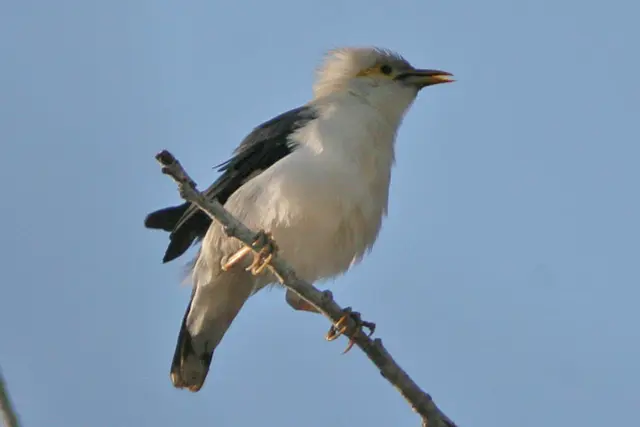
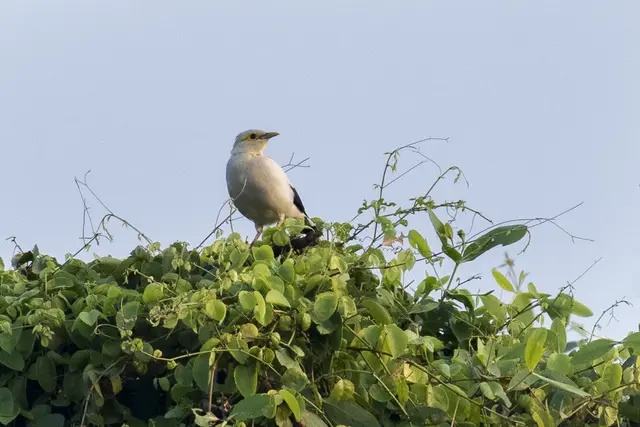
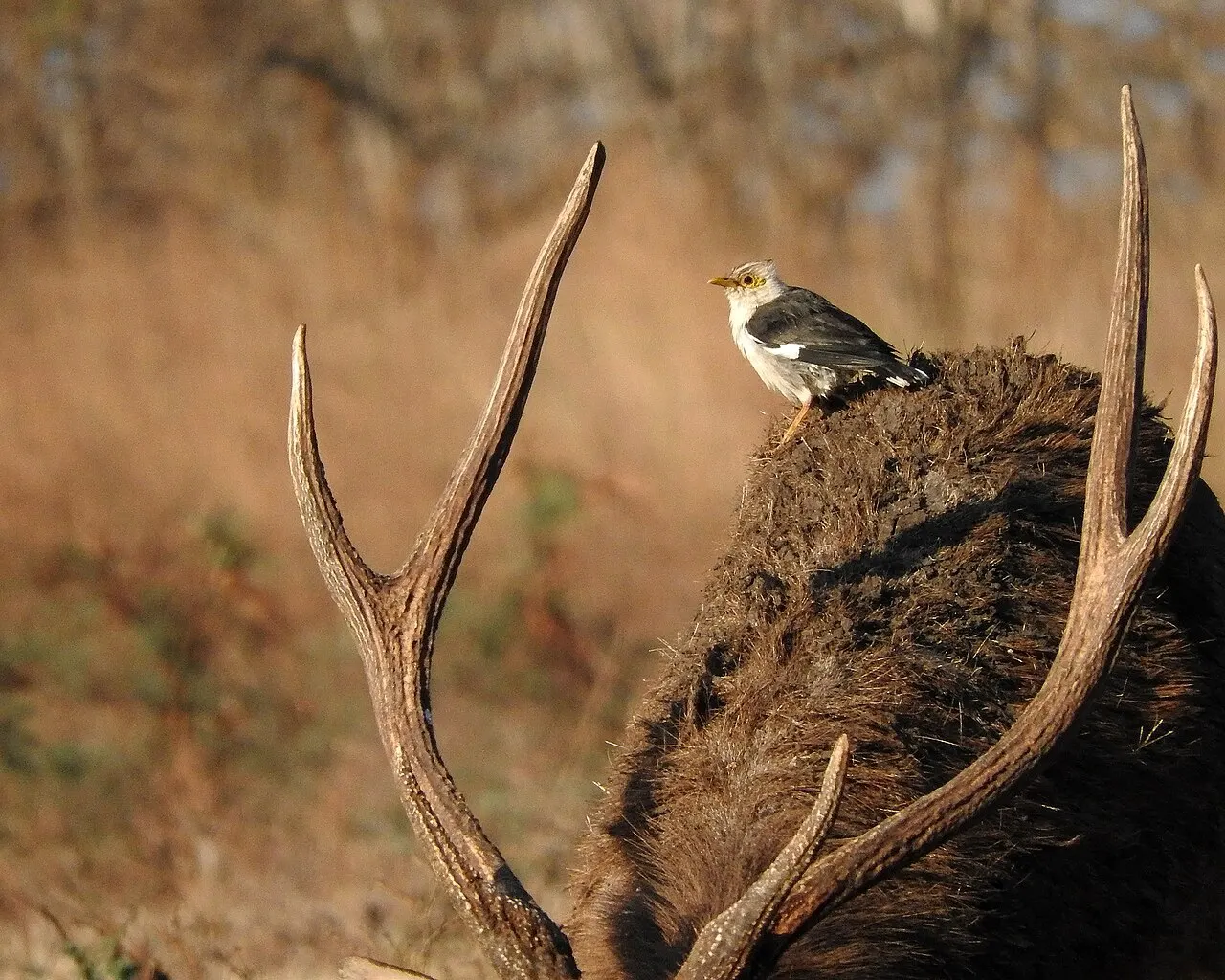
The grey-backed myna (Acridotheres tricolor) is a starling relative found only in the dry forests and scrub of southeastern Java, Indonesia. The IUCN Red List rated it Critically Endangered in 2018, with 50 to 249 mature birds estimated. Trapping for the cage-bird trade is the main threat.
How to recognise it
It resembles the black-winged myna of Java and Bali, but has a grey back and much more black on the wings. The black-winged myna as a whole measures about 23 cm, and the sexes look alike.
Whether it counts as a species is not settled. Some authorities treat it as a subspecies of the black-winged myna, while the IUCN assessment of 2018 treated it as a species in its own right. The 2018 assessment is not the most recent IUCN treatment of the group, so figures from different years may not describe the same bird.
Where it lives
The bird is restricted to southeastern Java. Baluran National Park in East Java is one of only two places where it is still known in the wild.
The IUCN lists habitats from dry subtropical forest and dry or moist shrubland to dry savanna, pastureland and arable land, from sea level up to 2,400 m. It is not a migrant.
Pins are Wikidata “endemic to” fields. Orange dots, when present, are GBIF occurrence tiles — survey bias included.
How it lives
Detailed studies of this form are scarce, but the black-winged myna group as a whole eats fruit, nectar and insects. It feeds in pairs or small groups, in trees and on the ground. It nests in a twig-lined hole among rocks or in a tree, and is apparently monogamous.
Why it is in trouble
Counts are small and the figures differ. The IUCN assessment (2018) gives 50 to 249 mature individuals and a decreasing trend. A 2021 report from the Monitor Conservation Research Society put Baluran at a minimum of 50 birds in 2017 and no more than a few dozen in 2020, while unpublished research suggested 140 to 220 birds.
Capture for the cage-bird trade is the main cause, and the IUCN records the species as the intentional target. Between April 2020 and March 2021, researchers tracking online sales found at least 19 grey-backed mynas offered on social media by 16 different sellers. Some were advertised as Baluran locals. The IUCN also lists herbicides and pesticides as a threat.
What is being done
The species occurs in at least one protected area, and the 2018 assessment records site and area management, captive breeding and trade management among the actions listed. At that time there was no recovery plan, no systematic monitoring scheme and no invasive species control.
The 2021 report recommended a rapid reporting system for sightings, trapping, trade and keeping of the birds, and patrols using the SMART system, which it says has worked elsewhere.
Sources
Written for this catalog in our own words from the sources below, checked against them on 12 November 2026. Population figures are estimates and carry the year they were made. Status and assessment year: IUCN. 2026. The IUCN Red List of Threatened Species. Version 2026-1. iucnredlist.org.