Critically Endangered
Crestless Fireback
Lophura erythrophthalma
The Malayan crestless fireback (Lophura erythrophthalma) is a shy, dark pheasant of lowland rainforest in Peninsular Malaysia and Sumatra. The IUCN Red List rated it Critically Endangered in 2022, after a suspected population fall of more than 80 percent driven by forest loss and hunting.
How to recognise it
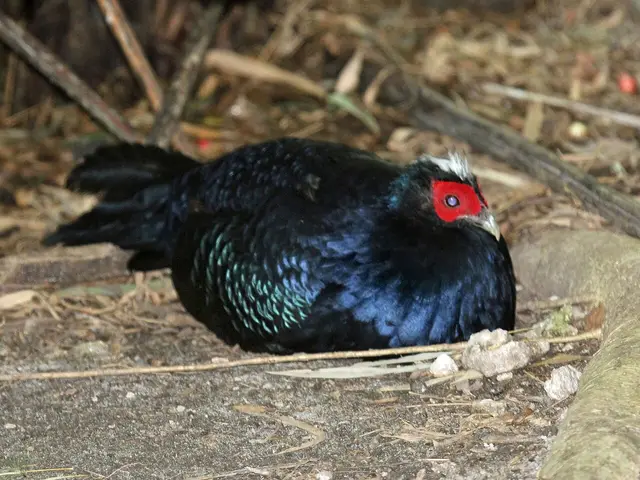
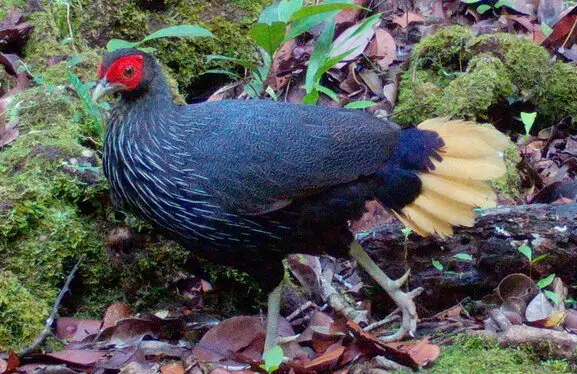
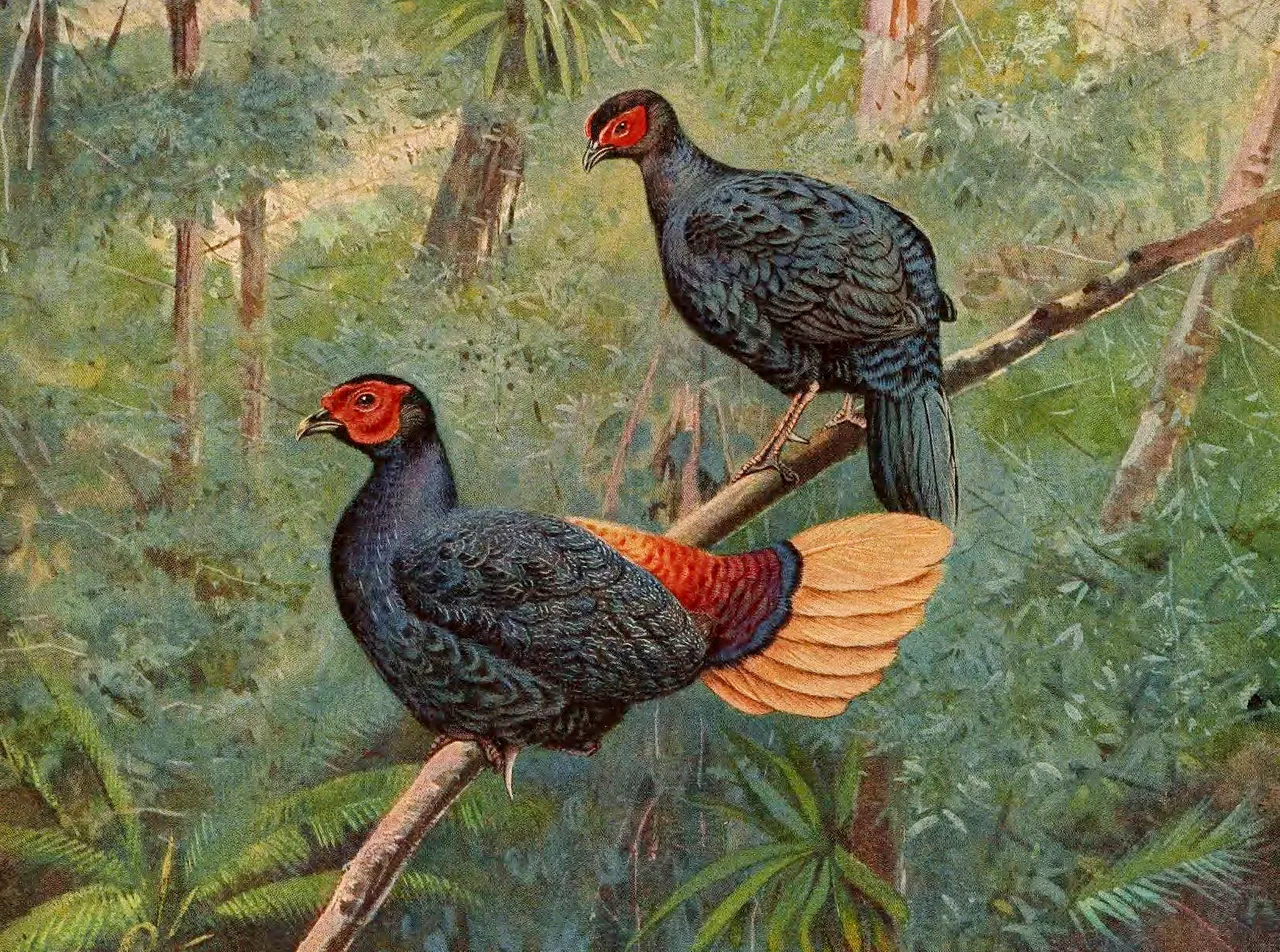
Descriptions of the crestless fireback group give a medium-sized pheasant, about 38 cm long in the male, with bare red facial skin and no crest. Males have a greenish bill, bluish-grey legs with long spurs and a chestnut rump. The Malayan male is notably dark, with plumage that is virtually unmarked. That separates it from the Bornean crestless fireback (Lophura pyronota), whose male is greyer with black and white speckling and steel-blue upper tail coverts.
Females are slightly smaller, almost entirely black with a blue or green sheen, with a black bill and short spurs. A female can be mistaken for a male Salvadori's pheasant, which lives at higher altitudes on Sumatra.
Where it lives
It is a bird of lowland rainforest, including peat and karst forest, and has been recorded in logged secondary forest in Malaysia and Sumatra. The IUCN gives an upper elevation of 300 metres. In partly logged forest in those countries, densities of about six birds per square kilometre have been reported. On Sumatra it seems always to have been rare, and almost all suitable habitat there has been cleared.
Pins are Wikidata “endemic to” fields. Orange dots, when present, are GBIF occurrence tiles — survey bias included.
How it lives
Crestless firebacks are retiring and seldom seen, usually in pairs or small groups on the ground in undergrowth. They feed by day, scratching through leaf litter for small animals and eating plant material and fallen fruit. A wild nest of the group was found between the buttress roots of a large tree, holding four or five pale eggs, and the birds have bred in captivity. Details specific to the Malayan species are thin.
Why it is in trouble
An estimate of 10,000 to 20,000 mature birds is attributed to the IUCN in older summaries, but it is undated and no longer reflects the situation. BirdLife's 2022 review concluded that the population likely fell by more than 80 percent over three generations. The IUCN gives a generation length of about 7 years. The review put the loss of flat forest below 200 metres at roughly 65 to 68 percent over that period. Hunting and forest fragmentation are believed to add to each other, because fragmented forest is easier for hunters to reach. Hunting is suspected to have caused local losses even inside Taman Negara National Park.
Of about 22 Peninsular Malaysian sites with records since 1980, only about six still have suitable habitat. A 2018 study by Symes and colleagues, discussed in the review, estimated an 84 percent reduction and judged hunting a bigger driver than forest loss. The IUCN lists targeted hunting, accidental catches, farming and housing among the threats.
What is being done
The species occurs in at least one protected area. The IUCN records a recovery plan, conservation sites identified across the whole range, and captive breeding among the actions in place. There is no systematic monitoring scheme.
Sources
Written for this catalog in our own words from the sources below, checked against them on 12 November 2026. Population figures are estimates and carry the year they were made. Status and assessment year: IUCN. 2026. The IUCN Red List of Threatened Species. Version 2026-1. iucnredlist.org.