Endangered
Brasília tapaculo
Scytalopus novacapitalis
The Brasília tapaculo (Scytalopus novacapitalis) is a small, ground-dwelling bird of swampy gallery forest in central Brazil. The IUCN Red List rated it Endangered in 2018 because it occupies only about 72 square kilometres, in fragmented patches that are being drained, burned and cleared.
How to recognise it
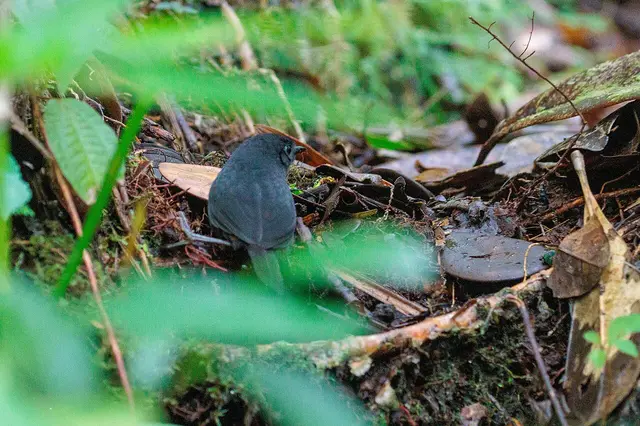
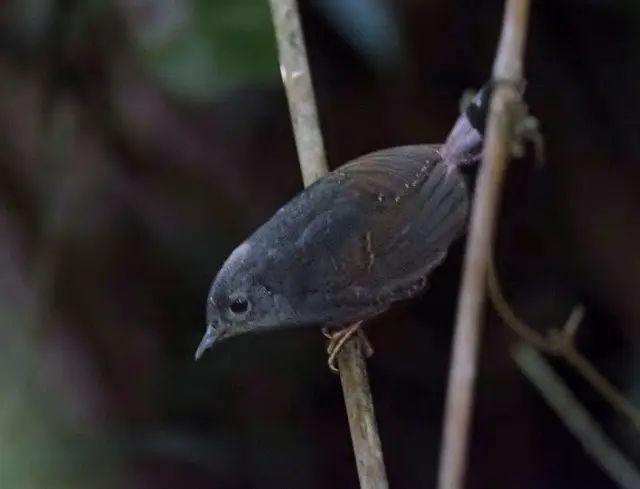
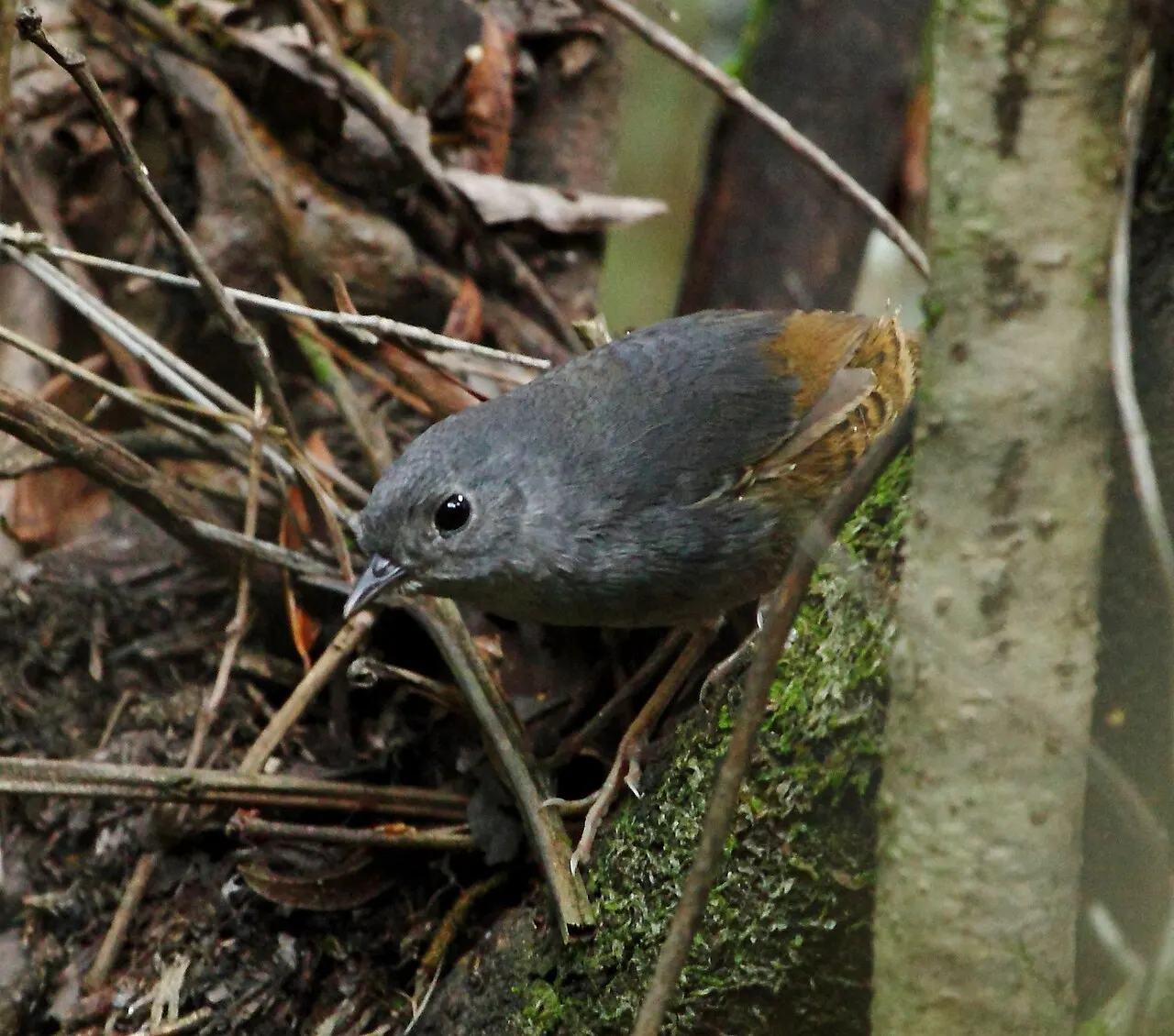
It is a tapaculo of the family Rhinocryptidae, about 11 cm long. One male weighed 19.2 g, and two unsexed birds weighed 15.6 g and 18.6 g. Adults are blue-gray above and whitish to pale gray below, with a reddish-brown lower back and rump and a rufous, gray-barred vent. The juvenile plumage has not been described.
Helmut Sick described the species in 1958. Its closest relatives are the Planalto, rock and Diamantina tapaculos. The song is reportedly a single note repeated for a minute or more, and the alarm call is a series of sharp notes.
Where it lives
The bird is endemic to Brazil, in separate patches in eastern Goiás, the Federal District around Brasília and western Minas Gerais. It lives in swampy gallery forest along streams, mainly in permanently flooded ground with Blechnum ferns and Euterpe palms. The Red List gives its elevation range as 860 to 1,100 m.
The Red List estimates its area of occupancy at about 72 square kilometres and describes the population as severely fragmented.
Pins are Wikidata “endemic to” fields. Orange dots, when present, are GBIF occurrence tiles — survey bias included.
How it lives
It reportedly forages on the ground for insects, spiders and centipedes. Very little is known about its breeding. The only record is of a bird collected in July that had active gonads. It is not a migrant, and the generation length is estimated at 3.2 years.
Why it is in trouble
The Red List names agricultural expansion, the drawing of surface water for farming, more frequent fires and mining and quarrying as threats. Each degrades or removes the wet forest the bird needs, and the area and quality of habitat are still declining. The population trend is decreasing, though the number of birds has never been estimated.
What is being done
Conservation sites have been identified across the species' entire range, and it occurs in at least one protected area, reportedly six. There is no recovery plan and no systematic monitoring scheme in place.
Sources
Written for this catalog in our own words from the sources below, checked against them on 12 November 2026. Population figures are estimates and carry the year they were made. Status and assessment year: IUCN. 2026. The IUCN Red List of Threatened Species. Version 2026-1. iucnredlist.org.