Endangered
Bahian Mouse-colored Tapaculo
Scytalopus gonzagai
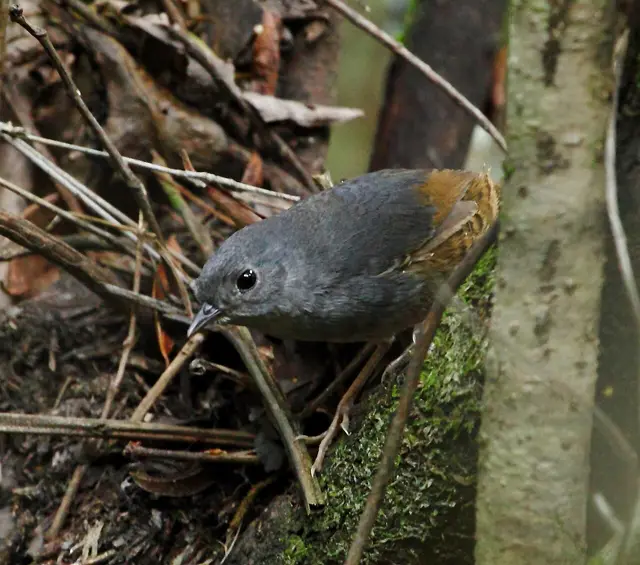
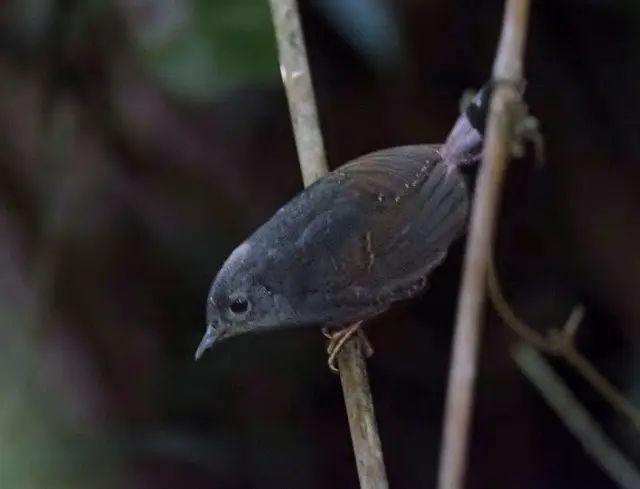
The Boa Nova tapaculo, also called the Bahian mouse-colored tapaculo (Scytalopus gonzagai), is a small grey forest bird found only in the mountains of southern Bahia, Brazil. It was recognised as a species in 2014. The IUCN Red List assessed it as Endangered in 2022, with a small range and shrinking habitat.
How to recognise it
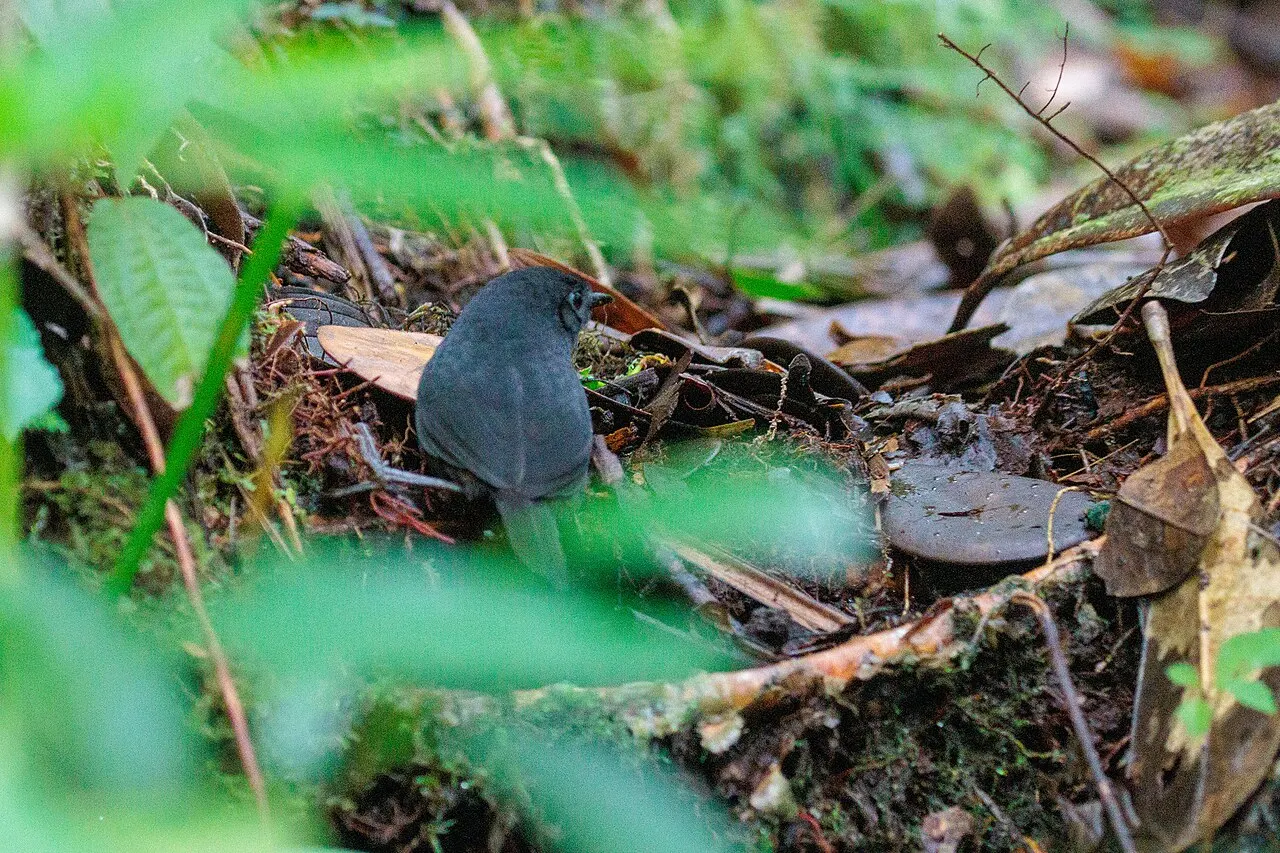
This is a plain, rounded little bird, about 12 cm long and around 15 g, with grey plumage and yellowish to light brown claws. It belongs to the tapaculos (family Rhinocryptidae). It stays low in dense vegetation, so a sighting is a matter of patience.
Voice is the better clue. Researchers describe three kinds of call: a song, an alarm call, and a short "kreew" that probably keeps pairs in contact. Differences in song and in the shape and measurements of specimens separated it from the mouse-colored tapaculo (Scytalopus speluncae), a bird it was long mistaken for.
Where it lives
The species is known from just five localities in two mountain areas of southeastern Bahia. One group lies on the Planalto da Conquista, between the towns of Boa Nova and Iguai. The other is about 100 km to the southeast, in the Serra das Lontras near Arataca. All of it is montane Atlantic Forest, at roughly 660 to 1,140 m above sea level.
The 2022 Red List assessment gives an extent of occurrence of about 3,300 square kilometres and an area of occupancy of 760 square kilometres, both measured on coarse grids. The forest actually holding the bird is much smaller. One estimate puts it at about 5,885 hectares.
Pins are Wikidata “endemic to” fields. Orange dots, when present, are GBIF occurrence tiles — survey bias included.
How it lives
It keeps to dark, dense, humid undergrowth, hopping over the ground, rocks, fallen logs and tangled low branches up to about 2 m high. Males hold territories and are found alone or with a mate. Females have only been seen alongside territorial males.
A 2014 estimate gave roughly 0.49 birds per hectare, which scaled up to about 2,883 birds in total. The Red List gives a range of 1,000 to 2,499 mature individuals in two subpopulations, the larger holding perhaps 251 to 1,000.
Why it is in trouble
Its forest is shrinking. The Red List names shifting agriculture, small-scale harvesting of forest products and more frequent fires as the main pressures, and it records a continuing decline in the area the bird occupies and an overall decreasing trend. A 2014 Mongabay report on the discovery cited clandestine timber extraction, deforestation and frequent burning in the remaining forest.
The same report put Bahia's net forest loss at close to 2 million hectares between 2001 and 2012, and quoted WWF as saying about 7 percent of the original Atlantic Forest remains.
What is being done
Part of its range sits inside national parks. The Red List says 41 to 50 percent of the population is in protected areas, and the 2014 report put it at nearly 60 percent of the range. Those figures differ, so the true share is uncertain. Forest outside the parks is still being degraded: the same report said even the Boa Nova Wildlife Refuge lost about 2.5 percent of its forest cover over the previous decade.
The assessment lists habitat protection and awareness work as conservation actions. It records no recovery plan and no systematic monitoring scheme.
Sources
Written for this catalog in our own words from the sources below, checked against them on 12 November 2026. Population figures are estimates and carry the year they were made. Status and assessment year: IUCN. 2026. The IUCN Red List of Threatened Species. Version 2026-1. iucnredlist.org.