Endangered
Diamantina Tapaculo
Scytalopus diamantinensis
The Diamantina tapaculo (Scytalopus diamantinensis) is a small, forest-dwelling bird found only in the Chapada Diamantina uplands of Bahia, northeastern Brazil. It was described in 2007. The IUCN Red List rated it Endangered in 2022 because its range is tiny and its forest patches are shrinking.
How to recognise it
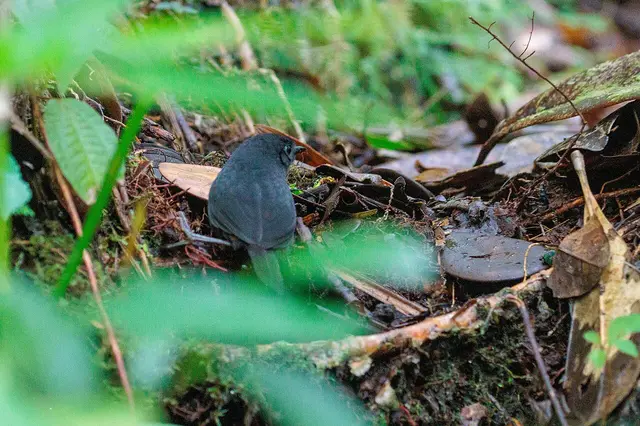
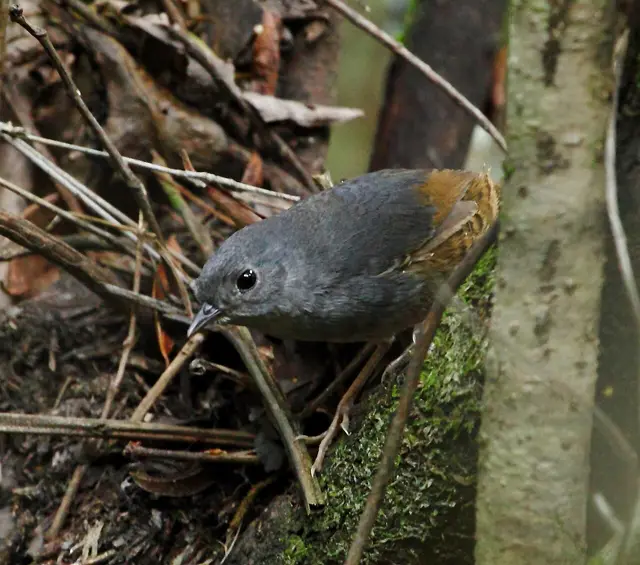
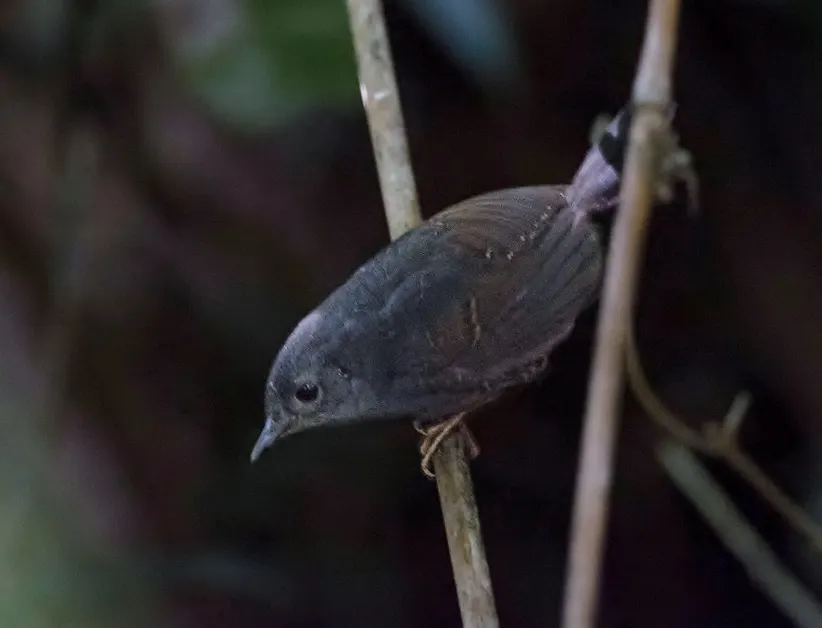
It is a 10 to 11 cm bird weighing about 15 g. Males are mainly dark grey above and paler grey below, with buff flanks barred in dark. That barring separates it from the similar mouse-colored tapaculo, which lacks it. Females are browner.
The song is a single note repeated rapidly, often for more than a minute, while the call is a short 'tcheep'. The 2007 description found the call notably distinct from those of its relatives, though the song differs little.
Where it lives
It is restricted to the Chapada Diamantina in Bahia. It lives between roughly 800 and 1,600 m, in patches of dense forest and in young and old regrowth, in a region otherwise covered by campo rupestre, a rocky grassland. The Red List also lists high-altitude shrubland and heavily degraded former forest among its habitats.
The assessment counts only five locations and describes the range as restricted.
Pins are Wikidata “endemic to” fields. Orange dots, when present, are GBIF occurrence tiles — survey bias included.
How it lives
Little is known. Nothing has been published on diet or foraging, and a single nest has been described: a bowl of grass in a rock crevice, where both adults fed two nestlings.
Discovery and classification
Bornschein and colleagues described it in 2007 in the Brazilian journal Revista Brasileira de Ornitologia, using voice, plumage and DNA. They placed it in the Scytalopus speluncae group, closest to the Brasilia tapaculo, the Planalto tapaculo and an undescribed bird from the southern Serra do Espinhaco. Some checklists treat it as especially close to the Planalto tapaculo, a placement the International Ornithological Congress has not accepted.
Why it is in trouble
The Red List gives the trend as decreasing, with a population estimate of 2,500 to 9,999 (2022). Fire, shifting and small-scale farming, harvest effects such as firewood gathering, and tourism are listed as threats. Conversion of native vegetation to coffee and banana plantations is also reported to reduce habitat. Conservation sites have been identified across the whole range, and the assessment names habitat protection, private-sector standards and livelihood alternatives as actions, but no recovery plan or monitoring scheme was in place.
Sources
Written for this catalog in our own words from the sources below, checked against them on 12 November 2026. Population figures are estimates and carry the year they were made. Status and assessment year: IUCN. 2026. The IUCN Red List of Threatened Species. Version 2026-1. iucnredlist.org.