Critically Endangered
Rota White-eye
Zosterops rotensis
The Rota white-eye (Zosterops rotensis), also called the Rota bridled white-eye, is a small yellowish forest bird found only on Rota in the Northern Mariana Islands. The IUCN rated it Critically Endangered in 2018, with an estimated 3,750 to 14,000 mature birds confined to the island's Sabana plateau.
How to recognise it
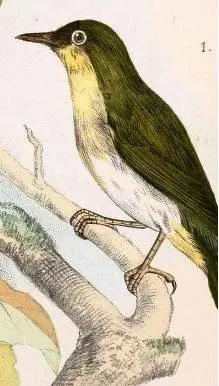
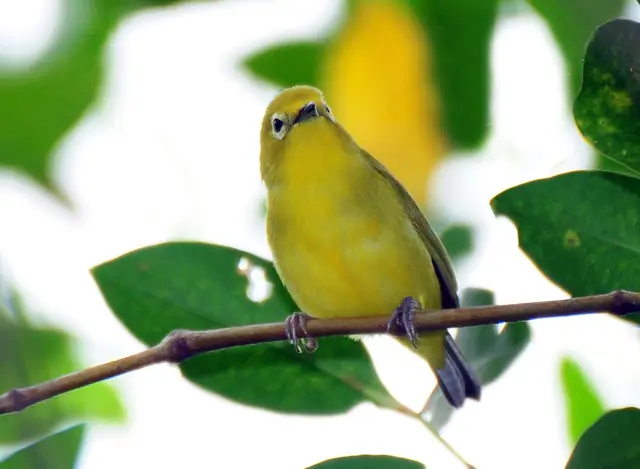
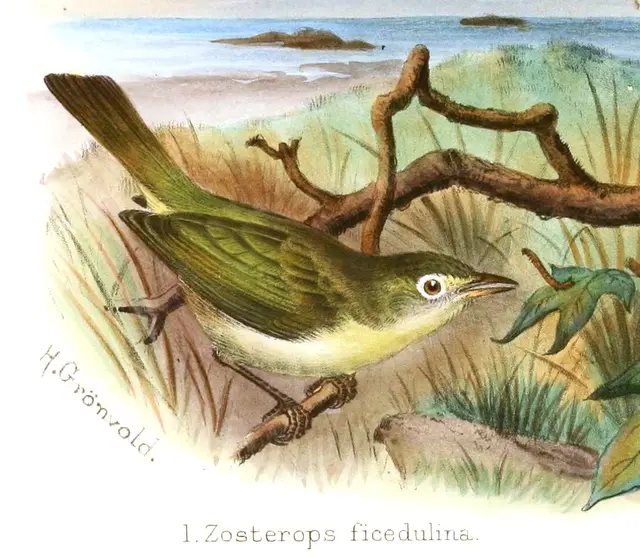
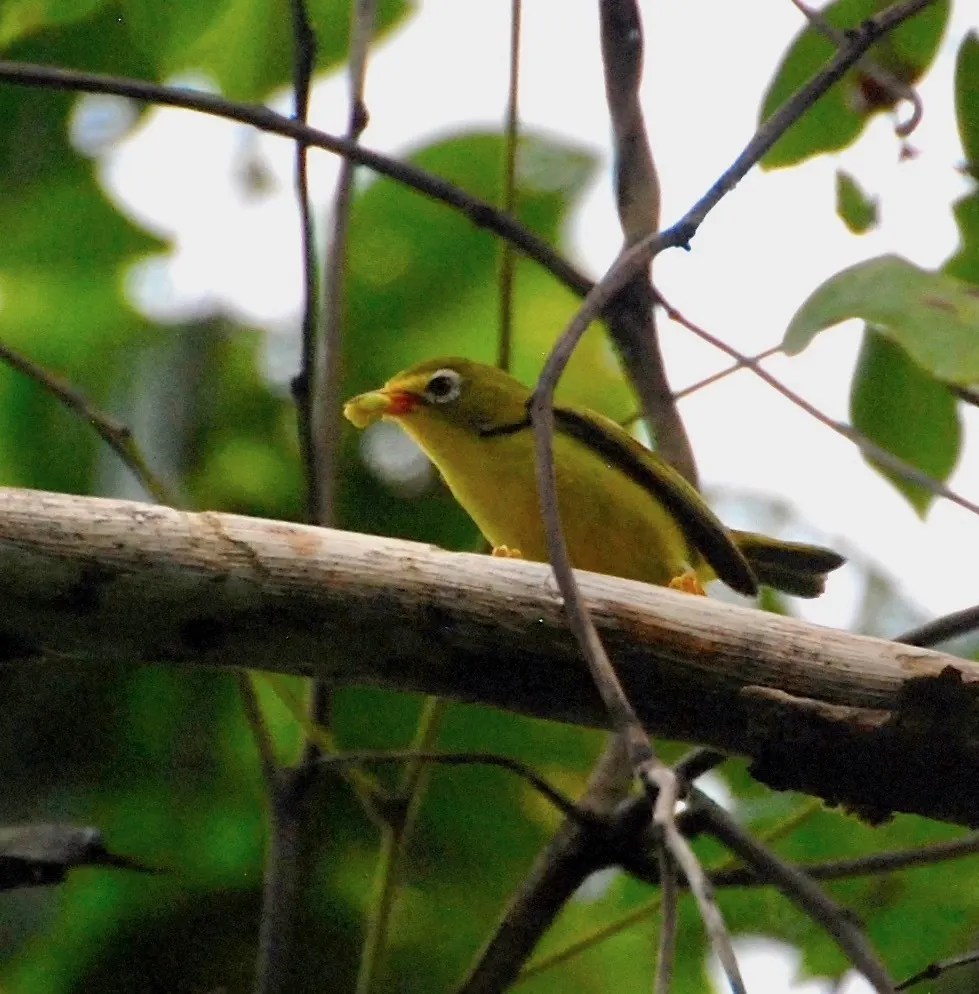
It is a warbler-like bird about 10 cm long and weighs roughly a third of an ounce. The back is yellowish-olive, the underparts and the patch between eye and bill are saffron-yellow, and a bold white ring circles the eye. It travels in small groups and is quieter and less conspicuous than most white-eyes. Calls include a harsh, rolling low note and a buzzing series of zee notes.
Where it lives
The species is endemic to Rota and is treated as a single location. It was once thought common and widespread on the island but has been confined to the Sabana plateau since the 1980s. Surveys between 2005 and 2008 found it in about 298 ha spread over six areas at roughly 100 to 490 m above sea level.
It appears to favour mature, wet limestone forest with mid-sized trees, dense foliage and plenty of epiphytes, and it avoids grassland. It eats insects, seeds and fruit, and perhaps nectar. It is a resident that does not migrate, and it reportedly forages and roosts in flocks. Nesting has been recorded from December to August, with one or two eggs usually laid.
Pins are Wikidata “endemic to” fields. Orange dots, when present, are GBIF occurrence tiles — survey bias included.
Why it is in trouble
Numbers crashed once already. A 1982 island-wide count gave about 10,000 birds, and by 1999 the figure was around 1,000. The IUCN considers habitat loss and degradation from farming, development and typhoons the most likely main cause, with pesticides and predation by introduced rats and black drongos also implicated. The native Micronesian starling and Mariana crow have been recorded raiding nests as well.
The IUCN's 2018 assessment lists agro-industry farming, housing development, introduced black drongos, typhoons and flooding, and pesticides as ongoing threats. It lists the brown tree snake, which devastated the birds of nearby Guam, as a future threat: the snake has been introduced on Saipan but is not established on Rota. Climate-related habitat change is also listed as a future threat. Because the whole species sits in one small area, a single typhoon or disease outbreak could cause a steep loss.
The population has stabilised or increased since the 1990s, and the IUCN estimate for 2012 was back at 1980s levels. The 2018 assessment rates the trend as increasing and the population as not declining, though the area it occupies is still shrinking.
What is being done
The US government listed the bird as endangered in 2004, designated 3,958 acres of critical habitat in 2006 and issued a recovery plan in 2007. The plan's long-term goal is a stable population of 10,000 birds. The IUCN records invasive species control and an identified conservation site over its entire range, but no protected area and no systematic monitoring scheme.
Recommended steps include controlling and watching for brown tree snakes, controlling drongos if they prove harmful, an island-wide habitat plan with native forest protection and replanting in Sabana, and a captive population as insurance if the snake becomes established.
Sources
Written for this catalog in our own words from the sources below, checked against them on 12 November 2026. Population figures are estimates and carry the year they were made. Status and assessment year: IUCN. 2026. The IUCN Red List of Threatened Species. Version 2026-1. iucnredlist.org.