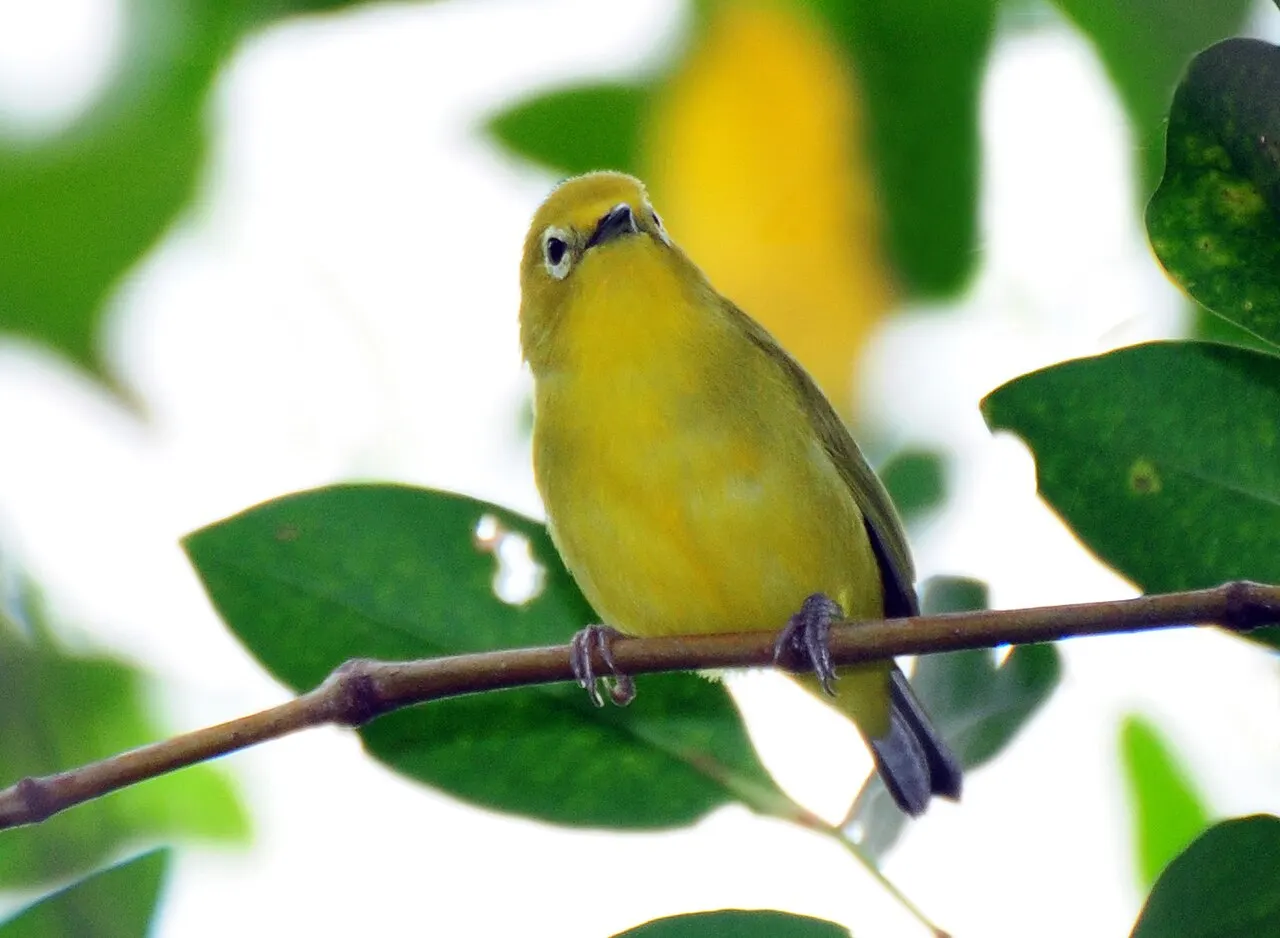
Endangered
Javan White-eye
Zosterops flavus
The Javan white-eye (Zosterops flavus) is a small yellow-bellied songbird of coastal wetlands on Java and Madura in Indonesia. The IUCN Red List rated it Endangered in 2021. Trapping for the cage-bird trade has driven surveyed numbers down sharply in little over a decade.
How to recognise it
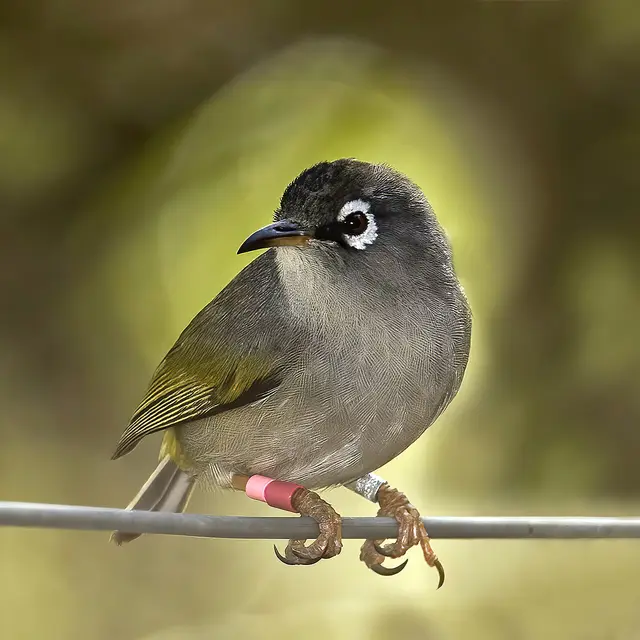
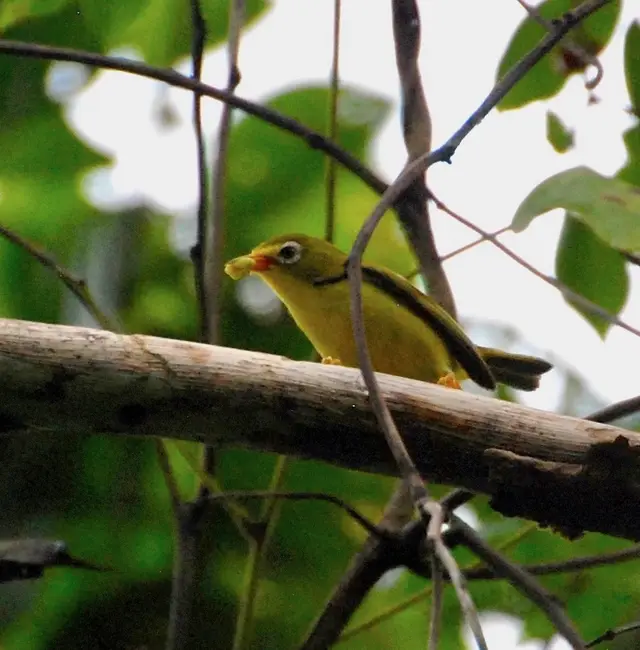
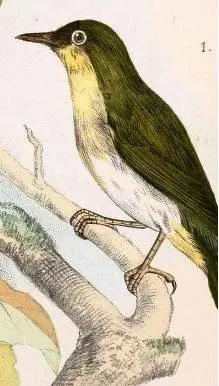
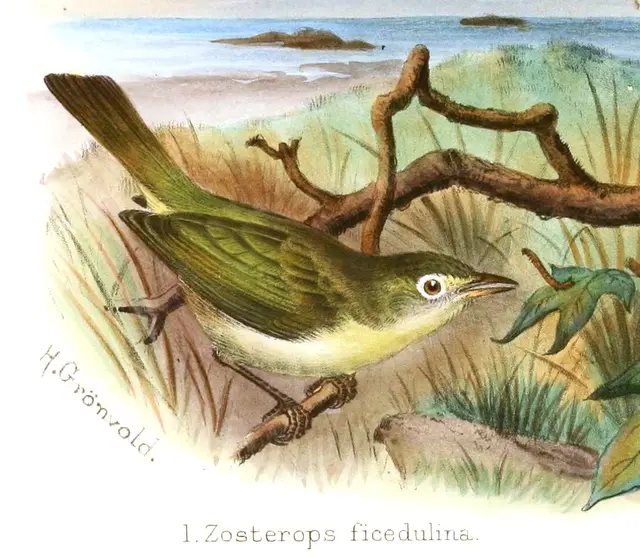
This is a tiny bird, about 10 cm long, with yellow plumage underneath. Like other white-eyes it lives in cohesive groups, and it feeds on insects, mainly beetles and caterpillars. Thomas Horsfield described it in 1821.
Where it lives
It lives in coastal habitats: mangroves, scrub, grassland, beaches, mudflats and lowland moist forest, usually in low, often narrow strips of vegetation along the shore. It has also been recorded in urban parks, for example four in Malang, East Java, in 2015.
The Red List gives Indonesia and Malaysia as range countries and an extent of occurrence of about 17,700 square kilometres. A separate, isolated population in scattered coastal areas of southern Borneo is little known and has not been surveyed in detail.
Pins are Wikidata “endemic to” fields. Orange dots, when present, are GBIF occurrence tiles — survey bias included.
Why it is in trouble
The main cause is capture for the domestic cage-bird trade. A study in Bird Conservation International (2023) repeated surveys at 19 coastal sites on Java and Madura, first counted in 2006 and 2009 and again in 2018 and 2019. Total counts fell from 805 birds to 143, a drop of roughly 80 percent. The three richest sites held 502 birds in the first survey and 22 in the second.
The researchers concluded that trapping was probably a bigger driver than habitat change, since the white-eye fell much faster than less-traded birds at the same places. They put the Java-wide population at perhaps 250 to 2,500 birds, though the surveys sampled sites rather than counting the whole population. Significant numbers turned up in market inventories on Java in 2014 and 2015, and in Kalimantan in 2015 and 2016 it was one of 15 songbirds sold in high volume at high prices.
The Red List also names housing, aquaculture ponds and small-scale farming as pressures that remove or degrade its habitat. It estimates a past and continuing decline of 50 to 79 percent and lists the population size as unknown.
What is being done
Indonesia has legally protected the species since 2018. The Red List records that it occurs in at least one protected area and notes habitat protection at national level, but no monitoring scheme, recovery plan or captive programme is in place. The 2023 study argued that all white-eyes should be protected, because the species look alike to buyers and enforcers.
Sources
Written for this catalog in our own words from the sources below, checked against them on 12 November 2026. Population figures are estimates and carry the year they were made. Status and assessment year: IUCN. 2026. The IUCN Red List of Threatened Species. Version 2026-1. iucnredlist.org.