Critically Endangered
Sangihe White-eye
Zosterops nehrkorni
The Sangihe white-eye (Zosterops nehrkorni) is a small yellow and olive songbird found only on Sangihe Island, north of Sulawesi in Indonesia. The IUCN rated it Critically Endangered in 2018. It is rarely seen, and its population is thought to be under 50 mature birds.
How to recognise it
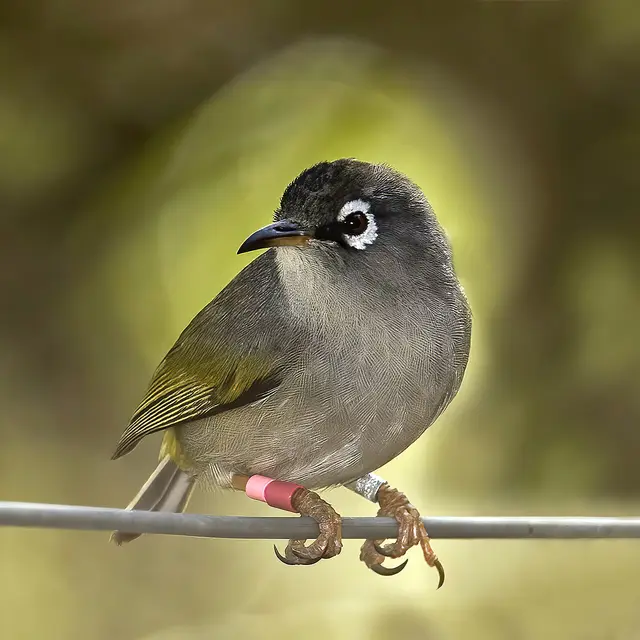
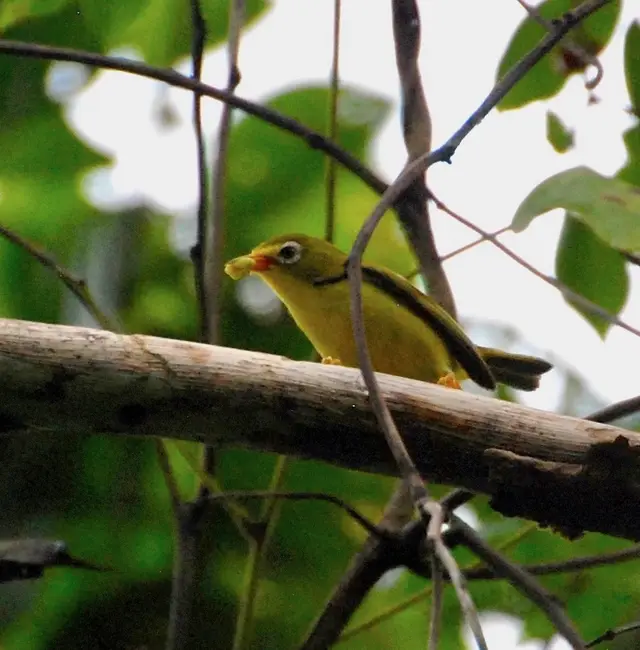
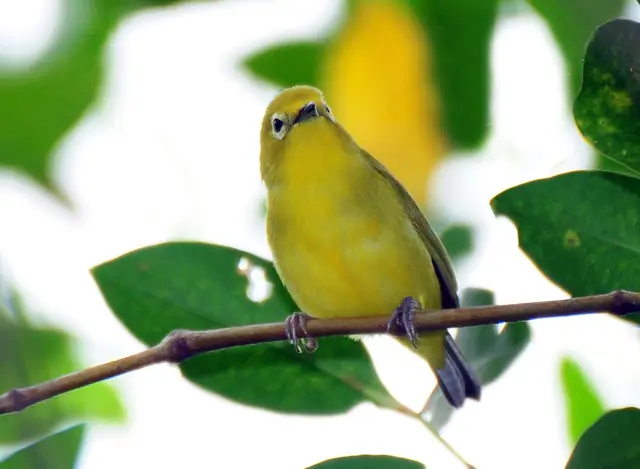
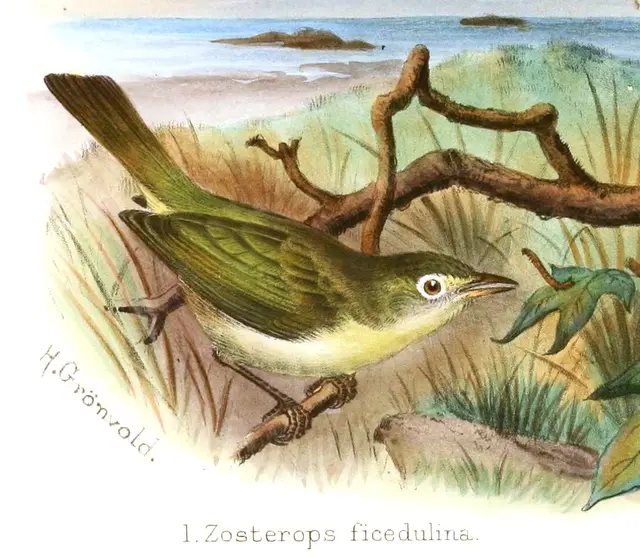
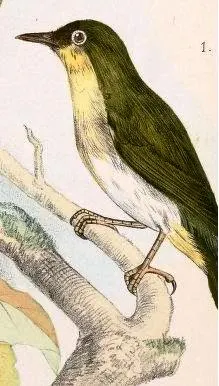
It measures 10.5 to 12 cm. The forehead and forecrown are black, the rear crown golden-olive, and the upperparts yellowish olive-green. A white ring circles the eye. The chin, throat and undertail are bright canary-yellow, while the rest of the underparts are pearly white with grey flanks. Bill and legs are pale orange-flesh, and the sexes look alike.
It was long treated as part of the black-crowned white-eye (Zosterops atrifrons). A 2000 paper in Forktail by Pamela Rasmussen and colleagues showed it is a separate species. Its song is thinner and more tinkling than that of the black-crowned bird, with less warbling.
Where it lives
The white-eye is known only from Mount Sahendaruman and nearby Mount Sahengbalira on Sangihe, an island north of Sulawesi. It lives in primary ridgetop and hill rainforest with plenty of screw pines (Pandanus), at roughly 750 to 920 m, and is absent from secondary habitats such as mixed plantations. The IUCN assessment gives a wider band of 750 to 1,000 m and counts a single location.
About 800 hectares of suitable habitat were reported to remain within the bird's range. It is also the only white-eye on the island.
Pins are Wikidata “endemic to” fields. Orange dots, when present, are GBIF occurrence tiles — survey bias included.
A rarely seen bird
Science knew the species from a single specimen collected in 1886 until it was seen again in August 1996, when three birds were watched on two consecutive days on Mount Sahengbalira. A second survey that November saw three birds just once. Over 60 days between August 1998 and February 1999, observers recorded one sighting and heard calls on three consecutive days. Many later visitors failed to find it at all.
The bird may range widely in search of fruit, and the loss of forest is thought to be holding its numbers down.
Why it is in trouble
The IUCN lists shifting agriculture, plantations, wood harvesting and, in future, climate-related change as threats, and records a decreasing population. A 1998 to 1999 survey by Jon Riley found that destruction of primary forest threatens all the island's most endangered birds. Loss of lowland forest has already caused the red-and-blue lory to die out on Sangihe.
The white-eye shares Mount Sahendaruman with two other Critically Endangered endemics, the cerulean paradise-flycatcher and the Sangihe shrike-thrush.
What is being done
The IUCN assessment recommends protecting the habitat on Mount Sahendaruman, working with local communities to restore degraded valleys, zoning the remaining forest within the Protection Forest boundary, continuing education about forest cover and farming, and lobbying against forest clearance for exotic tree plantations.
Awareness programmes have been run, and conservation sites have been identified across its range. The assessment records no recovery plan, no monitoring scheme and no protected area covering the species.
Sources
Written for this catalog in our own words from the sources below, checked against them on 12 November 2026. Population figures are estimates and carry the year they were made. Status and assessment year: IUCN. 2026. The IUCN Red List of Threatened Species. Version 2026-1. iucnredlist.org.