Endangered
Príncipe White-eye
Zosterops ficedulinus
The Príncipe white-eye (Zosterops ficedulinus) is a small olive-green songbird with a white eye-ring, living on the island of Príncipe in the Gulf of Guinea. The IUCN Red List assessed it as Endangered in 2018, with an estimated 250 to 999 individuals and a decreasing trend.
How to recognise it
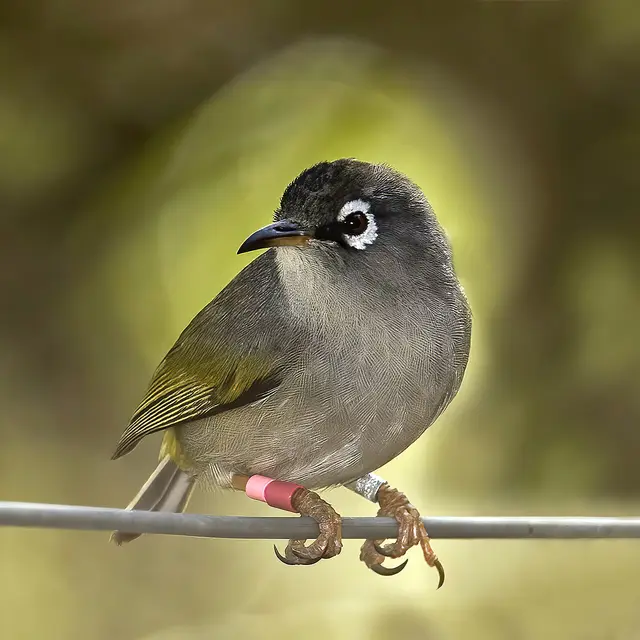
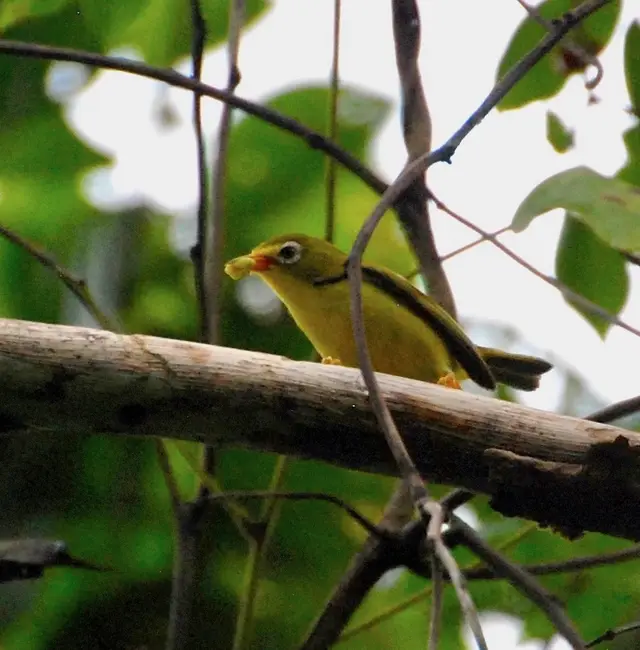
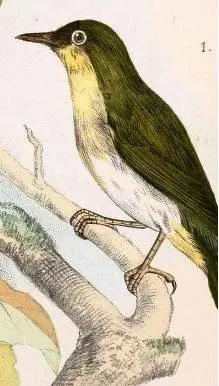
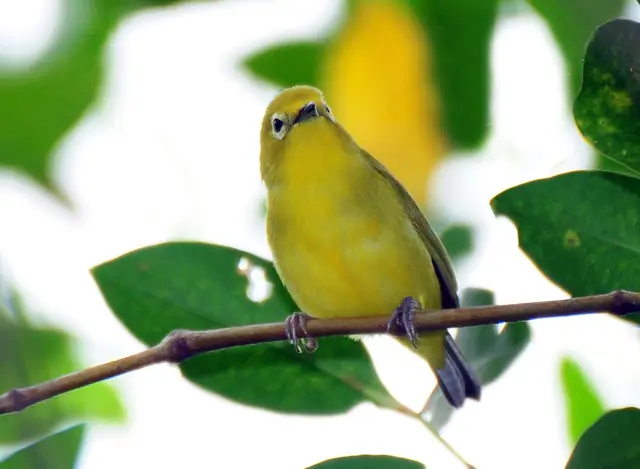
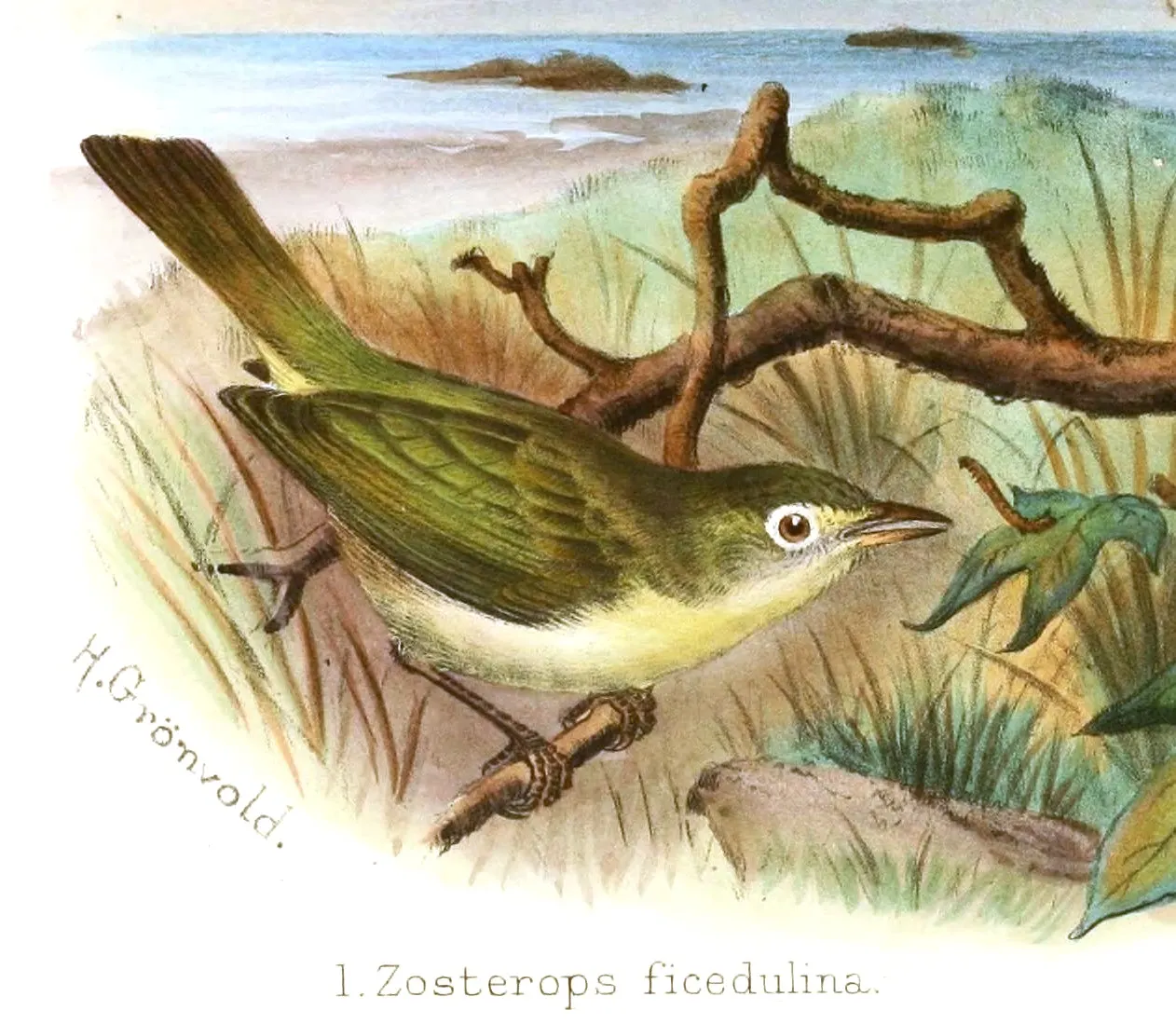
It is a small bird, about 10.5 cm long, with a dark brown head, a bright white ring around each eye and dark olive-green upperparts. The underparts are whitish with a yellow tinge, and the throat and upper breast carry faint dusky streaks.
Gustav Hartlaub described the species in 1866. The IUCN says it resembles the São Tomé white-eye (Zosterops feae) from the neighbouring island but is duller, with less bright green above and whiter underparts.
Where it lives
The IUCN's country records place it on Príncipe, part of São Tomé and Príncipe. The assessment lists tropical moist lowland forest and moist montane forest as its habitats. Its extent of occurrence is given as 50 square kilometres, and the number of locations as 11 to 100.
The IUCN records conservation sites across its whole range but not occurrence inside a formal protected area. Two natural parks have been set up in São Tomé and Príncipe since 2006, and in 2012 UNESCO classed the whole of Príncipe, with its waters and islets, as a biosphere reserve.
Pins are Wikidata “endemic to” fields. Orange dots, when present, are GBIF occurrence tiles — survey bias included.
Why it is in trouble
The population is tiny and the IUCN says it is still declining. The largest subpopulation is estimated at 251 to 1,000 individuals. The assessment lists small-holder farming and small-scale harvesting as ongoing pressures, each affecting under half the population and causing negligible declines, and commercial and industrial development as a possible future one. An unspecified past pressure, judged unlikely to return, is also recorded. The pressures named are tied to loss or degradation of forest.
The IUCN classes the bird as not migratory, so it stays on its island all year.
What is being done
The assessment records no recovery plan, no systematic monitoring scheme, no captive population, no education programme and no international trade control. Research on its life history and on its numbers is listed as a need.
Sources
Written for this catalog in our own words from the sources below, checked against them on 12 November 2026. Population figures are estimates and carry the year they were made. Status and assessment year: IUCN. 2026. The IUCN Red List of Threatened Species. Version 2026-1. iucnredlist.org.