Critically Endangered
Rapa shearwater
Puffinus myrtae
The Rapa shearwater (Puffinus myrtae), called kaki kaki locally, is a small seabird that breeds only on a few islets off Rapa, in French Polynesia's Austral Islands. The IUCN Red List assessed it as Critically Endangered in 2018, and counts since 2017 point to fewer than 100 breeding pairs.
How to recognise it
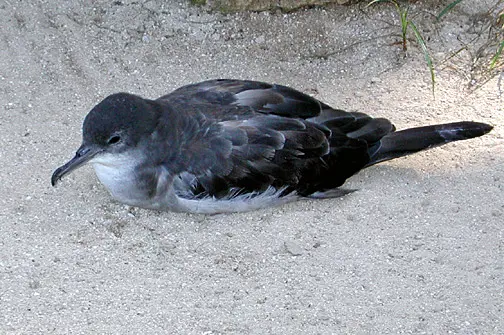
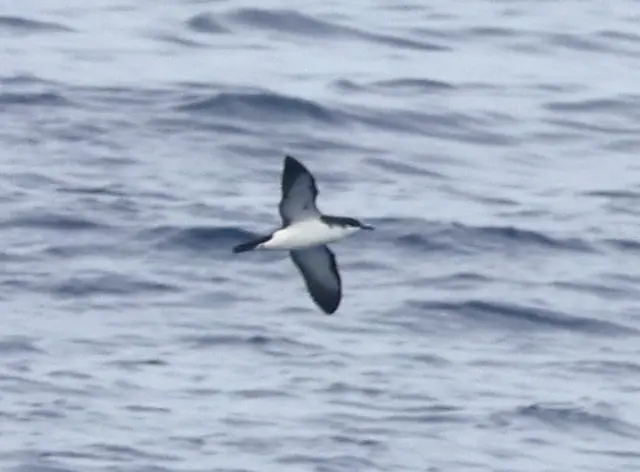
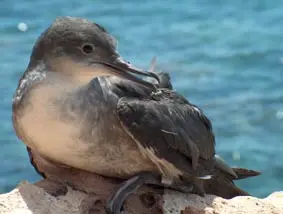
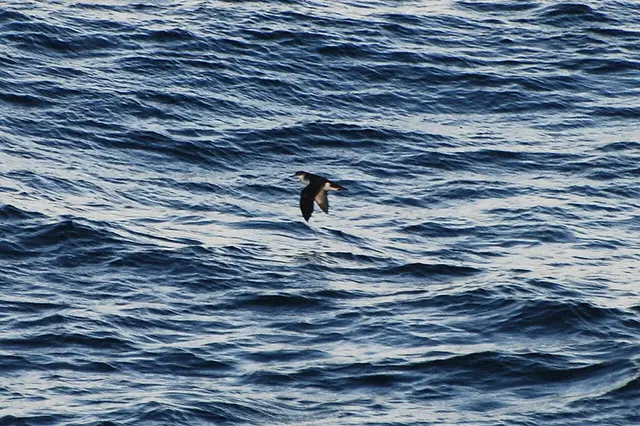
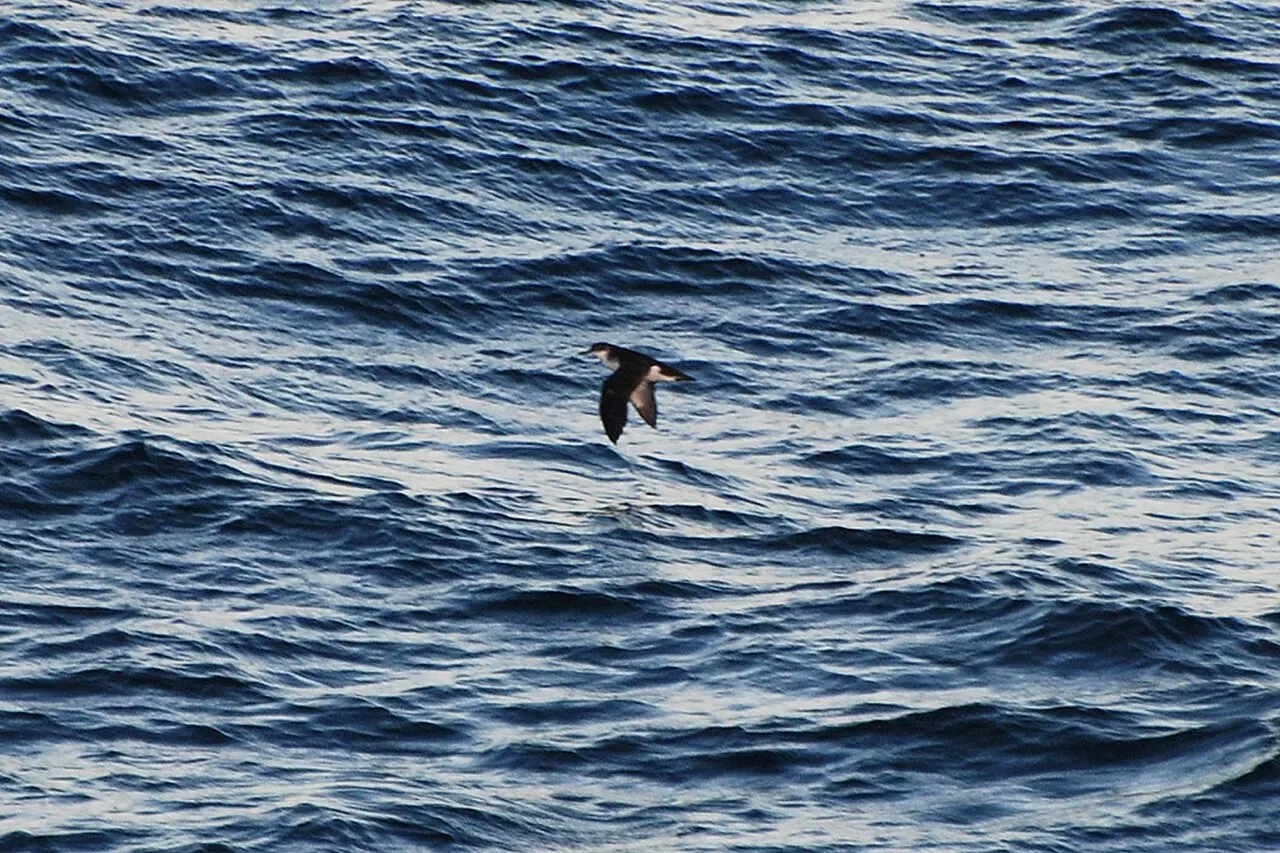
It is a medium-sized shearwater of about 33 cm, generally black above and white below.
For decades it was treated as a subspecies of the little shearwater. W. R. P. Bourne described it in 1959 from a bird collected on Rapa in 1925, a specimen later identified as a juvenile, and an adult was formally described in 2017. A 2015 genetic study placed it close to a group made up of the Hawaiian and little shearwaters, and it is now ranked as a species.
Where it lives
Rapa is the southernmost inhabited island of the Austral archipelago, ringed by ten islets. The shearwaters breed on a few of those islets, including Tauturou, Karapoo Koio, Karapo Rahi and the islet called Rapa Iti. Birds may also breed on Morotiri (formerly Marotiri), but only sightings at sea point that way. The species is presumed extinct as a breeder on Rapa's main island, though burrows of an unidentified seabird were found on a coastal cliff there in 2019. Pre-European bones turned up in excavations on the island, though the birds could have been caught on the islets.
Pins are Wikidata “endemic to” fields. Orange dots, when present, are GBIF occurrence tiles — survey bias included.
How it lives
It nests in burrows, and on the islets the same burrows are used in turn by black-winged petrels, which breed from November to April. Few details of its own breeding are known. Birds appear to be absent from the colonies in December and January and have been recorded back in March. Incubation has been recorded in July and chick-rearing from August to October.
In 2019 researchers fitted ten light loggers to adults on Rapa Iti and recovered one the next year. That single bird spent its non-breeding season roughly 1,000 to 2,000 km south-east of Rapa, between about 140 and 120 degrees west and 30 and 45 degrees south, farthest out in January. It did not incubate an egg in 2020, and from March to July it visited its burrow about once every 10 days.
Why it is in trouble
Counts show a steep fall. A 1974 estimate gave roughly 250 to 360 pairs. Surveys found 18 pairs on Rapa Iti in 2019 and only eight occupied burrows there in July 2022. A 2025 review put the total breeding population at fewer than 100 pairs, while the local conservation group reports about 60 pairs possible and only 7 confirmed in 2024. The IUCN estimate in 2018 was 50 to 249 mature individuals.
Introduced mammals are the main suspects. Polynesian rats prey on chicks and harass incubating adults, and the IUCN rates the rat as an ongoing cause of decline. Goats and brown rats are listed as past pressures, and feral cats are also blamed for the loss of the main-island population. Goats trample the soft soil where burrows are dug. Invasive plants add to the damage: Chinese guava blocks burrow entrances and its fruit feeds rats, and a sticky grass, Melinis minutiflora, may impair the birds' plumage. When the islets were checked in April 2017, only Karapoo Koio was free of rats and goats, leaving about 2 of the 37.5 hectares of breeding ground unaffected. Birds have also been found grounded under streetlights in the village. The IUCN lists past harvesting for food as a minor factor.
What is being done
The Polynesian Ornithology Society (SOP Manu) has worked on Rapa since 2017 with BirdLife International and the local group Raumatariki. Goats were removed from Tauturou and Karapo Rahi in 2019 and from Rapa Iti in 2021. Rats were eradicated from Tauturou and Rapa Iti in November and December 2023, and Karapo Rahi is the planned next site. Plans also include removing Chinese guava, replanting to hold back the sticky grass and cutting light pollution that harms fledglings. The work is part of an EU-funded LIFE project. The Red List assessment records that part of the range lies in a protected area.
Sources
Written for this catalog in our own words from the sources below, checked against them on 12 November 2026. Population figures are estimates and carry the year they were made. Status and assessment year: IUCN. 2026. The IUCN Red List of Threatened Species. Version 2026-1. iucnredlist.org.
- IUCN Red List assessment, Puffinus myrtae (2018)
- Withers et al. 2025, Breeding seabird assemblage of Rapa, Notornis 72(1)
- Jiguet et al. 2024, Tracking the non-breeding range of Rapa Shearwater, Bird Conservation International 34
- SOP Manu, Rapa shearwater page
- Rapa shearwater (encyclopedia entry)
- Birds of the World, Rapa Shearwater introduction