Critically Endangered
Townsend's Shearwater
Puffinus auricularis
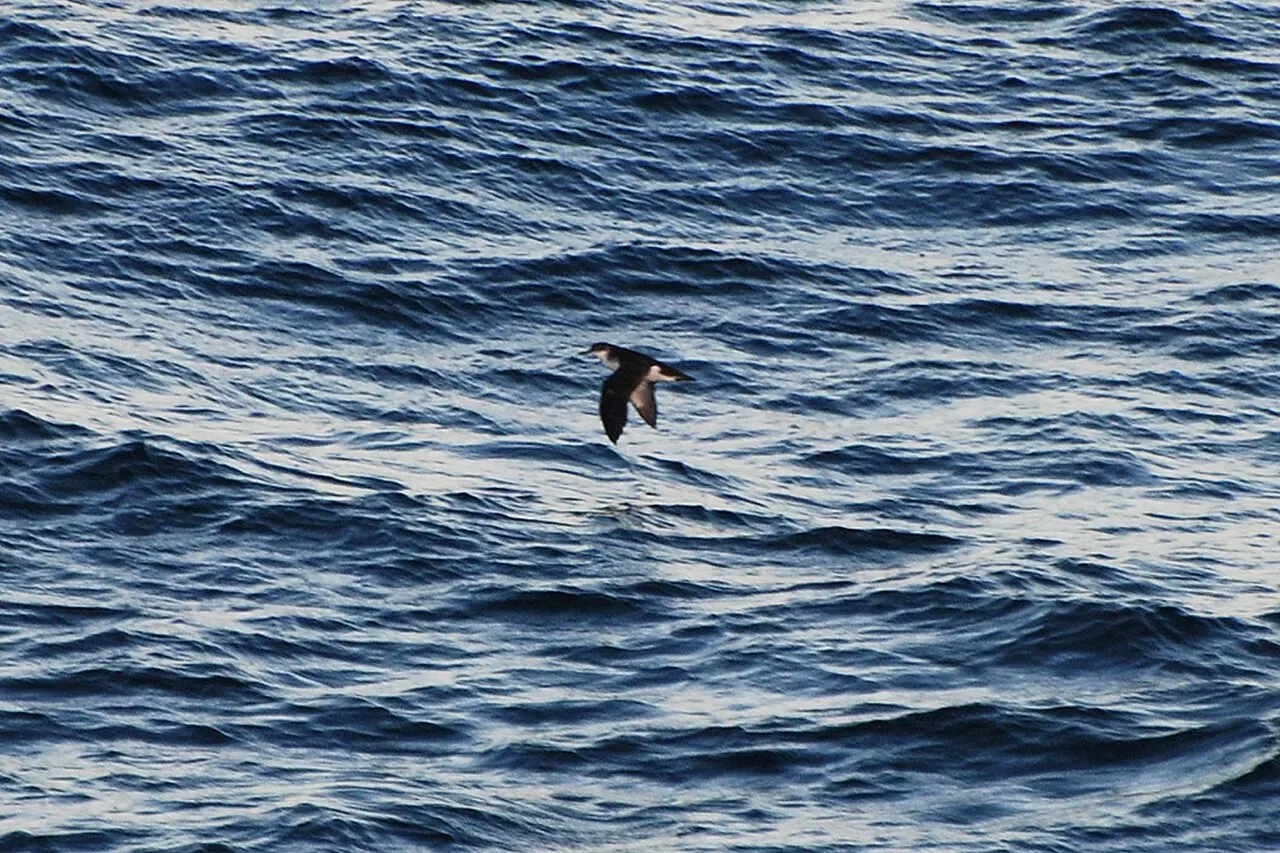
Townsend's shearwater (Puffinus auricularis) is a medium-sized black and white seabird that breeds only on Socorro, in Mexico's Revillagigedo Islands. The Red List assessed it as Critically Endangered in 2018. Introduced cats are the chief threat, and the breeding population is small.
How to recognise it
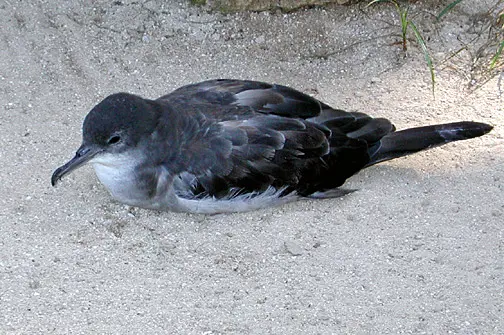
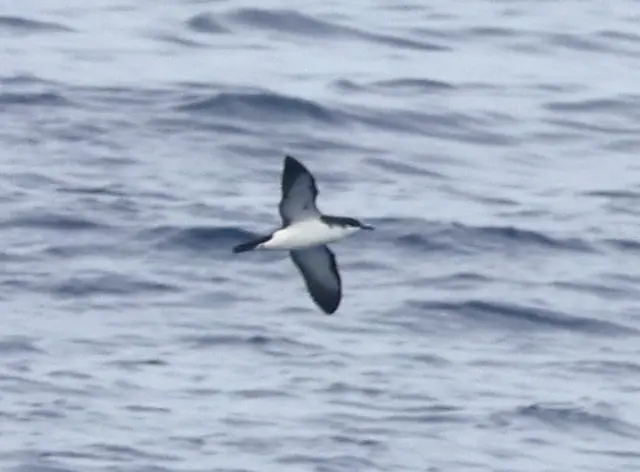
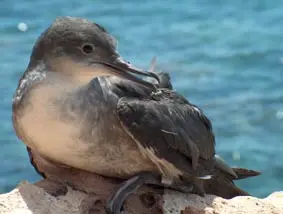
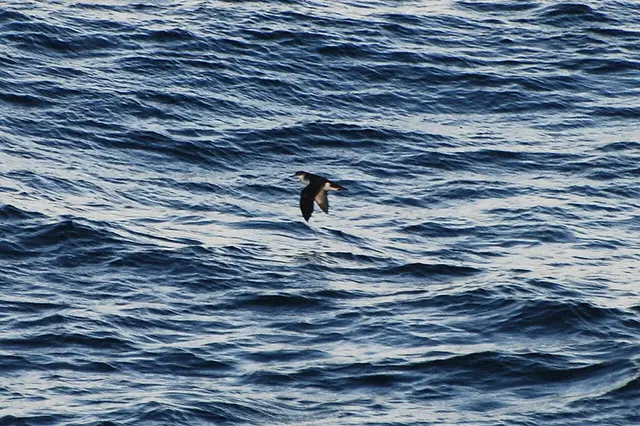
It is about 33 cm long, black above and white below, with a sharp change from black to white on the side of the head and a prominent white patch on each flank. Unlike Newell's shearwater of Hawaii, its undertail feathers are completely dark. Weights of 315 to 358 g are given for the species, though they come from an older account that also covered Newell's.
Where it lives
The species breeds only in the Revillagigedo Archipelago off Mexico's Pacific coast. Its main colony is on Socorro, where birds nest in rocky burrows in dense scrub at the forest edge, mostly above about 700 m, around Cerro Evermann. Charles Haskins Townsend described it in 1890, and it carries his name.
It once also nested on Clarión and San Benedicto. Pigs and rabbits were introduced to Clarión in 1979, and the birds were almost certainly gone by 1988. A volcanic eruption wiped out the San Benedicto colony in 1952. In the non-breeding season it forages largely over the continental shelf waters of Mexico, and single birds have been recorded as vagrants in Panama, Guam and the Northern Mariana Islands.
Pins are Wikidata “endemic to” fields. Orange dots, when present, are GBIF occurrence tiles — survey bias included.
How it lives
Birds return to the colony in mid-November, and breeding runs from late January to mid-March. Each pair lays a single egg. Burrows sit just 3 to 10 m apart, and first breeding is thought to come at around six years old, though those figures come from an older account that treated Newell's shearwater as the same species.
At sea it dives from the surface after fish and squid, reaching depths of about 10 m.
Why it is in trouble
Feral cats, introduced to Socorro in the early 1970s, are the leading threat. The Red List rates their impact as rapid decline across the whole range, and notes that more than 92 percent of cat droppings found above 500 m held shearwater remains. Introduced rabbits and house mice are also listed as ongoing, and rats are a future risk. Past damage came from pigs, sheep and goats, which degraded nesting habitat.
A 2026 study in the journal Oryx, by Solís-Carlos and colleagues, used acoustic surveys on Socorro and Clarión from 2016 to 2024. It put the Socorro population at fewer than 200 pairs and described a slow decline. Native predators, including land crabs, snakes and ravens, also take eggs and chicks, so breeding stays unreliable. The Red List counted 250 to 999 mature birds in 2018. Light pollution from construction of a new airstrip in 2009 is believed to have killed an unknown number of birds.
What is being done
The Revillagigedo Islands became a Biosphere Reserve in 1994. Pigs and sheep were removed from Clarión between 2001 and 2004, though an attempt to remove rabbits failed. Sheep and goats were eradicated from Socorro by 2012, and the vegetation recovered quickly. The 2018 assessment says cat eradication on Socorro was under way.
The Oryx study found that a small group of shearwaters had returned to breed on Clarión after about 30 years away. The study's authors say that without continued restoration, including removal of feral cats, the population could face extinction. The Red List also calls for lobbying to limit the effects of military operations and for checking whether any breeding survives on San Benedicto.
Sources
Written for this catalog in our own words from the sources below, checked against them on 12 November 2026. Population figures are estimates and carry the year they were made. Status and assessment year: IUCN. 2026. The IUCN Red List of Threatened Species. Version 2026-1. iucnredlist.org.