Endangered
Polynesian Imperial Pigeon
Ducula aurorae
The Polynesian imperial pigeon (Ducula aurorae) is a large fruit pigeon found only in French Polynesia, and today now only on the island of Makatea. The IUCN Red List assessed it as Endangered in 2017. Its numbers have recovered a little, but it lives on very little land.
How to recognise it
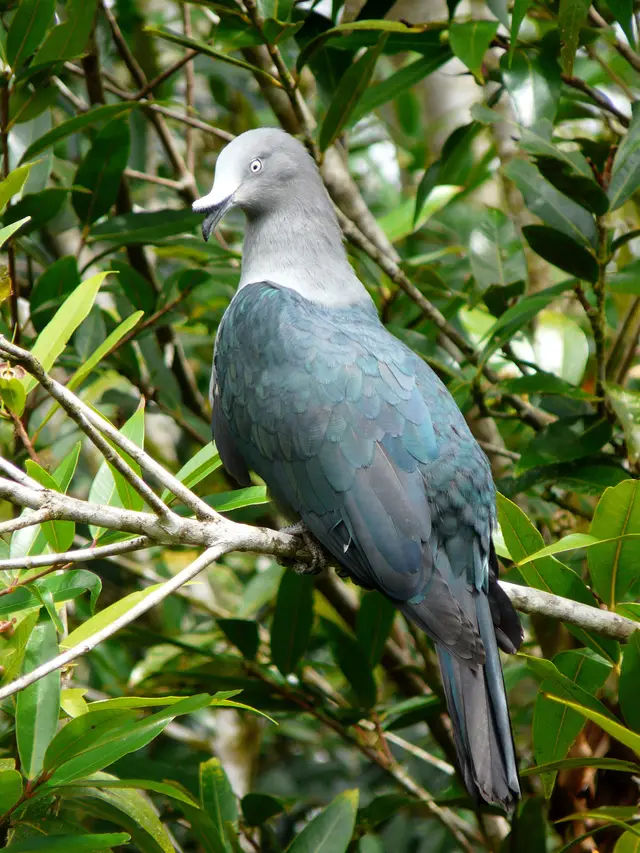
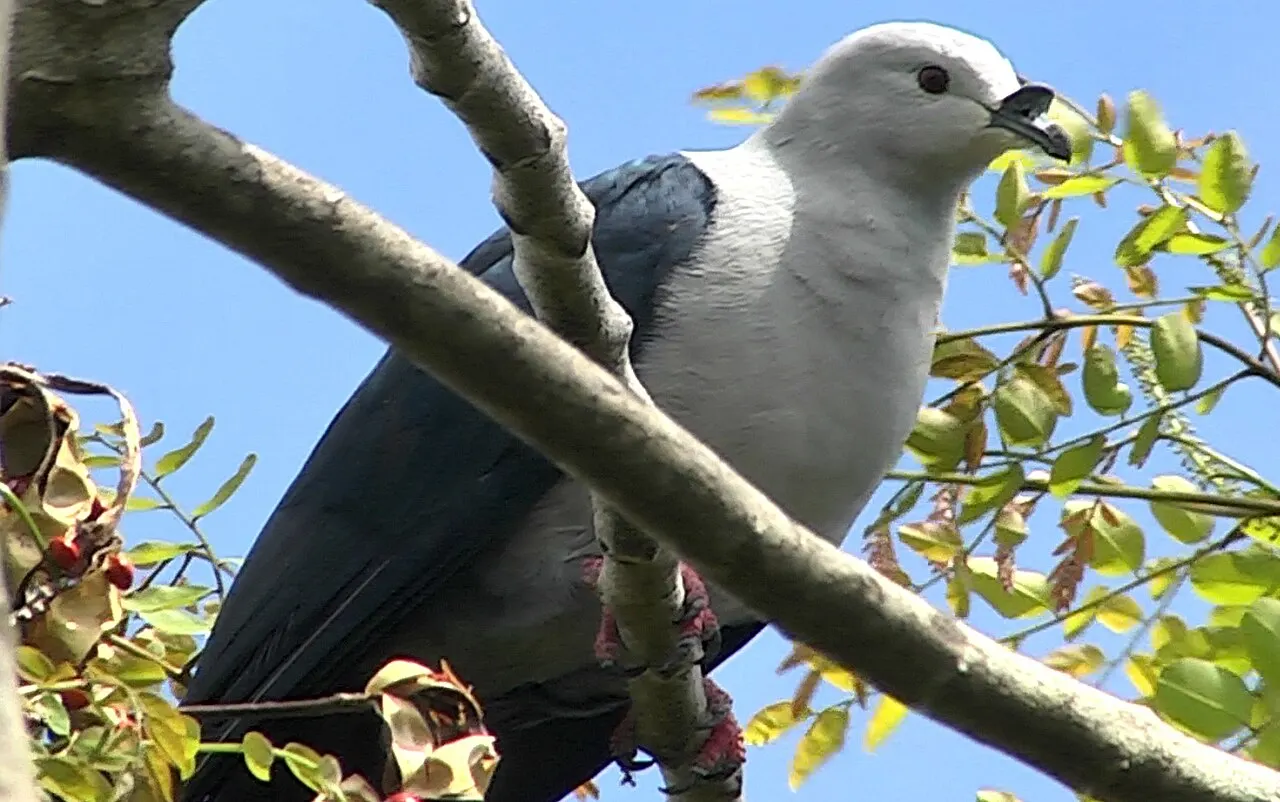
It is a big, heavy pigeon, roughly 41 to 51 cm long, with a silvery-grey head and underparts, dark bronzy-green upperparts and black undertail feathers. The eyes, legs and feet are red, and a black fleshy knob sits above the bill. Males are slightly larger than females, but the two look alike.
Its call is reportedly a deep, hoarse coo.
Where it lives
The species is endemic to French Polynesia. The birds that remain live on Makatea, a single island in the Tuamotu group. A second form, Ducula aurorae wilkesii, once lived in valleys on Tahiti and Moorea. A study in 1986 to 1990 found it confined to the Papenoo and Hitiaa valleys of Tahiti, and there were no sightings from 1998 to 2006. It is now considered unlikely to survive.
The IUCN counts two to five locations, from sea level to about 1,100 m. The pigeon depends on dense native forest, both lowland and mountain, though it has lately turned up in secondary growth and gardens. Its extent of occurrence is reportedly only about 28 square kilometres.
Pins are Wikidata “endemic to” fields. Orange dots, when present, are GBIF occurrence tiles — survey bias included.
How it lives
It eats the fruit of many native and introduced trees, including figs, guavas and plantains. On Makatea it helps spread seeds, which lets native forest regrow on land that was mined and cleared. The IUCN gives the generation length as about 6.6 years. Little is known about its breeding, partly because Makatea is hard to reach.
Why it is in trouble
Phosphate mining on Makatea ran from 1917 to 1964 and destroyed much of the forest. Hunting took more birds. A census in 1986 and 1987 estimated only 100 to 500 pigeons. A survey in 2009 estimated 870 to 1,680 birds, which the IUCN converts to 570 to 1,200 mature individuals. The 2017 assessment treats the population as increasing, though it still records a continuing decline in habitat area.
The biggest worry is the swamp harrier, an introduced bird of prey that is thought to have played a part in the loss of the Tahiti form and has not yet reached Makatea. The assessment says its establishment there would be disastrous, and stopping it is treated as the most important action. The IUCN also lists hunting for food and mining as past pressures that could return, and future commercial development as a further risk. Cats are named as another threat by one secondary source.
What is being done
The IUCN records conservation sites identified across the whole range and at least one protected area, but no recovery plan, no systematic monitoring scheme and no invasive species control in place when it assessed the bird in 2017.
The actions it recommends are eradicating the harrier from Tahiti and the Society Islands, setting up a reporting system so residents can spot one on Makatea, opposing a large runway there, and considering captive breeding and reintroduction.
Sources
Written for this catalog in our own words from the sources below, checked against them on 12 November 2026. Population figures are estimates and carry the year they were made. Status and assessment year: IUCN. 2026. The IUCN Red List of Threatened Species. Version 2026-1. iucnredlist.org.