Endangered
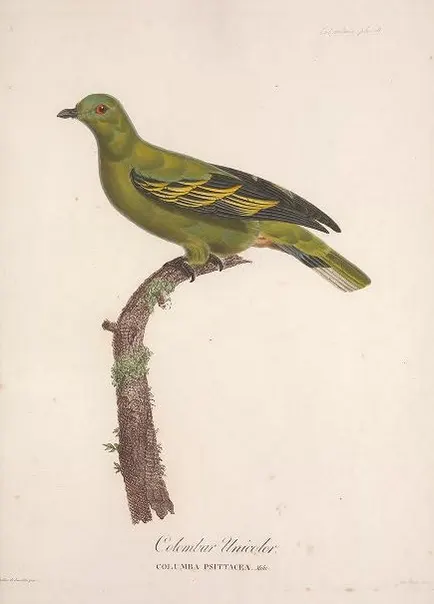
Timor Green Pigeon
Treron psittaceus
The Timor green pigeon (Treron psittaceus) is a fruit-eating forest pigeon of Timor and nearby islands. The IUCN Red List category is Endangered (assessed 2021). A 2026 study in Oryx estimates far fewer birds than that assessment did and recommends Critically Endangered, but that change has not been made by the IUCN.
How to recognise it
It is a medium-sized, tree-living green pigeon about 28 cm long, with females duller than males. The only other green pigeon in its range is the rose-crowned fruit-dove, which has orange and yellow patches on the underparts and, in males, a pink crown.
Where it lives
This pigeon is found on Timor, Rote and Semau, in both Indonesian West Timor and Timor-Leste, with records from Jaco Island too. It is a lowland bird. Records average about 151 m in elevation, and the highest were 600 m on Mount Timau, 700 m on Mount Sarim and 1,100 m on Mount Legumau. The Red List gives its habitat as moist lowland forest.
A 2004 report from Atauro Island, based on a hunter's account, is judged in the 2026 Oryx study to be a misidentified female rose-crowned fruit-dove, so Atauro is not counted in its range.
Pins are Wikidata “endemic to” fields. Orange dots, when present, are GBIF occurrence tiles — survey bias included.
How it lives
It feeds on fruit, and hunters seek it out at fruiting trees, mainly figs (Ficus). Birds sometimes visit fig trees in villages near small patches of forest.
The 2026 survey team found it highly vocal, with calls carrying about 60 m, and fairly easy to flush from trees when it feeds below the canopy. The Red List treats it as non-migratory.
How many are left
The 2021 Red List assessment gave 660 to 2,000 mature individuals and a decreasing trend. A 2026 paper by researchers from Charles Darwin University, BirdLife International and Conservation International put the figure at 100 to 500 mature birds, probably toward the low end. It drew on more than 1,400 field days between 2002 and 2025 and 96 records going back to 1969.
Of those records, 74 came from Timor-Leste and 22 from Indonesia. Since 2000, about 93 percent of records have been in Timor-Leste, almost all in Lautem District. Nino Konis Santana National Park accounts for 60 records. The biggest flock on record was about 131 birds in 2005, at Afabubu/Wairoke.
Why it is in trouble
Hunting is the main threat. The meat is valued, and hunters target fruiting trees, where the remaining birds often stay in the canopy after one is shot. Most hunting is by local communities, and recreational hunting by town and city residents has increased. Forest clearing for farming, including shifting agriculture, and more frequent fire add to the loss.
The Indonesian side has been hit hardest. The 2026 study estimates 0 to 50 mature birds there and calls the population probably functionally extinct. There have been no West Timor records since 2005. Rote had four records of one or two birds between 2004 and 2013 and none since.
What is being done
Protection has been light. The species has been listed as Endangered since 2000, with little done to protect it since. The Red List records that it occurs in at least one protected area and lists harvest management, site protection and awareness work as conservation actions, but notes no recovery plan or systematic monitoring.
The Oryx study calls for urgent work in both countries, with governments, conservation groups and local communities, including national action plans, community-based work in Lautem to reduce hunting, and more surveys. It suggests persuading hunters to change through reasoning, financial support or both.
Sources
Written for this catalog in our own words from the sources below, checked against them on 12 November 2026. Population figures are estimates and carry the year they were made. Status and assessment year: IUCN. 2026. The IUCN Red List of Threatened Species. Version 2026-1. iucnredlist.org.