Endangered
Millerbird
Acrocephalus familiaris
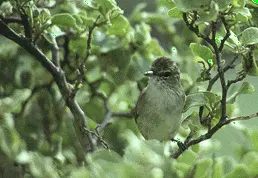
The millerbird is a small, secretive warbler found only in the Northwestern Hawaiian Islands. Today it survives on Nihoa and, since a 2011 to 2012 translocation, on Laysan. The IUCN Red List moved it from Critically Endangered to Endangered in 2023. It is named for the moths it hunts.
How to recognise it
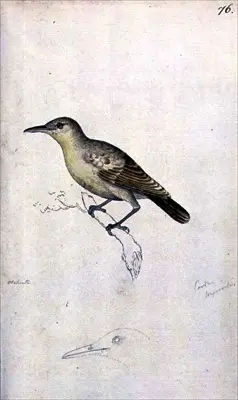
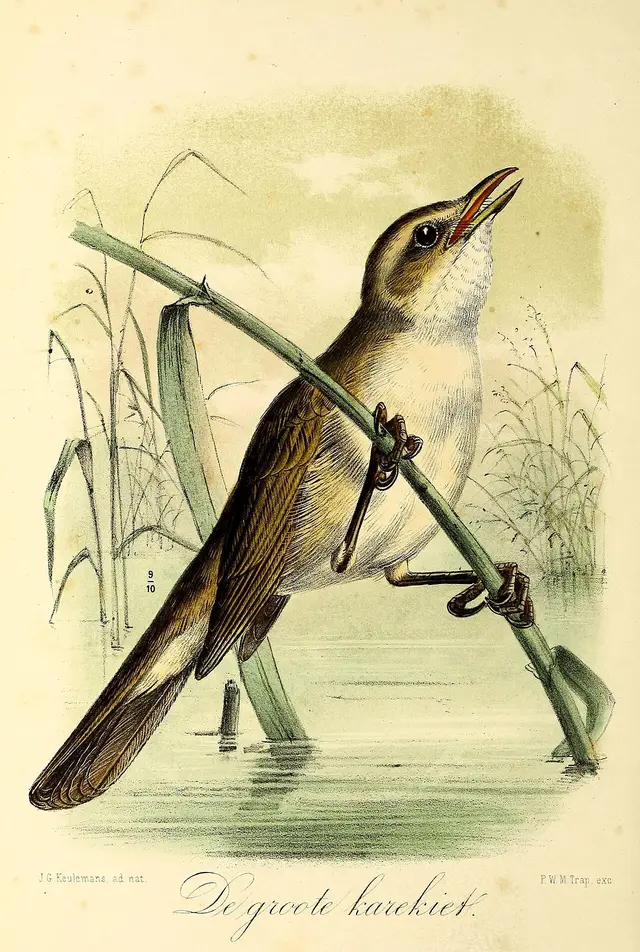
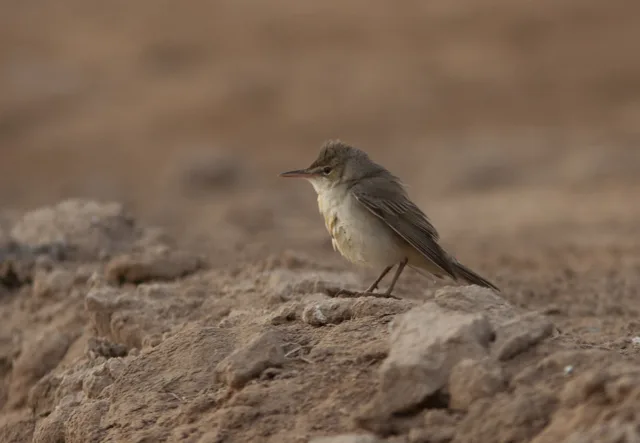
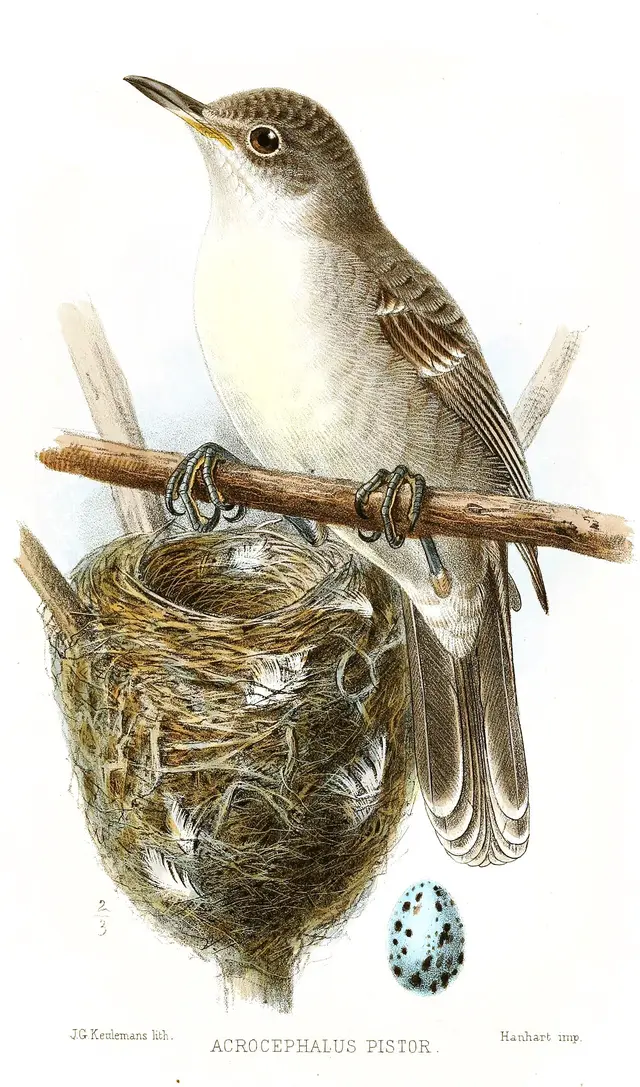
A millerbird weighs less than an ounce and is lively gray and brown. It's easy to miss. It keeps to dense, low vegetation and forages for insects among shrubs and bunchgrasses. Males sometimes sing from an exposed perch, with harsh chirps and churring notes.
The name comes from its appetite for miller moths. It's reportedly the only Old World warbler to have colonised Hawaii, and no fossils suggest it ever lived beyond these two islands.
Where it lives
Two subspecies were described. The Laysan millerbird died out between 1916 and 1923, after introduced rabbits stripped Laysan of its plants. The Nihoa millerbird is the survivor. Nihoa is a rocky island of about 178 acres, roughly 650 miles from Laysan.
The IUCN's 2023 assessment lists two locations, both in the Hawaiian Islands, with the species living from sea level up to 270 m in subtropical or tropical moist shrubland. It puts the population at 250 to 999 birds and lists the trend as unknown.
Pins are Wikidata “endemic to” fields. Orange dots, when present, are GBIF occurrence tiles — survey bias included.
How it lives
Pairs reportedly bond for the long term and defend a territory for several years. Territories can reach 0.95 hectares, though 0.19 to 0.40 hectares is more typical. Breeding runs from January to September, and its timing shifts with food supply.
Why it is in trouble
Having one population on one small island is risky. A hurricane, or the accidental arrival of a predator or disease, could badly hurt a species with nowhere else to go. The IUCN's threat list includes invasive species, drought, storms and flooding, and habitat shifts.
Laysan's history shows how fast it can go wrong. The millerbird disappeared there when introduced animals destroyed the vegetation, and the Laysan rail and Laysan honeycreeper were lost for the same reason. Guano mining also damaged the island in the early 1900s.
What is being done
Rabbits and other introduced mammals were gone from Laysan by 1923, and the U.S. Fish and Wildlife Service spent more than two decades restoring its native plants. Then the Service, the American Bird Conservancy and other partners moved 50 adult birds from Nihoa by ship, 24 in September 2011 and 26 in August 2012, after about five years of planning.
The first years on Laysan went well. Eight of 11 tracked females from the 2011 group and all 11 from the 2012 group raised at least one brood of fledglings in their first year. A USGS paper put the Laysan population at an estimated 164 birds in September 2014. Conservation groups now say several hundred live there, and the 2023 downlisting followed that population growth.
Sources
Written for this catalog in our own words from the sources below, checked against them on 12 November 2026. Population figures are estimates and carry the year they were made. Status and assessment year: IUCN. 2026. The IUCN Red List of Threatened Species. Version 2026-1. iucnredlist.org.
- IUCN Red List assessment (BirdLife International, 2023)
- Wikipedia, Millerbird
- American Bird Conservancy, millerbird downlisting (Dec 2023)
- USGS, long distance translocations create a second millerbird population
- Papahanaumokuakea, second millerbird translocation (2012)
- Honolulu Magazine, Millerbirds on Laysan Island