Critically Endangered
Streaked Reed Warbler
Acrocephalus sorghophilus
The streaked reed warbler (Acrocephalus sorghophilus) is a small, lightly streaked songbird that winters in the Philippines and passes through China, but whose breeding grounds have never been found. The IUCN Red List rated it Critically Endangered in 2022. Its one known wintering marsh has largely been drained.
How to recognise it
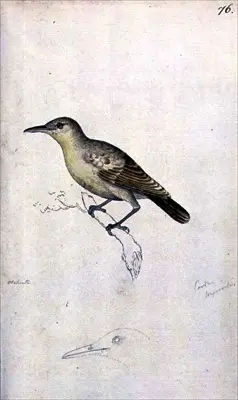
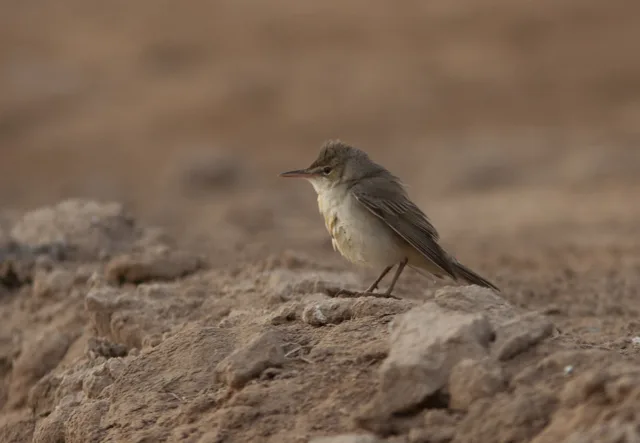
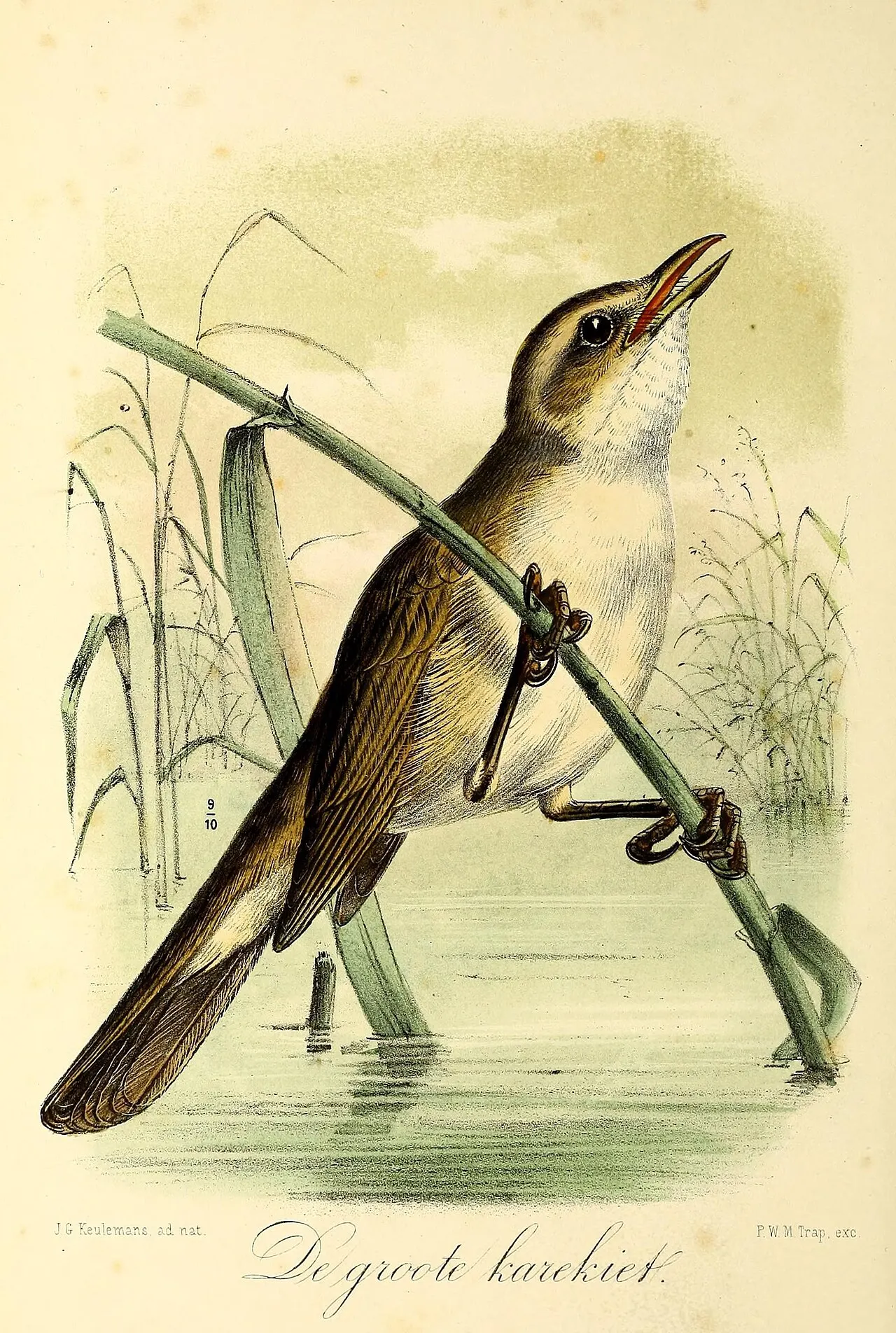
It is a small warbler, 12 to 13 cm long. The upperparts are pale buff with faint dark streaks on the back and shoulders, and the rump is bright buff with a rufous tinge. A black stripe runs along each side of the crown, above a broad creamy-buff eyebrow. The underparts are buff-ochre, with a paler throat and belly.
The lookalike to rule out is the black-browed reed warbler (Acrocephalus bistrigiceps). It has plain olive-brown upperparts, with no streaking on the crown or back.
Where it lives
The warbler is a full migrant. It has been recorded passing through China, with spring passage from late May to early June and autumn passage from late August to early September. The only known wintering ground is Candaba Swamp in the Philippines, and Philippine records all fall between September and June. Taiwan is also on the IUCN list of countries where it occurs.
Where it nests is still a gap in the map. The IUCN suggests searching north-eastern China and neighbouring parts of Russia, and gives an extent of occurrence of about 48,700 square kilometres. Birds have been recorded up to roughly 610 m above sea level.
Pins are Wikidata “endemic to” fields. Orange dots, when present, are GBIF occurrence tiles — survey bias included.
How it lives
In winter it uses reed and grass marsh. It probably eats mostly invertebrates and may take some seeds, though little has been studied. The IUCN lists its habitat as swamp and marsh plus arable land.
Why it is in trouble
Loss of wetland is the main driver. Candaba Swamp has largely become farmland, especially rice paddies. The IUCN also lists agriculture, aquaculture, housing, industrial development, grazing, and pesticide and herbicide use as pressures.
A four-day survey at Candaba Marsh that ended in late April 2008 was aimed at finding the streaked reed warbler. Its team caught a black-browed reed warbler instead, the first Philippine record of that common species. They found most of the reed beds drained for rice, and the largest reed block was only about five hectares, mostly burnt.
The IUCN estimates 1 to 999 individuals, with a decline continuing, and puts the past reduction at 80 to 99 percent. Another summary gives 250 to 999 mature birds in 2022. Either way the population is very small, and all of it is treated as a single subpopulation.
What is being done
Conservation sites have been identified across its range, and Candaba is a Ramsar wetland, yet habitat conversion there continues and hunting has reportedly continued too. Proposed steps include locating the breeding areas with call-playback surveys, looking for more wintering sites in Philippine wetlands, starting a new bird-ringing programme at Dalton Pass and other migrant trapping sites, mapping the vegetation of the Candaba area, and testing whether stable isotopes in museum specimens can point to breeding catchments. One summary adds that the species should be protected by law in China. The IUCN records no recovery plan or systematic monitoring scheme.
Sources
Written for this catalog in our own words from the sources below, checked against them on 12 November 2026. Population figures are estimates and carry the year they were made. Status and assessment year: IUCN. 2026. The IUCN Red List of Threatened Species. Version 2026-1. iucnredlist.org.