Endangered
Basra reed warbler
Acrocephalus griseldis
The Basra reed warbler is a large, plain brown reed warbler that breeds in the marshes and reedbeds of Iraq, Iran and Kuwait and winters in East Africa. The IUCN Red List assessed it as Endangered in 2022, with an estimated 1,500 to 7,000 birds, because its wetland habitat keeps shrinking.
How to recognise it
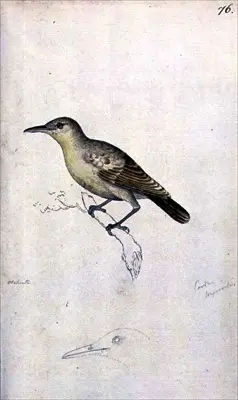
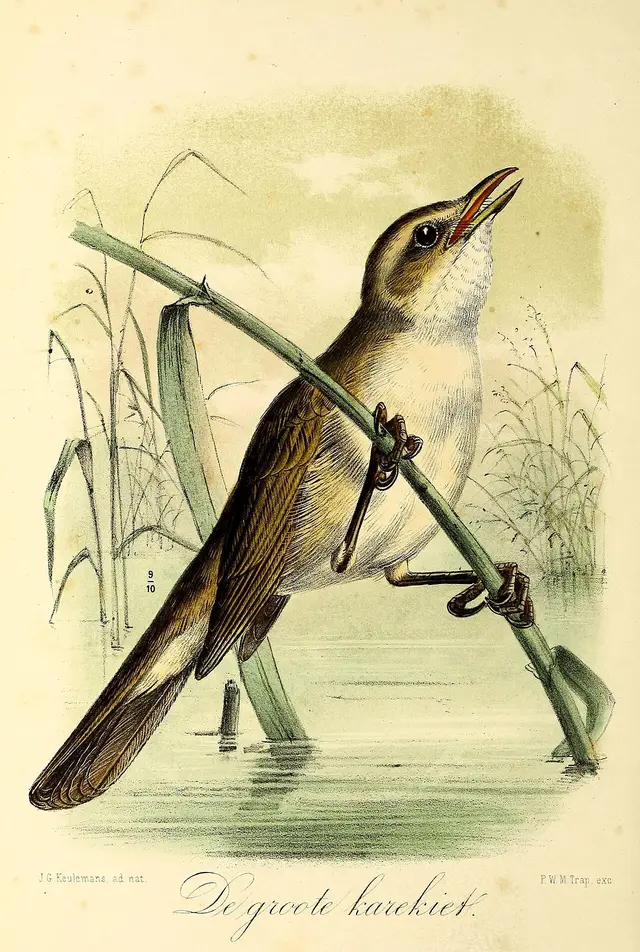
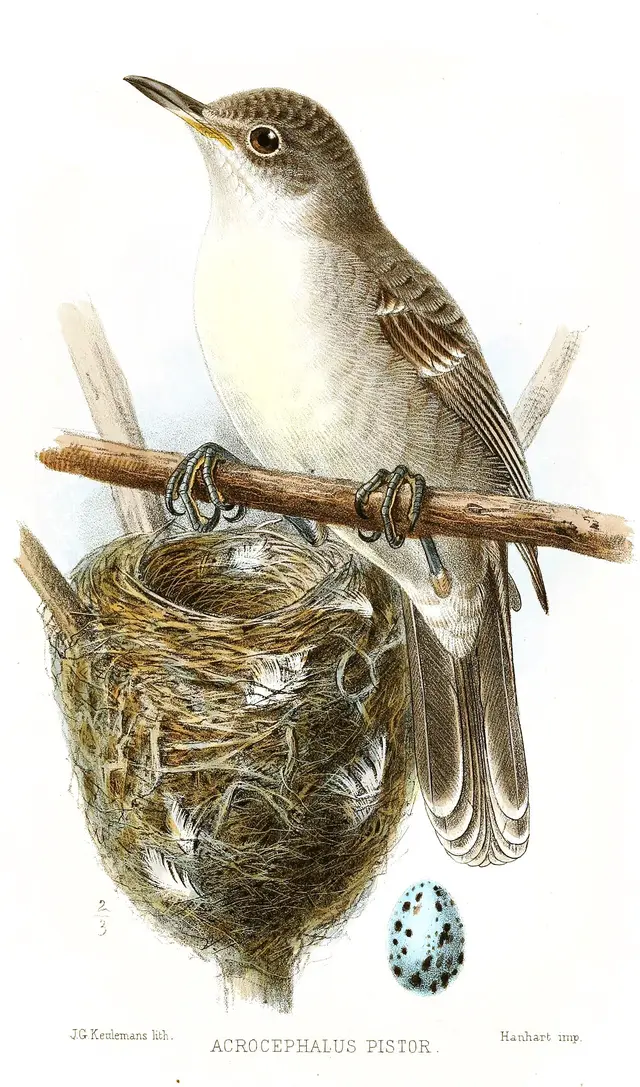
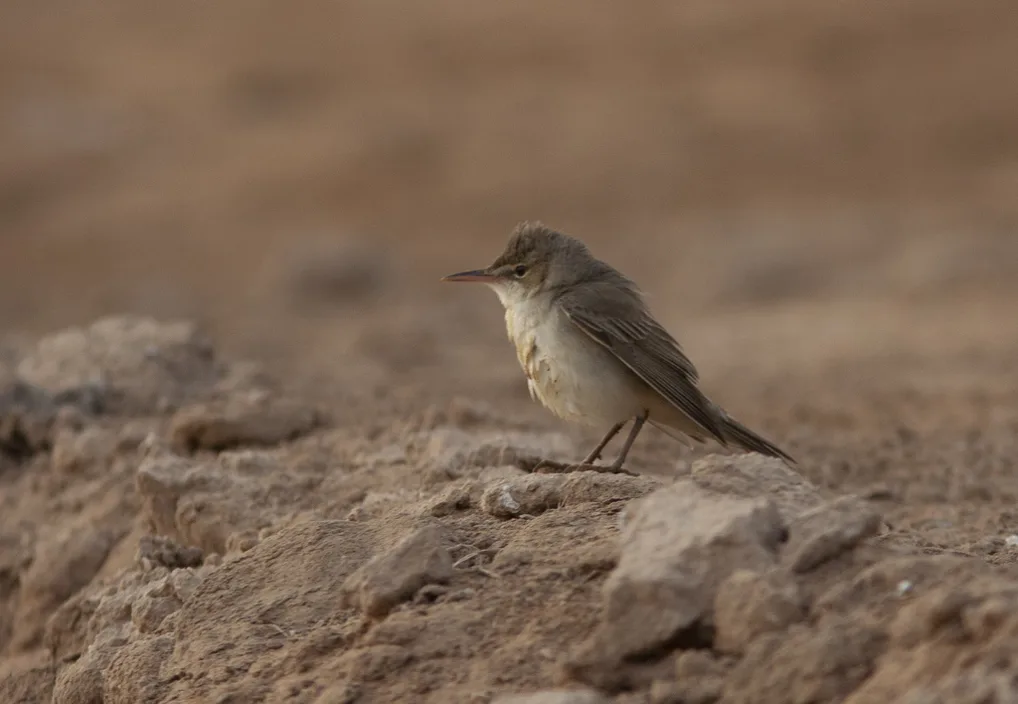
It's a large, rather dull reed warbler, about 15 to 18 cm long, with dark brown upperparts, mostly whitish underparts and creamy yellow flanks. A whitish stripe above the eye and a dark line through it give the head a strong pattern.
The great reed warbler is the usual lookalike. The Basra reed warbler has a slimmer, longer, pointed bill with a paler, often pinkish lower half, a shorter and less stepped tail, no rufous tones in the plumage and paler underparts. The male's song is a repeated kaka-kee, and the call is a harsh chaarr.
Where it lives
It breeds mainly in the Tigris and Euphrates river system, in eastern and southern Iraq, south-western Iran and Kuwait. Dense papyrus and reed beds beside shallow fresh or brackish water are its home, and it also uses ditches and drainage channels. Breeding was first recorded in northern Israel in 2007.
It is a full migrant that winters in East Africa. The IUCN lists it from Egypt, Sudan, South Sudan, Ethiopia, Somalia, Kenya, Uganda, Tanzania, Malawi, Mozambique and Botswana, as well as Saudi Arabia and Syria. Away from the breeding grounds it is reported from thickets and bush near small pools. Its habitats range from sea level to about 1,000 m, and its overall range covers roughly 682,000 square kilometres.
Pins are Wikidata “endemic to” fields. Orange dots, when present, are GBIF occurrence tiles — survey bias included.
How it lives
It eats insects. The nest is a deep basket woven from grass and other material and slung between reed stems above the water. In winter the birds are reported to gather in loose groups.
Why it is in trouble
The big blow came in the 1980s and 1990s, when the Mesopotamian marshes of southern Iraq were drained and badly damaged, and much of the reed habitat was lost. Wetland restoration since has let the birds return, and the breeding area is reported to be larger now than at any time since 2003.
The pressures haven't gone away. The IUCN assessment rates droughts as the most serious current threat, followed by water taken for farming and household use and by renewable energy development. Housing, small-scale and industrial farming and sewage have smaller effects, and war damage is listed as a past impact. It projects a 50 to 79 percent decline in habitat quality and extent in future, though it describes the current population trend as stable. An earlier estimate put the population at 2,500 to 9,999 birds in 2003, so the figures reflect revision rather than a clear fall.
What is being done
Conservation sites have been identified across its whole range, it occurs in at least one protected area, and a monitoring scheme is in place. There is no species recovery plan. The one action the IUCN lists is habitat and natural process restoration.
Sources
Written for this catalog in our own words from the sources below, checked against them on 12 November 2026. Population figures are estimates and carry the year they were made. Status and assessment year: IUCN. 2026. The IUCN Red List of Threatened Species. Version 2026-1. iucnredlist.org.