Endangered
Galápagos martin
Progne modesta
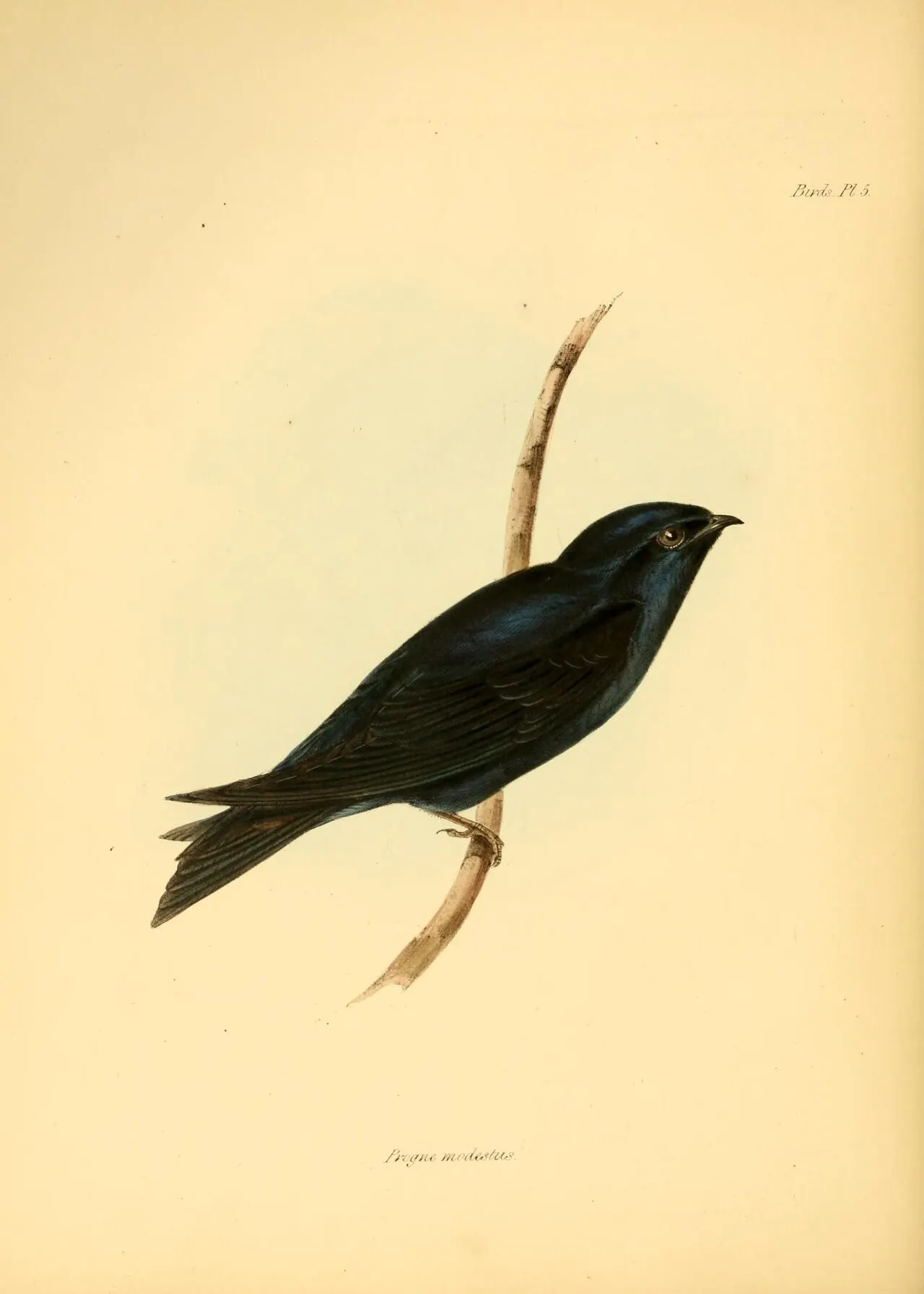
The Galápagos martin is a small, glossy dark-blue swallow found only on the Galápagos Islands of Ecuador. The IUCN Red List classes it as Endangered (assessed 2020), with an estimated 250 to 999 mature birds and a falling population. Very few nests have been described, and most were on sea cliffs.
How to recognise it
At about 15 cm long, it is a compact swallow, and the sexes differ. Males are a glossy dark steel blue with black wings and tail. Females have a mostly black head and upperparts with a steel-blue gloss on the back, and sooty grey underparts. Both have a black bill. It flies with alternating flaps and glides and gives a short warbling song and a twittering call.
Where it lives
It lives on the central and southern islands and is absent from the five northernmost. It is described as most common on Isabela and rare on Española. It once used much of the archipelago, including built-up areas, but is now found mostly in the highlands.
The Red List gives a maximum elevation of 970 m, whereas another reference says up to about 1,500 m. Habitats listed include moist forest, rocky areas, sea cliffs, shorelines, coastal lakes and urban areas.
Pins are Wikidata “endemic to” fields. Orange dots, when present, are GBIF occurrence tiles — survey bias included.
How it lives
It stays on the islands year-round and catches insects in the air, including moths and butterflies, usually low to the ground. Breeding is little known. It probably nests in the warm, wet season around March. Two nests described in the literature were grass cups lined with feathers, set in cavities on cliffs by the sea, holding two or three white eggs.
Why it is in trouble
The Red List counts 250 to 999 mature birds and a continuing decline, after ratings of Vulnerable in 2005 and 2008. The exact causes are not settled. Introduced diseases and parasites, introduced nest predators such as rats, and climate effects on insect food are reportedly suspected, and the assessment also lists drought as a threat.
One clear finding came from Isabela. In March 2017, guides reported a martin nest at Tagus Cove, and the Charles Darwin Foundation later described how scientists collected an inactive nest from a crack in a sea cliff there. It held 13 pupae of Philornis downsi, an invasive fly whose larvae feed on the blood of nestling birds. How much harm the fly does to martins is not yet known.
What is being done
The Charles Darwin Foundation and the Galápagos National Park Directorate asked naturalist guides to report martin nests from 2014, and they plan to inspect more nests for the fly. The Red List assessment records no recovery plan, monitoring scheme or protected-area presence for the species, and lists invasive species control as a conservation action.
Sources
Written for this catalog in our own words from the sources below, checked against them on 12 November 2026. Population figures are estimates and carry the year they were made. Status and assessment year: IUCN. 2026. The IUCN Red List of Threatened Species. Version 2026-1. iucnredlist.org.




