Endangered
Grey-breasted Parakeet
Pyrrhura griseipectus
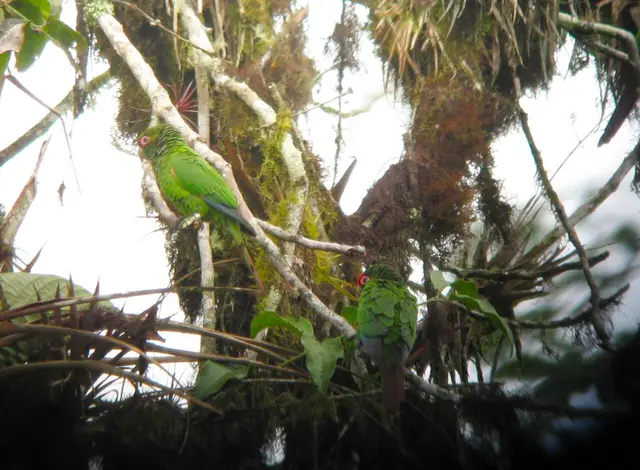
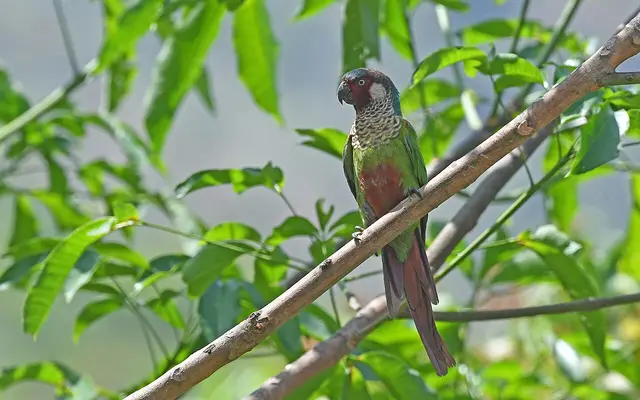
The grey-breasted parakeet, Pyrrhura griseipectus, is a green parrot with a scaled grey breast and a plum-red face, found mainly in patches of humid mountain forest in north-eastern Brazil. It was Critically Endangered until 2016 and has been Endangered since 2017 (IUCN 2018). Its numbers are rising.
How to recognise it
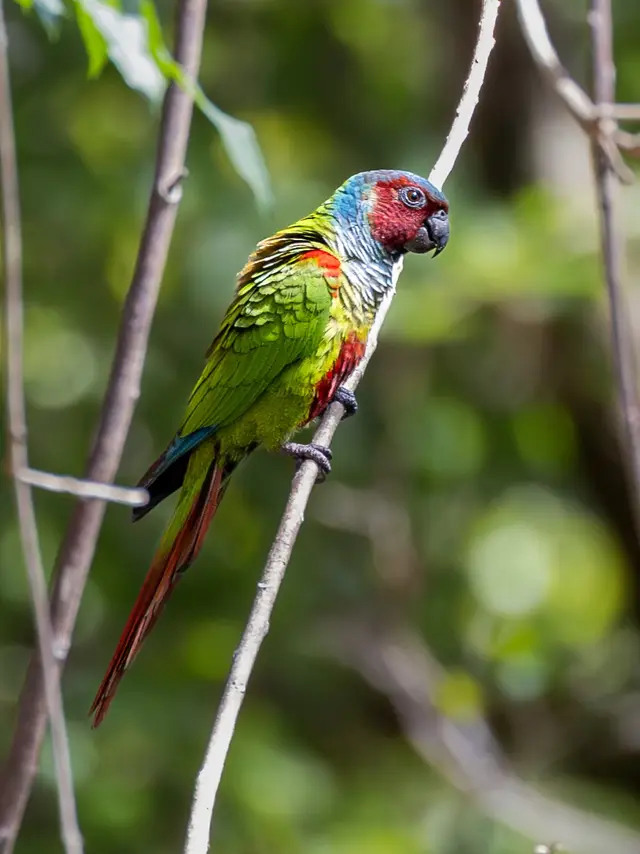
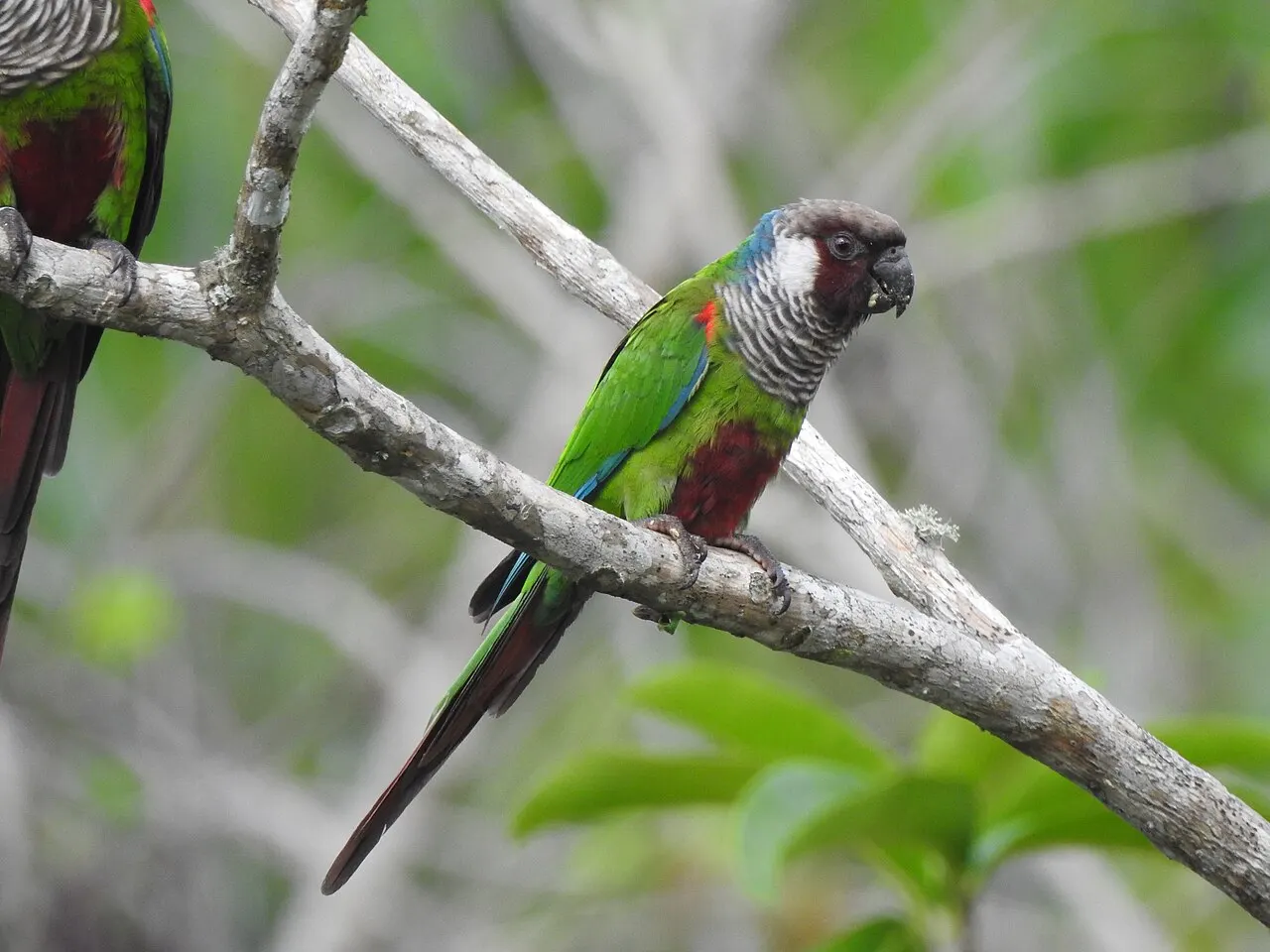
It is a small parakeet, roughly 20 to 23 centimetres long, mostly green with blue in the wing and a red-brown rump, tail, belly and shoulders. The chest and breast are grey with pale scalloping. The face is plum-red, the crown is brown, and there is a white patch over the ear. Males and females look alike, and young birds look similar to adults.
Related parakeets such as the white-eared parakeet look close. The all-brown crown, white ear patch and grey breast help separate this one. It was treated as a subspecies of the white-eared parakeet until the early 2000s, and some authors argue that an older name, anaca, should take priority over griseipectus.
Where it lives
The parakeet once lived across north-eastern Brazil and was recorded from at least 15 areas in Ceará, Alagoas, Pernambuco and Rio Grande do Norte. As of 2020 it was known from three sites in Ceará: the Serra do Baturité, Quixadá and Ibaretama.
There it lives in patches of tall, humid forest within dry caatinga, almost always above 500 metres. The Red List gives an elevation range of 500 to 1,100 metres and an extent of occurrence of about 3,300 square kilometres. A 2022 publication reported a flock in Bahia, roughly 800 kilometres south of the Ceará sites, near the coast in mangroves, restinga scrub and abandoned coconut plantations. Earlier Bahia photographs had been identified as white-eared parakeets.
Pins are Wikidata “endemic to” fields. Orange dots, when present, are GBIF occurrence tiles — survey bias included.
How it lives
It feeds on fruits and seeds in the forest canopy. In Ceará the breeding season includes February and March. Pairs nest in cavities in trees and rock, and they also use nest boxes. Clutches can reach seven eggs. Incubation, fledging time and parental care are poorly known.
Why it is in trouble
Most of its forest has been converted to farmland, especially coffee. Poachers took chicks for the pet trade, and illegal trapping for domestic and international trade remains a threat, although it has reportedly eased since the early 2000s. Natural nest cavities are scarce, and the species is on CITES Appendix II.
A 2012 survey led by Fábio Nunes covered more than 4,000 kilometres of forest tracks and trails in Ceará, with about 100 interviews, and found no sign of the species apart from one small remnant population. The last known birds were confined to two neighbouring areas in the Baturité Mountains, with 80 percent in one site.
The 2018 Red List assessment gave 250 to 999 mature individuals and described the trend as increasing, after a past reduction of 30 to 49 percent. An undated encyclopedia estimate of 400 to 600 mature birds falls within that range.
What is being done
The 2012 survey led to a government-led conservation action plan, and the Brazilian group AQUASIS has worked with Loro Parque Fundación (Spain) and ZGAP (Germany). In 2010 the team put up 30 artificial nest boxes designed to copy natural cavities in depth, opening size and position, and later added 70 more. Three fledglings were recorded in the first year, and the cumulative total reached 1,165 by 2019.
Local residents monitor nest boxes on their properties and watch for poachers. Private protected areas and a wildlife refuge, the Refúgio de Vida Silvestre Periquito Cara-suja, now shelter the birds. The Red List also records captive breeding, trade management and conservation payments. Loro Parque Fundación reports more than 1,500 chicks from the nest boxes in just over a decade.
Sources
Written for this catalog in our own words from the sources below, checked against them on 12 November 2026. Population figures are estimates and carry the year they were made. Status and assessment year: IUCN. 2026. The IUCN Red List of Threatened Species. Version 2026-1. iucnredlist.org.