Critically Endangered
Subandean parakeet
Pyrrhura subandina
The Sinu parakeet (Pyrrhura subandina) is a small green parrot from the Sinu River valley in northwest Colombia. It has not been confirmed alive since 1949. The IUCN Red List rated it Critically Endangered (Possibly Extinct) in 2021, placing any survivors at fewer than 50 mature birds.
How to recognise it
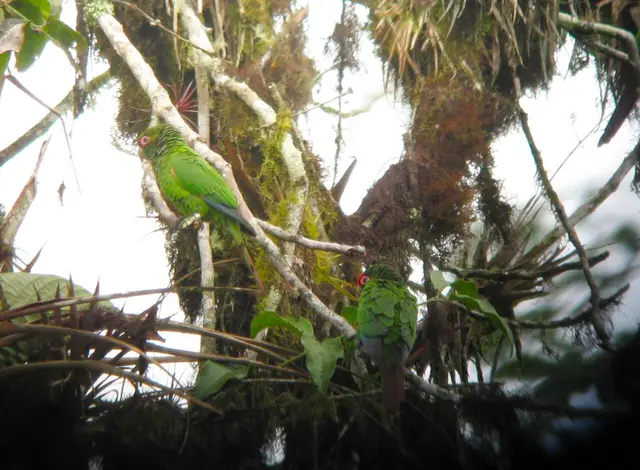
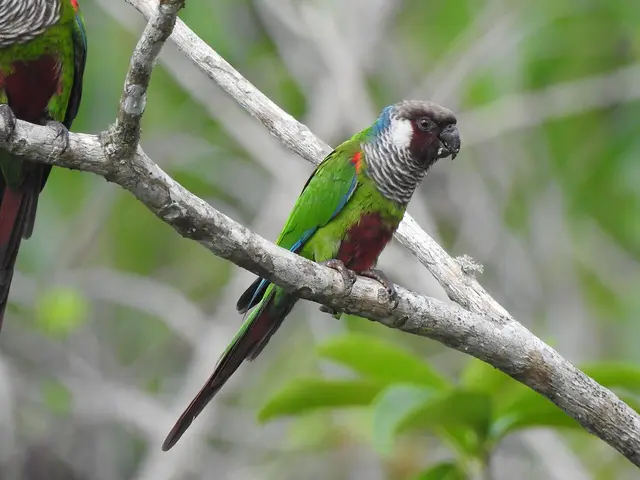
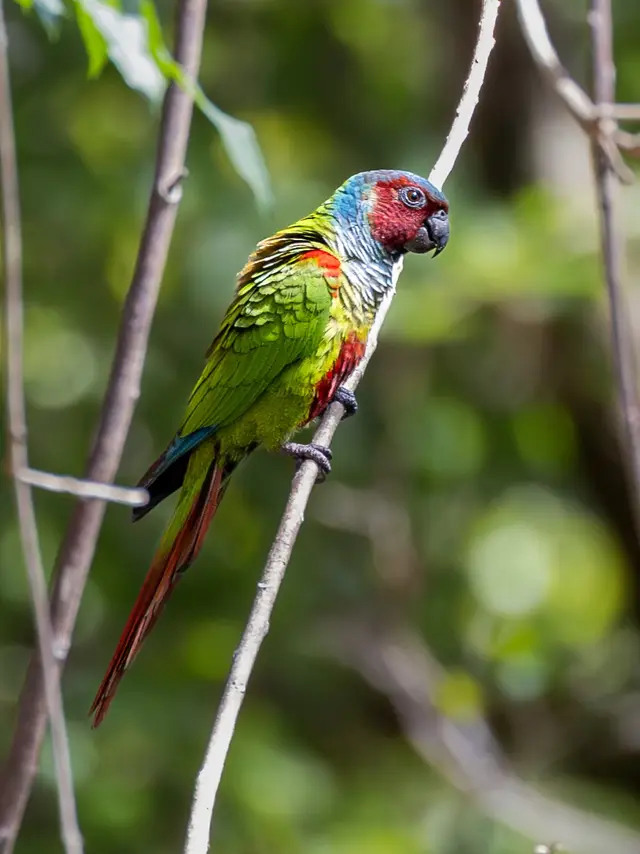
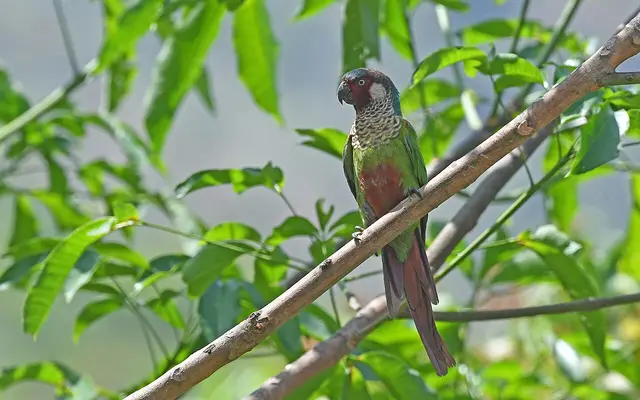
Pyrrhura parakeets are small, long-tailed parrots. This one is about 25 cm long, mostly green, with a red patch on the belly and blue-tinged flight feathers. Two secondary websites agree on these details, but no one has photographed the bird in the wild, so they come from museum skins and secondary accounts.
Naming is tangled. BirdLife International treats it as a full species, and the IUCN follows that. Other major checklists, reportedly including the IOC, the South American Classification Committee and Clements, treat it as a subspecies of the painted parakeet (Pyrrhura picta). A 2023 genetic study reportedly found it to be the sister of the Perija parakeet (Pyrrhura caeruleiceps). The Azuero parakeet of Panama is sometimes grouped with it as a second subspecies.
Where it lives
The Colombian form was described by W. E. Clyde Todd in 1917 and is known with certainty only from the Sinu valley. The IUCN lists Colombia as the only country. Museum collections hold 18 specimens from four localities, two of which have since been deforested. The last were collected in 1949 at Quimari and Murrucucu and are held at the Carnegie Museum of Natural History.
Descriptions of its habitat differ. The assessment text mentions dry and gallery forest at 100 to 1,500 m, while its habitat list gives lowland moist forest as the main type, with moist montane forest and heavily degraded former forest also used. Loro Parque Fundacion puts the historic range at under 20 square kilometres in the upper Sinu valley near Paramillo National Natural Park.
Pins are Wikidata “endemic to” fields. Orange dots, when present, are GBIF occurrence tiles — survey bias included.
How it lives
Almost nothing is documented. The IUCN assessment says the bird is thought to eat fruit and to nest in tree cavities, with breeding probably from March to July. Its reproduction, diet and behaviour in the wild have never been properly studied.
Why it is in trouble
The IUCN assessment says original habitat was mainly converted to farming and cattle pasture. It lists small-holder farming and grazing, agrochemicals, and trapping or hunting of the bird itself as threats, with pets and display animals recorded as a use. None of these has a measured impact. The parrot is also on CITES Appendix II.
Loro Parque Fundacion cites an estimate that forest loss in the bird's range rose from 36 percent to 92 percent by 2012. It also blames armed conflict in the region, from the 1970s to 2015, for keeping scientists away and leaving gaps in the record.
What is being done
Searches continue. The IUCN assessment says more than 10 localities were searched without success between 2004 and 2008. In February and March 2021 a ten-day team led by Diego Calderon-Franco and Hugo Herrera Gomez of the Sociedad Ornitologica de Cordoba climbed into the Murrucucu mountains. They recorded 238 bird species, about 22 of them new for the department, but no Sinu parakeet. The species is on Re:wild's list of its 25 most wanted lost species.
A small part of its presumed remaining habitat lies inside Paramillo National Park. Residents near El Diamante describe a similar parrot they call the catanica, which may be this bird, but no sighting or recording has been verified. The IUCN assessment asks for further searches and, if a population is found, immediate habitat protection.
Sources
Written for this catalog in our own words from the sources below, checked against them on 12 November 2026. Population figures are estimates and carry the year they were made. Status and assessment year: IUCN. 2026. The IUCN Red List of Threatened Species. Version 2026-1. iucnredlist.org.