Endangered
Perija parakeet
Pyrrhura caeruleiceps
The Perijá parakeet (Pyrrhura caeruleiceps) is a medium-sized green parrot of the Serranía de Perijá, the mountain range on the Colombia and Venezuela border. The IUCN rated it Endangered in 2021, with roughly 1,000 to 2,499 mature birds and a falling population. It is also taken for the pet trade.
How to recognise it
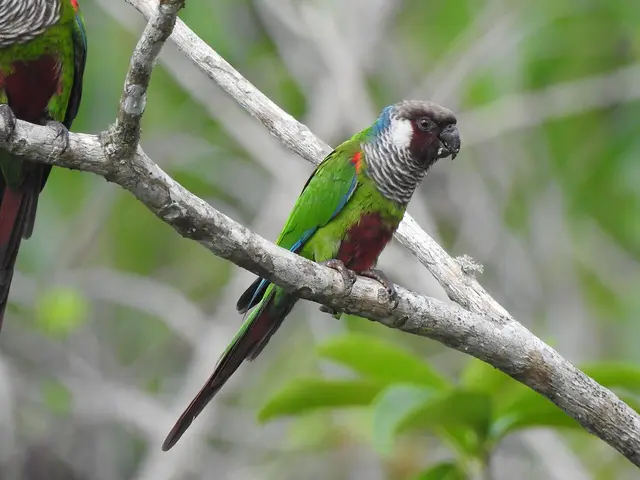
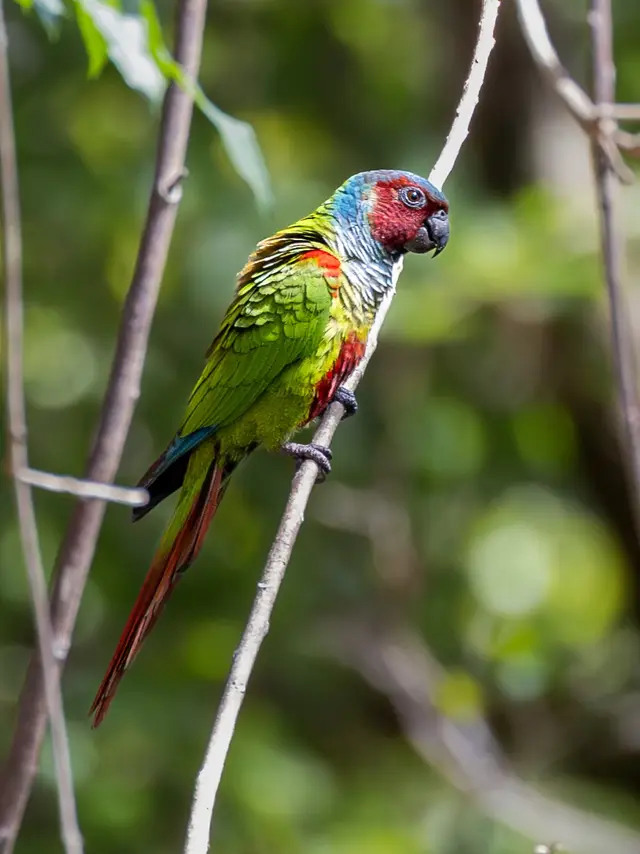
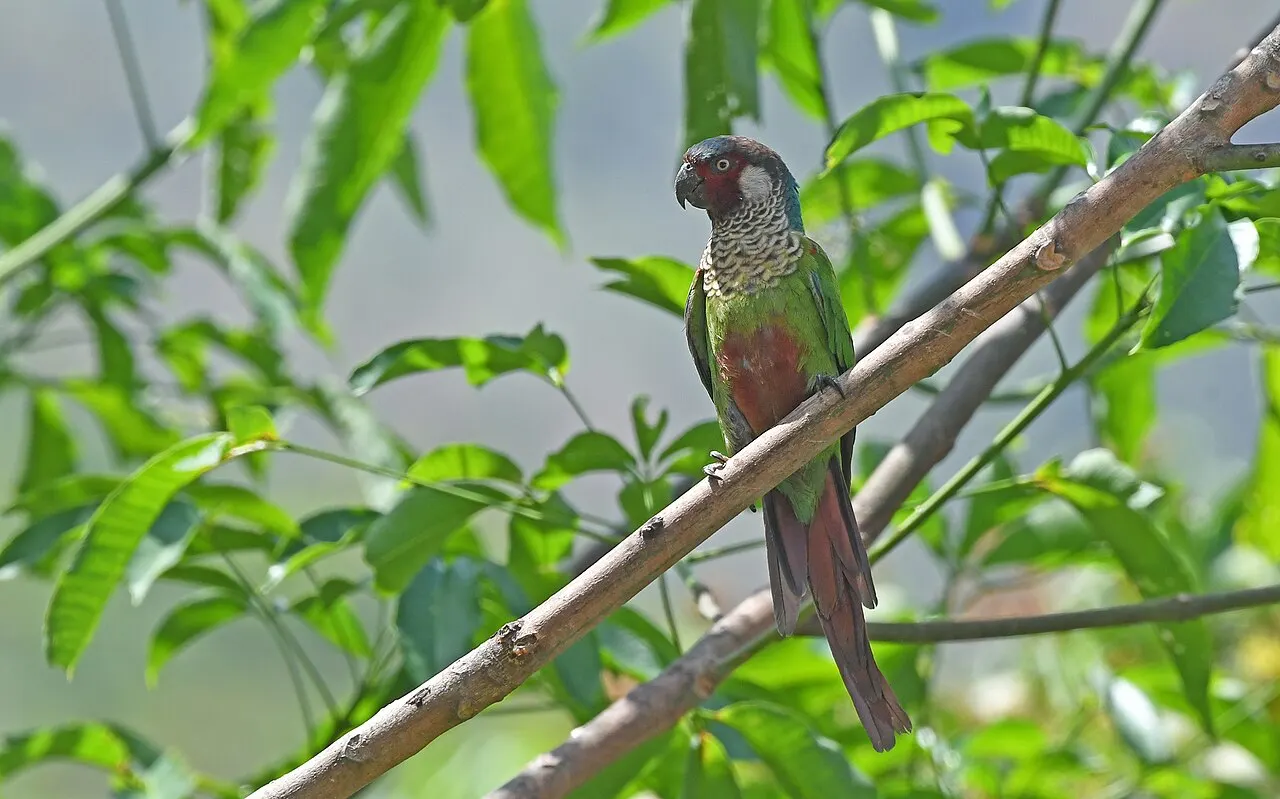
It is about 22 cm long, a mostly green parakeet (the kind aviculturists call a conure) with a long maroon-red tail, a dark red patch on the belly and bright blue flight feathers. The forecrown is blue, fading to brown tinged with blue further back, and the bend of the wing is red. The ear patches are pale grey-brown. The species name caeruleiceps means blue-headed.
The IUCN account says it is most like Pyrrhura eisenmanni and P. subandina, but both of those have a green bend of the wing, and neither matches its head colours.
Where it lives
W. E. Clyde Todd described it in 1947, which is why it is also called Todd's parakeet. Until 2001 it was treated as a subspecies of the painted parakeet. It is now a species in its own right, found in the Serranía de Perijá in Colombia and Venezuela. The IUCN gives an altitude range of 400 to 2,200 m and an extent of occurrence of about 30,100 square kilometres. It lists moist montane and moist lowland forest as habitat, although birds also turn up on farmland and pasture. It does not migrate, and the assessment counts between 11 and 100 locations.
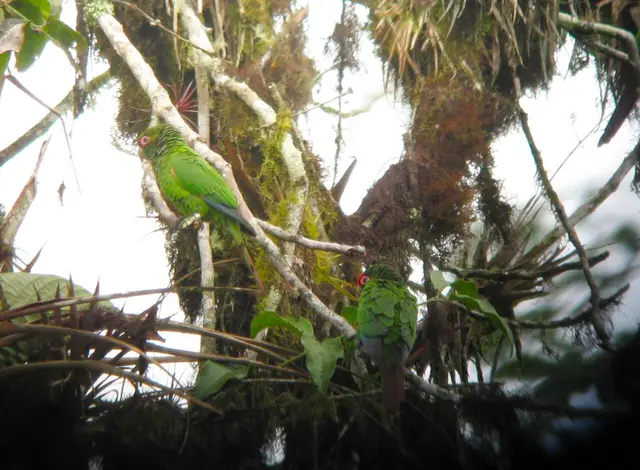
The bird is poorly known. A ProAves expedition on 27 September 2010 found a population in the foothills in Cesar, Colombia, in patches of tropical forest. It was only the third known population of the species and lay about 130 km from the older ones. The species is mainly recorded at 500 to 900 m.
Pins are Wikidata “endemic to” fields. Orange dots, when present, are GBIF occurrence tiles — survey bias included.
Why it is in trouble
The IUCN trend is decreasing, and habitat area is still shrinking. Its assessment names farming and grazing on an industrial scale as threats, and the capture of birds as another, since the species is used as a pet. ProAves calls forest loss and fragmentation the major threats. The mature population was put at 1,000 to 2,499 birds in 2021, an estimate rather than a count.
Wild-caught parrots raise their own questions for would-be keepers, and /exotic-pet-laws-by-state/ is the place to start on the legal side.
What is being done
The assessment records that the species occurs in at least one protected area and that conservation sites have been identified across its range. There was no species recovery plan and no systematic monitoring scheme in 2021. The actions it lists as needed are forest management against degradation, dispersal corridors between subpopulations, awareness work with local communities, and sustainable farming as an alternative livelihood.
The IUCN lists research on population size, distribution and trends, and on life history and ecology, as priorities. The 2010 expedition came out of the ProAves Pyrrhura project, which Loro Parque Fundación supported.
Sources
Written for this catalog in our own words from the sources below, checked against them on 12 November 2026. Population figures are estimates and carry the year they were made. Status and assessment year: IUCN. 2026. The IUCN Red List of Threatened Species. Version 2026-1. iucnredlist.org.