Endangered
El Oro Parakeet
Pyrrhura orcesi
The El Oro parakeet (Pyrrhura orcesi) is a small green parrot found only on the western slopes of the Andes in southwest Ecuador. The IUCN Red List classed it as Endangered in its 2020 assessment, with 250 to 999 mature birds. Nest boxes at one reserve have helped keep a core group going.
How to recognise it
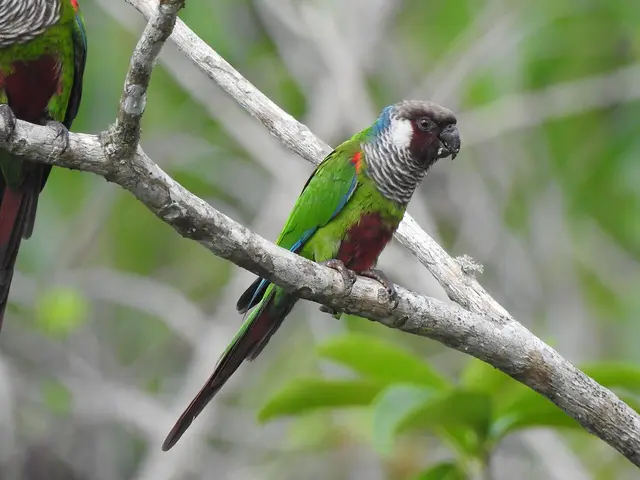
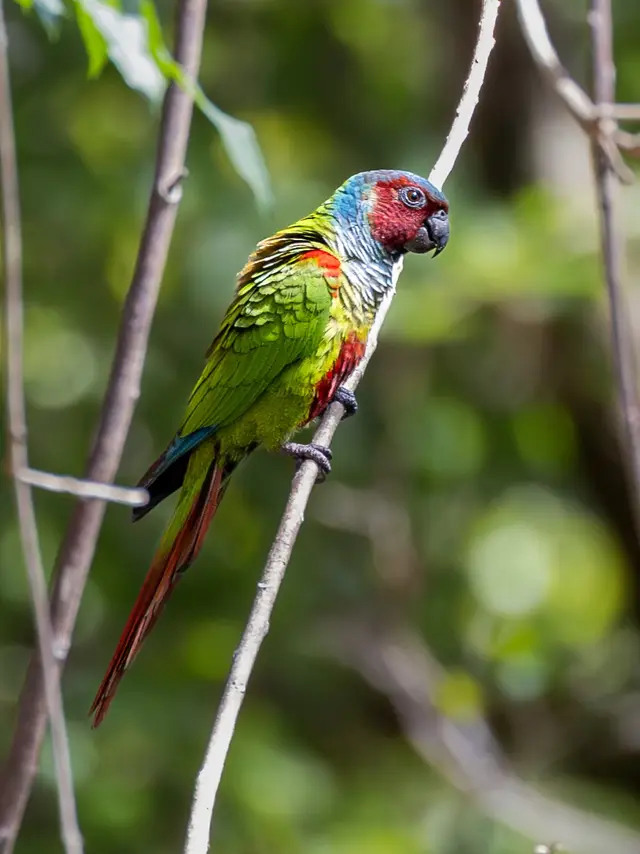
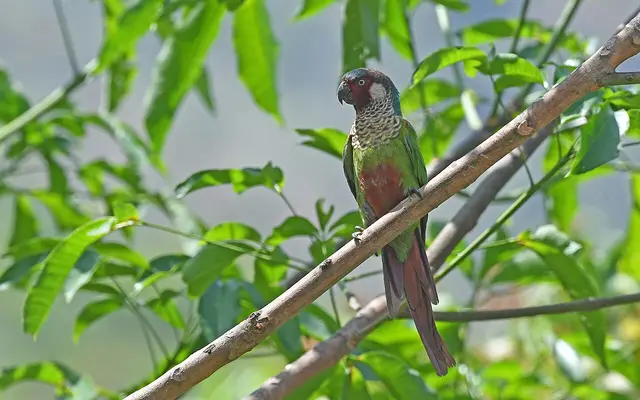
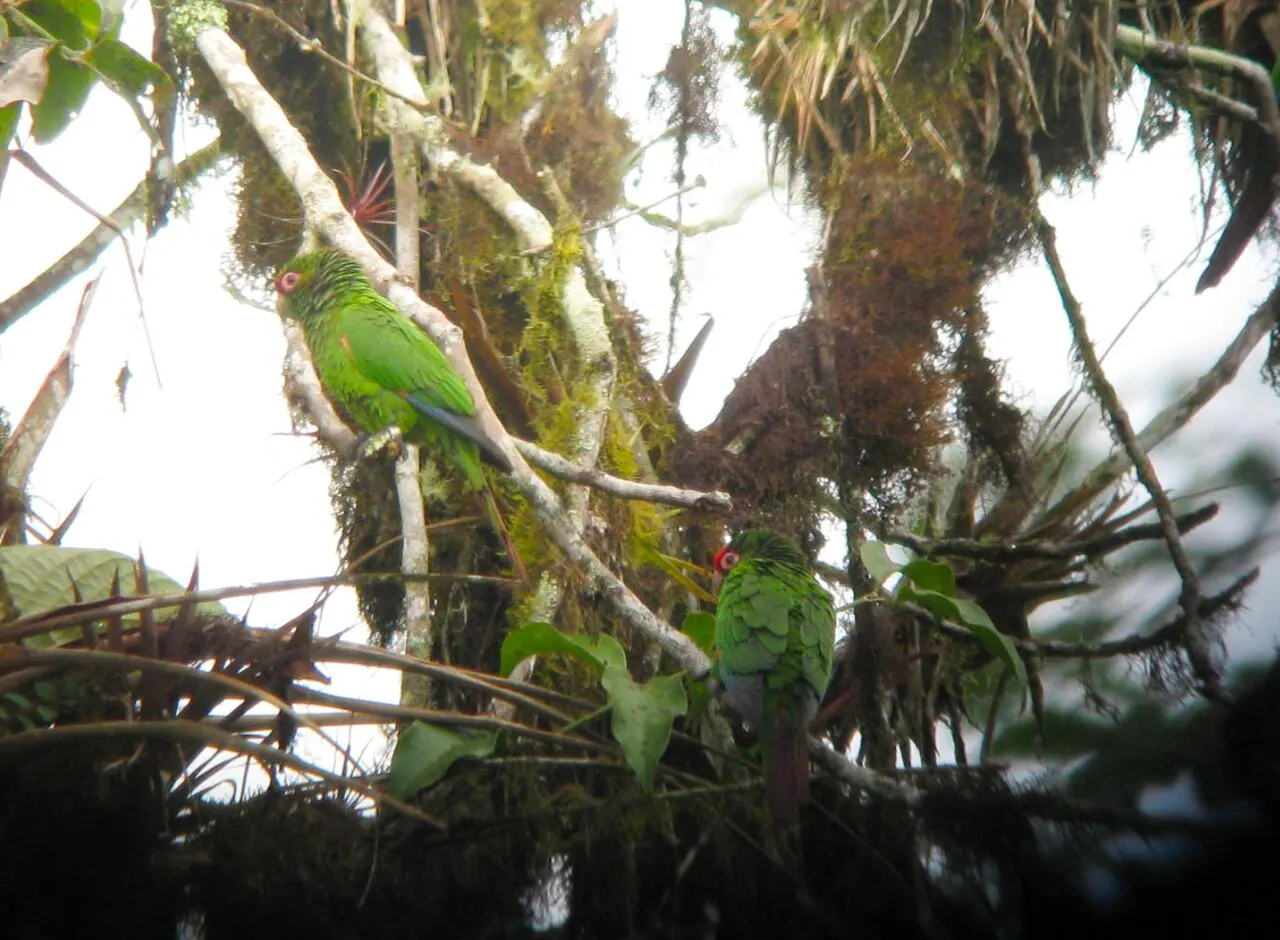
It's a compact parakeet, about 22 to 24 cm long and 65 to 75 g. Most of the plumage is green. Males have a red forehead and red between the eye and bill, red patches on the wing, blue flight feathers, and a maroon tail with a green base. The breast looks lightly barred in greyish buff.
Females look much the same but carry far less red on the forehead, and young birds show even less. No other Pyrrhura parakeet shares its range, and the larger red-masked parakeet has much more red on the forehead. Flocks give hoarse, grating calls in flight and chatter noisily.
Where it lives
Its whole range is in Ecuador, on the Pacific slope of the Andes in El Oro and Azuay provinces. The known range covers about 3,800 km2, a strip roughly 100 km long and only 5 to 10 km wide. It lives in humid forest, mostly between about 800 and 1,300 m on the Red List's figures, though birds have been recorded from 300 to 1,800 m.
It does not migrate. The Red List lists both moist montane and moist lowland forest as its habitat.
Pins are Wikidata “endemic to” fields. Orange dots, when present, are GBIF occurrence tiles — survey bias included.
How it lives
Flocks usually number up to about 15 birds, though groups of 60 have been seen. They eat fruit and berries, including figs and the fruits of Heliocarpus, Hieronyma and Cecropia trees.
Breeding seems to run from March to July. The parakeets nest in tree cavities, sometimes as high as 24 m up. They breed cooperatively, so a pair may be helped by several other birds. A 2013 study in Molecular Ecology by Klauke and colleagues found that how well a nest does depends on the quality of those helpers.
Why it is in trouble
The Red List puts the population at 250 to 999 mature birds (2020) and says it is still declining, as forest is cleared for farming and cattle grazing and lost to mining. Small-scale harvesting is also listed as a pressure. The assessment estimates the past loss at 1 to 19%.
A 2016 Mongabay report said the area had lost about 95% of its tree cover over the past century, and that the largest known group, in Buenaventura Reserve, held up to about 240 birds. Genetic markers cited there point to a recent bottleneck, with an effective population of 2,500 to 10,000 around 2000 and fewer than 1,000 now. Because the species needs large trees with cavities, losing old forest hurts breeding as well as feeding.
What is being done
Fundación Jocotoco opened Buenaventura Reserve in 1999, home to the largest known group of the parakeets. Natural nest holes have become scarce as forest has been cleared, so nest boxes are a key part of the recovery work. Jocotoco reports that 50 to 100 fledglings leave its boxes each year.
The 2016 report described a planned conservation corridor to link forest around the reserve, involving private landowners, local government and university and NGO partners. The species is on Appendix II of CITES, and the Red List records a recovery plan and a monitoring scheme in place.
Sources
Written for this catalog in our own words from the sources below, checked against them on 12 November 2026. Population figures are estimates and carry the year they were made. Status and assessment year: IUCN. 2026. The IUCN Red List of Threatened Species. Version 2026-1. iucnredlist.org.