Endangered
Bernier's Teal
Anas bernieri
Bernier's teal (Anas bernieri), also called the Madagascar teal, is a small, plain brown dabbling duck found only on Madagascar, mostly along the west coast, where it depends on mangroves and shallow brackish water. The IUCN Red List has rated it Endangered since 1994, most recently in 2022.
How to recognise it
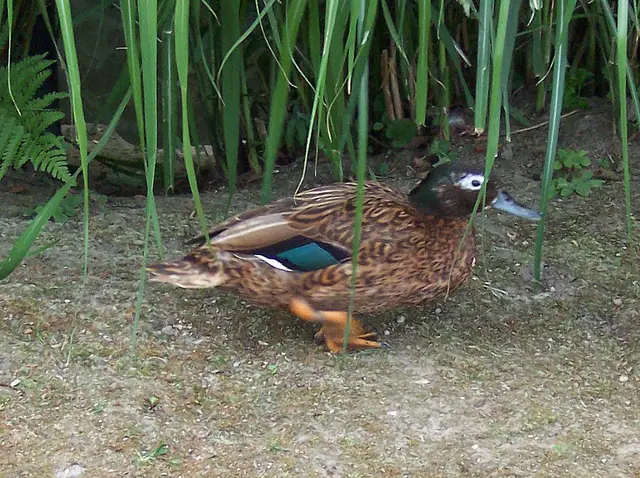
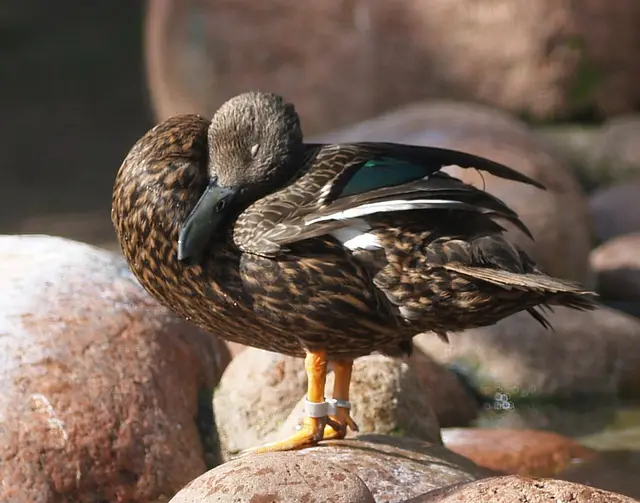
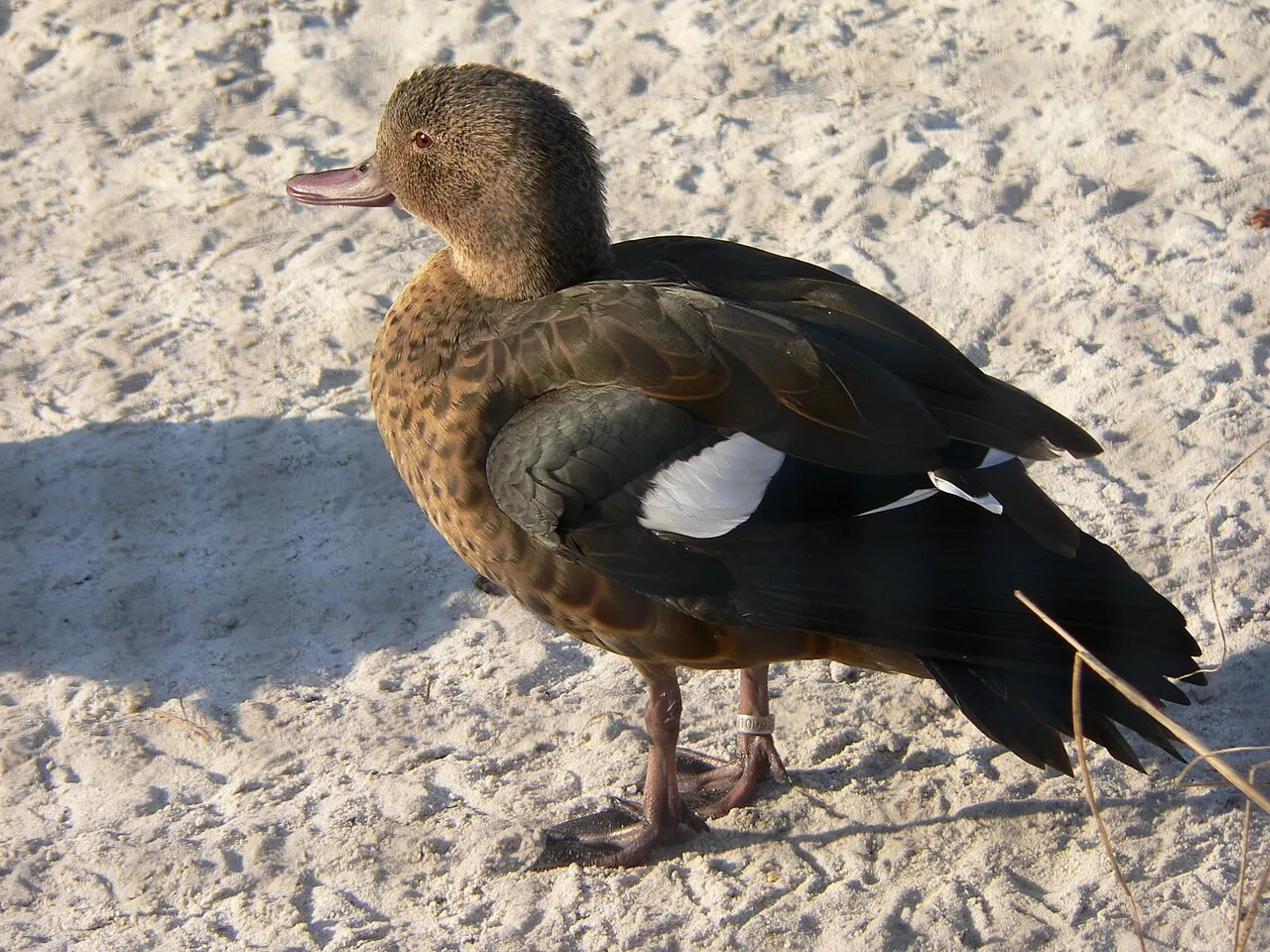
It is a small duck, 40 to 45 cm long, weighing roughly 320 to 405 g, with males a little larger and heavier than females. The plumage is warm greyish brown, scalloped with darker feathering on the breast and flanks, and the head has no bold pattern. The bill is pinkish and the legs are dull reddish-orange. Both sexes look alike, so telling pairs apart is hard.
A dark wing patch (speculum) with wide white borders shows in flight. Males reportedly whistle, while females give a croaking quack.
Where it lives
It is endemic to Madagascar. It occurs along the west coast and in the extreme northeast, and known breeding sites are on the central and northwest coasts. The IUCN puts its overall range at about 310,000 square kilometres, from sea level to roughly 200 m.
Mangroves are the heart of its habitat, along with estuaries, brackish lagoons and lakes, freshwater marshes, rivers and lowland moist forest or savanna. Subfossil bones from the Holocene reportedly show it once ranged much more widely across the island.
Pins are Wikidata “endemic to” fields. Orange dots, when present, are GBIF occurrence tiles — survey bias included.
How it lives
Pairs or small groups spend much of the day feeding, wading at the edge of shallow, muddy water, filtering the mud and dabbling at the surface. The diet includes invertebrates, insects and plant material.
Every wild nest described so far was a hole in a grey mangrove tree, 1 to 3 m above the water. The female adds no nest material, lays directly on the cavity floor, and covers the eggs first with rotting wood or wood shavings, then with her own down. Only she incubates. In captivity clutches have run from 3 to 9 eggs, averaging about 6.75. Sources disagree on the wild breeding season, with the west-coast wet season (December to March) the most specific account.
Why it is in trouble
The IUCN estimates the whole population at 630 to 1,900 birds (2022) and treats it as a single subpopulation. Some accounts give about 1,500 without a date. The trend is decreasing, with a reduction of 10 to 25 percent estimated for the past, present and future, driven by habitat loss and exploitation.
Mangroves are cut for timber and fuel and cleared for cultivation, which removes both nest trees and feeding grounds. Small-holder farming and aquaculture add to the damage. The duck is also taken for food and sport, and the IUCN notes use in the pet and display trade. Its Endangered listing rests on criterion C2a(ii): a small population in a single subpopulation that is declining.
What is being done
The IUCN lists site protection and site management as needed actions. In place already are a monitoring scheme, at least one protected area and a captive population. Durrell began field surveys in Madagascar in 1992 and has run village awareness programmes, nest searches and ringing since.
In 1993 to 1997, 11 wild-caught birds went to Durrell's headquarters in Jersey, and the first captive breeding came in 1998, according to the British and Irish zoo association BIAZA. By December 2005 there were 338 birds in 45 collections in 10 countries, all on loan from the Malagasy government.
Sources
Written for this catalog in our own words from the sources below, checked against them on 12 November 2026. Population figures are estimates and carry the year they were made. Status and assessment year: IUCN. 2026. The IUCN Red List of Threatened Species. Version 2026-1. iucnredlist.org.