Endangered
Dwarf Tinamou
Taoniscus nanus
The dwarf tinamou (Taoniscus nanus) is a tiny, quail-like ground bird of the dry grasslands of Brazil's Cerrado. The IUCN Red List assessed it as Endangered in 2019, up from Vulnerable until 2016, because farming and cattle ranching keep eating away at its open habitat.
How to recognise it
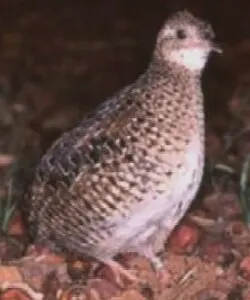
This is a small, stocky bird only about 13 to 16 cm long, with short wings and almost no visible tail. Its back and neck are greyish brown with bold markings, the throat is pale, the crown is blackish and the underparts are buff with brown bars. The eyes and legs are a dull yellow.
Some birds are noticeably darker and greyer than others. It isn't settled whether that reflects two colour forms or a difference between the sexes. The song is a series of high, cricket-like trills ending in short peet notes. The bird resembles a small, dumpy nothura and is also easily confused with the ocellated crake. It is highly inconspicuous and easily overlooked.
Where it lives
The species is a Cerrado specialist, found in dry scrubby grassland and savanna from sea level up to about 1,000 m. Recent records come from the Distrito Federal and from Goiás, Minas Gerais, Mato Grosso do Sul and São Paulo, and it once occurred in Paraná. Old specimens exist from Paraguay and northern Argentina, but all recent records are Brazilian. Surveys with recorded calls along the Río Bermejo in Argentina did not find it. The Red List counts six to ten locations.
Known protected sites include Serra da Canastra National Park, the Roncador Biological Reserve run by the Brazilian statistics institute (IBGE), and the Itapetininga Experimental Station.
Pins are Wikidata “endemic to” fields. Orange dots, when present, are GBIF occurrence tiles — survey bias included.
How it lives
It eats mainly grass seeds, termites and other small arthropods. Little else is documented, and field studies of its nesting and breeding season are scarce.
Why it is in trouble
Large areas of Cerrado grassland have been turned into mechanised crops, cattle pasture and tree plantations. Invasive grasses, heavy pesticide use and annual burning add to the damage, and in some areas the bird is reportedly hunted for food. The Red List describes the habitat as severely fragmented and still shrinking, with a decreasing population.
Counts are rough. An estimate from 2000 gave 5,800 to 6,960 adults. The 2019 Red List assessment gives 2,500 to 9,999 mature individuals.
What is being done
The bird is known from a handful of national parks and reserves. Recommended steps include better management of those sites, controls on burning, and more surveys using recorded calls in Serra do Cipó, Chapada dos Veadeiros and Emas national parks. Further searches are also proposed in Argentina and Paraguay, where the old specimens came from.
The Red List also lists captive breeding and reintroduction at suitable sites as actions to consider. Neither is an established programme.
Sources
Written for this catalog in our own words from the sources below, checked against them on 12 November 2026. Population figures are estimates and carry the year they were made. Status and assessment year: IUCN. 2026. The IUCN Red List of Threatened Species. Version 2026-1. iucnredlist.org.




