Endangered
White-tipped Monarch
Symposiachrus everetti
The white-tipped monarch (Symposiachrus everetti) is a small black and white flycatcher found on one island, Tanah Jampea in Indonesia's Flores Sea. The IUCN Red List classed it as Endangered in 2024, with a falling population estimated at 1,750 to 5,250 mature individuals and none of it in a protected area.
How to recognise it
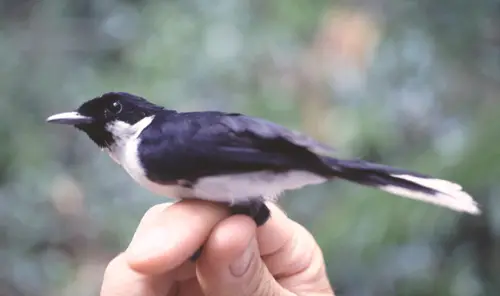
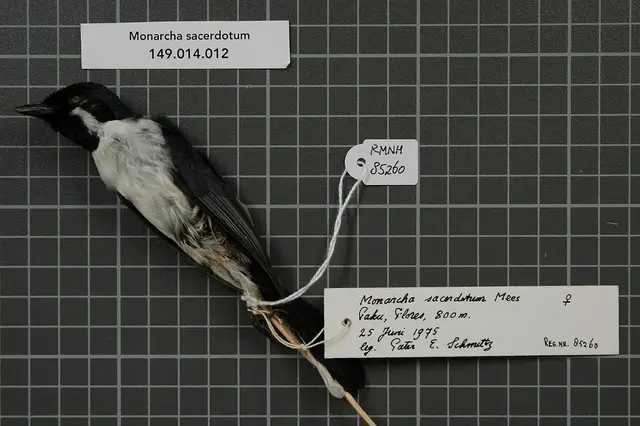
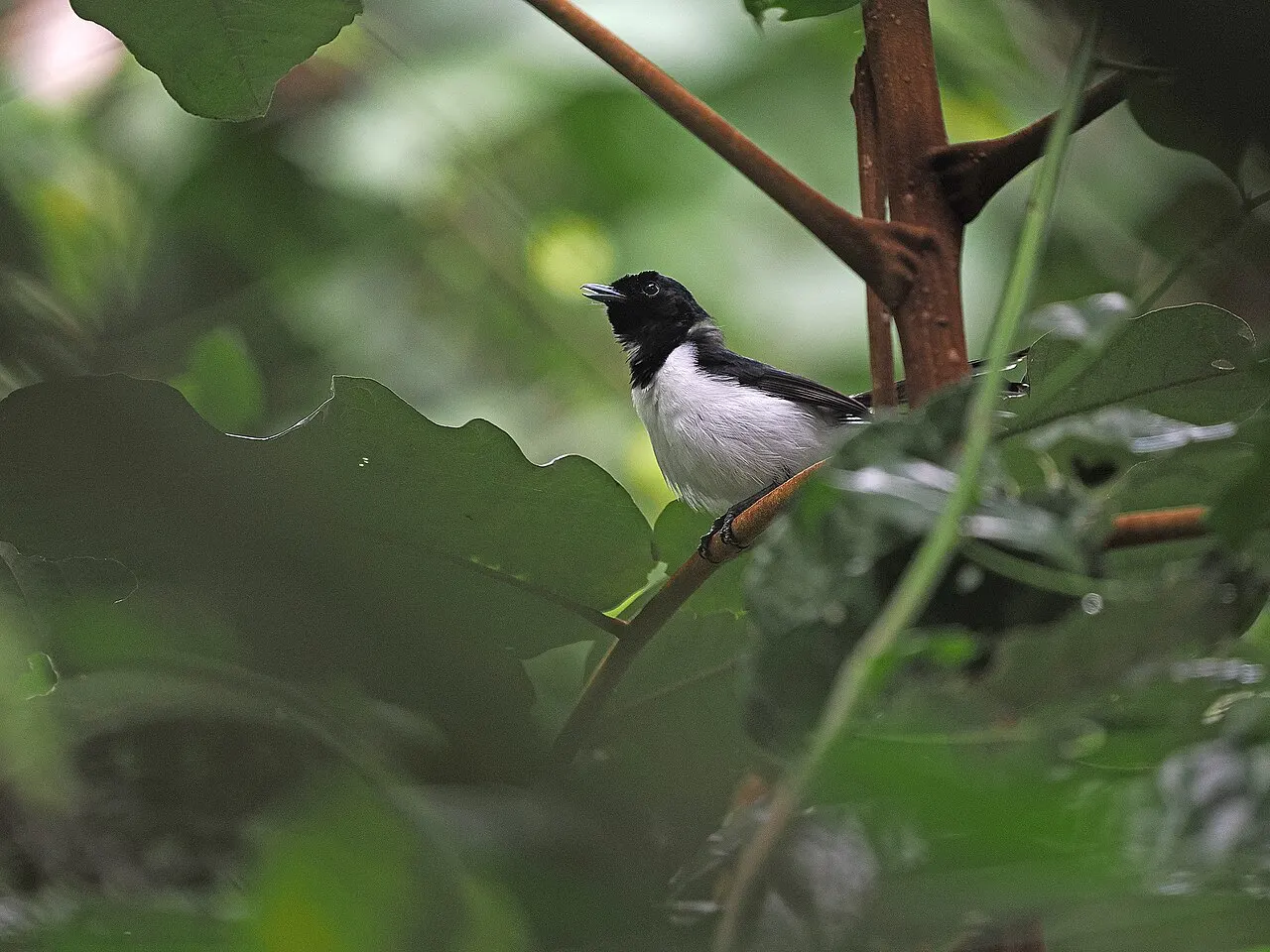
It's a bold little bird, about 14 cm long. Adults have a black head, chest and upperparts, with white underparts and a white rump. The outer tail feathers are white over their outer half, and a fanned tail shows four white tips. Young birds are greyer and browner, and may or may not have a rusty rump.
The song is a slightly shaky, plaintive whistle, and it also gives harsh, scolding notes.
Where it lives
The species is endemic to Tanah Jampea, the second-largest of the Selayar Islands in South Sulawesi. The island is about 22 km long and up to 10 km wide, and its highest point is 521 m. Its other names include Tanahjampea monarch, Djampea monarch and Everett's monarch, the last after the collector Alfred Hart Everett. Some authorities have treated it as a subspecies of the Kai monarch.
Its best habitat is lowland moist forest. The Red List also records it, less comfortably, in mangroves, moist shrubland and heavily degraded former forest, but describes it as absent from agricultural areas. Its upper elevation limit is put at 500 m. A visit by Burung Indonesia in September 2015 found it on Tanah Jampea in gardens, forest edges and secondary forest, and described it as relatively easy to see in gardens there. The same visit did not find it on neighbouring Kalao.
Pins are Wikidata “endemic to” fields. Orange dots, when present, are GBIF occurrence tiles — survey bias included.
Why it is in trouble
The Red List assessment names three ongoing pressures, each affecting an estimated 50 to 90 percent of the species' range and causing slow but significant declines: shifting agriculture, small-holder farming, and small-scale logging and wood harvesting. Forest cover within its range fell by about 10 percent over the ten years to 2024, and much of that loss was complete clearance for farmland.
The population is judged to be decreasing, and it is thought to occupy three to ten locations. About 70 square kilometres of forest remain in its range. The 1,750 to 5,250 figure is an estimate built from bird counts on eBird, and the assessors call for research to establish how many birds remain and how well they tolerate degraded habitat.
What is being done
Not much yet. The assessment records no recovery plan, no systematic monitoring, no captive population and no protected area covering any of the population. The island is a Key Biodiversity Area, with the monarch as its only trigger species (assessed 2018), and it is reportedly an Important Bird Area as well because it holds the Critically Endangered yellow-crested cockatoo.
The most urgent priority named by the Red List is a formal protected area on the island that actually halts forest loss, led in part by local communities and backed by education about why the remaining forest matters. Remote sensing is recommended to keep tracking forest loss.
Sources
Written for this catalog in our own words from the sources below, checked against them on 12 November 2026. Population figures are estimates and carry the year they were made. Status and assessment year: IUCN. 2026. The IUCN Red List of Threatened Species. Version 2026-1. iucnredlist.org.