Endangered
Clarke's Weaver
Ploceus golandi
Clarke's weaver, also called the Kilifi weaver (Ploceus golandi), is a small yellow-and-black forest weaver found only in coastal Kenya. The IUCN Red List assessed it as Endangered in 2022, with an estimated 2,000 to 4,000 birds, and its only known nesting area is Dakatcha Woodland.
How to recognise it
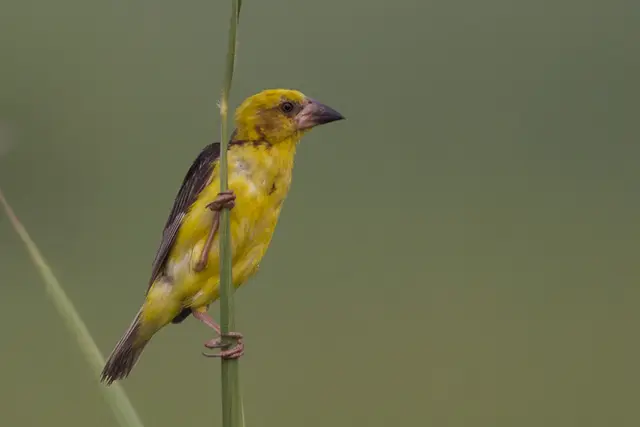
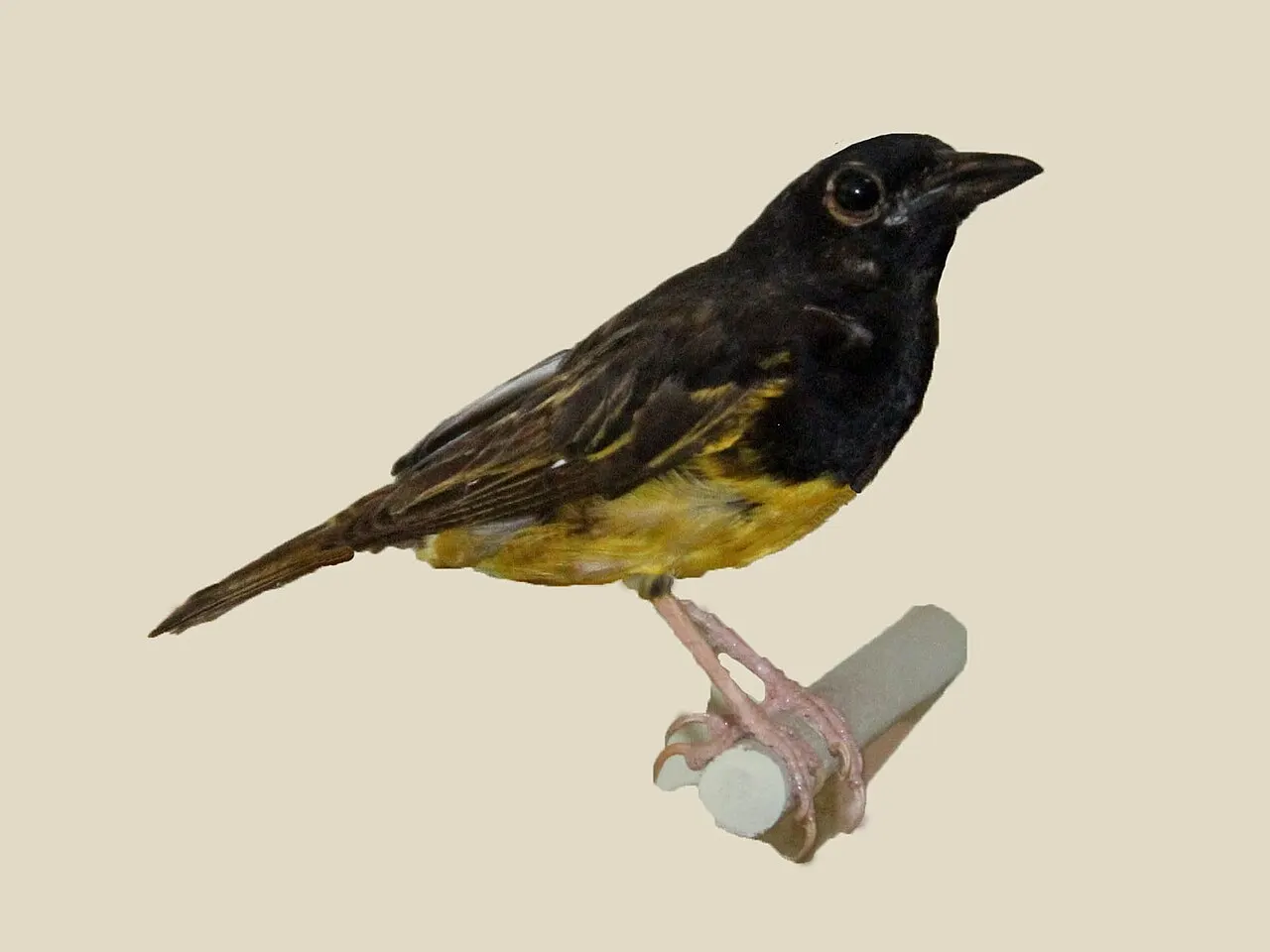
It is a small woodland weaver, about 13 to 14 cm long. The male is black above, with a black head and breast, and canary-yellow underparts that fade to white on the belly. The female is olive above and yellow below.
Both sexes have golden-yellow edges on the wing-covert feathers, which separates them from the similar forest weaver (Ploceus bicolor), which lacks yellow there.
Where it lives
The species is endemic to Kenya and is recorded from sea level to about 200 m. The IUCN counts it as occupying one location, with an extent of occurrence of about 1,900 square kilometres. It is known from Arabuko-Sokoke Forest, south of the Sabaki River, and Dakatcha Woodland, to the north near Malindi in Kilifi County. The IUCN lists dry tropical forest and seasonal wetlands as its habitats.
The birds usually move in small flocks and feed on insects and fruit. In Arabuko-Sokoke they are present mainly between about July and April, and are thought to leave that forest to breed. Stephenson Robert Clarke described the species in 1913.
Pins are Wikidata “endemic to” fields. Orange dots, when present, are GBIF occurrence tiles — survey bias included.
How it lives
For about a century nobody knew where it nested. In March 2013 a Nature Kenya and Dakatcha Woodland Conservation Group team found a breeding site in a small seasonal wetland of grasses and sedges in Dakatcha, where a male was watched weaving sedge strips onto a nest. The team estimated more than 700 birds there.
Numbers can swing with the weather. In 2023, after five seasons of drought, none were found during a May bird count, but a flock turned up in June at Kibaoni Nature Reserve near Marafa, and at least 25 birds were counted at a nearby wetland the next day.
Why it is in trouble
Its whole range is tiny, and the IUCN records the area it occupies as shrinking. The listed threats are small-holder farming, small-scale harvesting, and drought, which affects the whole range. Commercial charcoal production was described in 2013 as a major cause of woodland loss in Dakatcha.
The IUCN puts the population trend at decreasing, with a slow but significant decline.
What is being done
Nature Kenya has bought land at Dakatcha to hold as a nature reserve, and in 2025 artificial sedge ponds were created there to improve breeding habitat. The IUCN records site protection and some awareness work as in place, with conservation sites identified over its entire range. There is no recovery plan and no systematic monitoring scheme.
Sources
Written for this catalog in our own words from the sources below, checked against them on 12 November 2026. Population figures are estimates and carry the year they were made. Status and assessment year: IUCN. 2026. The IUCN Red List of Threatened Species. Version 2026-1. iucnredlist.org.